Ebook Info
- Published: 1998
- Number of pages: 224 pages
- Format: PDF
- File Size: 9.15 MB
- Authors: Jacques Derrida
Description
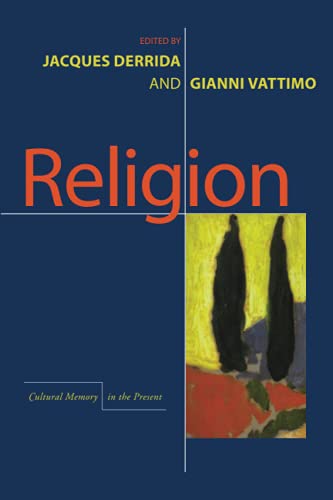
What should we make of the return to the sacred evidenced by the new vitality of churches, sects, and religious beliefs in many parts of the world today? What are the boundaries between the essential traits of religion and those of ethics and justice? Is there a “truth” to religion? This remarkable volume includes reflections on such questions by three of the most important philosophers of our time—Jacques Derrida, Gianni Vattimo, and Hans-Georg Gadamer. Together with other distinguished thinkers, they address a wide range of questions about the meaning, status, and future prospects of religion. In his meditation on the “return of religion,” entitled “Faith and Knowledge: The Two Sources of ‘Religion’ at the Limits of Mere Reason,” Derrida addresses the ways in which this return is intrinsically linked to transformations of which the new media are both the carriers and the symptom. Derrida coins this process one of globalatinization. This neologism signals, among other things, the process of a certain universalization of the Roman word or concept of religion, which tends to become hegemonic, as well as a certain performativity discernible in the new media and in contemporary structures of testimony and confession. Examples of this include, Derrida reminds us, not only the phenomenon of televangelism and televisual stagings of the pope’s journeys, and not only the portrayal and self-presentation of Islam, but also the fetishization and becoming virtually absolute of the televisual and the multimedial as such. Using Being and Time as a point of reference, Vattimo suggests that religious experience is both an individual experience and a manifestation of a historical rhythm within which religion regularly appears and disappears. A commentary by Gadamer summarizes and enriches the contributions by Derrida and Vattimo. Four essays by Maurizio Ferraris, Eugenio Trias, Vincenzo Vitiello, and Aldo Giorgio Gargani complete the volume by examining other facets of the “religious.”
User’s Reviews
Editorial Reviews: From the Inside Flap What should we make of the return to the sacred evidenced by the new vitality of churches, sects, and religious beliefs in many parts of the world today? What are the boundaries between the essential traits of religion and those of ethics and justice? Is there a “truth” to religion? This remarkable volume includes reflections on such questions by three of the most important philosophers of our time—Jacques Derrida, Gianni Vattimo, and Hans-Georg Gadamer. Together with other distinguished thinkers, they address a wide range of questions about the meaning, status, and future prospects of religion.In his meditation on the “return of religion,” entitled “Faith and Knowledge: The Two Sources of ‘Religion’ at the Limits of Mere Reason,” Derrida addresses the ways in which this return is intrinsically linked to transformations of which the new media are both the carriers and the symptom. Derrida coins this process one of globalatinization. This neologism signals, among other things, the process of a certain universalization of the Roman word or concept of religion, which tends to become hegemonic, as well as a certain performativity discernible in the new media and in contemporary structures of testimony and confession. Examples of this include, Derrida reminds us, not only the phenomenon of televangelism and televisual stagings of the pope’s journeys, and not only the portrayal and self-presentation of Islam, but also the fetishization and becoming virtually absolute of the televisual and the multimedial as such.Using Being and Time as a point of reference, Vattimo suggests that religious experience is both an individual experience and a manifestation of a historical rhythm within which religion regularly appears and disappears. A commentary by Gadamer summarizes and enriches the contributions by Derrida and Vattimo. Four essays by Maurizio Ferraris, Eugenio Trias, Vincenzo Vitiello, and Aldo Giorgio Gargani complete the volume by examining other facets of the “religious.” From the Back Cover What should we make of the return to the sacred evidenced by the new vitality of churches, sects, and religious beliefs in many parts of the world today? What are the boundaries between the essential traits of religion and those of ethics and justice? Is there a “truth” to religion? This remarkable volume includes reflections on such questions by three of the most important philosophers of our time–Jacques Derrida, Gianni Vattimo, and Hans-Georg Gadamer. Together with other distinguished thinkers, they address a wide range of questions about the meaning, status, and future prospects of religion.In his meditation on the “return of religion,” entitled “Faith and Knowledge: The Two Sources of ‘Religion’ at the Limits of Mere Reason,” Derrida addresses the ways in which this return is intrinsically linked to transformations of which the new media are both the carriers and the symptom. Derrida coins this process one of globalatinization. This neologism signals, among other things, the process of a certain universalization of the Roman word or concept of religion, which tends to become hegemonic, as well as a certain performativity discernible in the new media and in contemporary structures of testimony and confession. Examples of this include, Derrida reminds us, not only the phenomenon of televangelism and televisual stagings of the pope’s journeys, and not only the portrayal and self-presentation of Islam, but also the fetishization and becoming virtually absolute of the televisual and the multimedial as such.Using Being and Time as a point of reference, Vattimo suggests that religious experience is both an individual experience and a manifestation of a historical rhythm within which religion regularly appears and disappears. A commentary by Gadamer summarizes and enriches the contributions by Derrida and Vattimo. Four essays by Maurizio Ferraris, Eugenio Trias, Vincenzo Vitiello, and Aldo Giorgio Gargani complete the volume by examining other facets of the “religious.” About the Author Jacques Derrida (1930–2004) was director of studies at the école des hautes études en sciences sociales, Paris, and professor of humanities at the University of California, Irvine. He is the author of many books published by the University of Chicago Press. Read more
Reviews from Amazon users which were colected at the time this book was published on the website:
⭐Derrida and Vattimo’s collection of essays given on the Isle of Capri truly shows how even postmodern philosophy must still come front-and-center with the question of religion. As postmodernity brings an end to the metaphysics that made God undesirable, a different type of God, a God of Life (as Unamuno would call it) must be dealt with anew. Derrida, Vattimo, Gadamar, Vitiello, Trias and others discuss the role of religion in an age that claims to be so removed from it.My personal impression of the book is that Derrida reveals the type of religious issues that he offered us in his _Circumfessions_ and is wonderfully explicated in John Caputo’s _Prayers and Tears of Jacques Derrida_. Vitiello’s essay “Toward a Topology of the Religious” is insightful and necessary (if only Nietzsche could have read it!).
⭐Jacques Derrida’s contribution to this seminar which was held in 1994 on the island of Capri is the essay entitled “Faith and Knowledge.” What is particularly interesting about this keynote address is Derrida’s neologism “globalatinization” which he defines as “this strange alliance of Christianity, as the experience of the death of God, and tele-technoscientific capitalism.” There is talk of religion and digitality, airborn pilgrimages to Mecca, Jerusalem and its three monotheisms watched over by the heavenly and monstrous glance of CNN, a Pope versed in televisual rhetoric, miracles transmitted live followed by commercials, and lastly the televisual diplomacy of the Dalai Lama. Because Capri is an island not far from Rome, Derrida also has some interesting things to say about religion in the Mediterranean and the Levant, as well as the Promised Land and the desert. This essay is particularly opaque and beautiful and it would definitely help the reader if he or she is familiar with Martin Heidegger’s Sein und Zeit (Being And Time) as well as Beitrage zur Philosophie (Contributions to Philosophy), as JD name drops the great German philosopher’s ideas here and there throughout this essay. This is definitely good beach reading.
⭐This is a very saddening book in which these authors, who have helped to move our thinking away from some of the remnants of religion over which we continue to trip, express their (perhaps elderly, not to say senile) longing for old-time religion itself. Not only that, but they suggest, as opponents of postmodernism or pragmatism do, that outgrowing the tiresome remnants of religion found in the arrogant self-descriptions of scientists or ethicists actually allows (or is it causes?) “the return of religion” – an event which they claim to be witnessing although they offer little argument for its existence or desirability. They seem (and, of course, each takes a slightly different tack) to be arguing ad populum instead of admitting their desire for religion. They explain that people are scared by nuclear proliferation and environmental destruction and are turning to religion, but do not address whether such false comfort should be joined in. Rather, they simply join in it – without, however, ever quite saying so. Not one of them writes “I believe in God,” but each asserts by every word he writes “God is worth writing about.”
Keywords
Free Download Religion (Cultural Memory in the Present) 1st Edition in PDF format
Religion (Cultural Memory in the Present) 1st Edition PDF Free Download
Download Religion (Cultural Memory in the Present) 1st Edition 1998 PDF Free
Religion (Cultural Memory in the Present) 1st Edition 1998 PDF Free Download
Download Religion (Cultural Memory in the Present) 1st Edition PDF
Free Download Ebook Religion (Cultural Memory in the Present) 1st Edition