Ebook Info
- Published: 2007
- Number of pages: 364 pages
- Format: PDF
- File Size: 4.27 MB
- Authors: Beate Dignas
Description
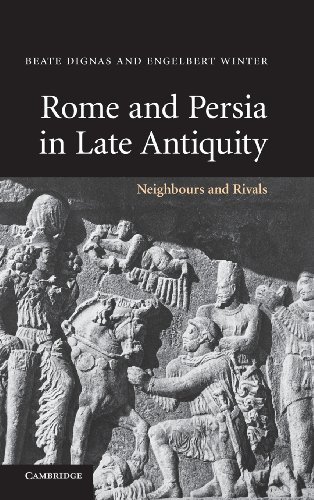
The foundation of the Sasanian Empire in Persia in AD 224 established a formidable new power on the Roman Empire’s eastern frontier, and relations over the next four centuries proved turbulent. This book provides a chronological narrative of their relationship, supported by a substantial collection of translated sources illustrating structural patterns. The political goals of the two sides, their military confrontations and their diplomatic solutions are discussed, as well as the common interests between the two powers. Special attention is given to the situation of Arabia and Armenia, to economic aspects, the protection of the frontiers, the religious life in both empires and the channels of communication between East and West. Considerable attention is also paid to exploring the role played by the Sasanians in the history of the ancient Near East. The book will prove invaluable for students and non-specialists interested in late antiquity and early Byzantium.
User’s Reviews
Reviews from Amazon users which were colected at the time this book was published on the website:
⭐I know of no other book that covers this topic in such an accessible format. Books on the Sassanid Persians are hard to find in general, and the Roman-Persian wars generally only show up in the context of background information or specific emperors’ campaigns. It’s kind of embarrassing. This book covers more than just the wars though. It includes the diplomatic relationships and the way that their relations changed over time. This book covers all the basics needed for a broader understanding of this topic.It’s nice when books are so considerately laid out. The first section covers a narrative of the conflicts while the other chapters deal with the various issues involved. The second section details what the sources say. It includes large selections from these sources to describe the various conflicts. As might be expected most of these documents are Roman ones. Syrian and Armenians ones show up too, but the Persian evidence is scanty and rarely informative. The rest of the book covers topics such as diplomacy, the Arabs, and the nature of rule.I don’t have much to say about this book. That’s not because it’s a bad one but because it’s a good one. I have no major criticisms and while I disagree with several of their interpretations I can’t say that they are too far off. As I said earlier there really aren’t many books on this topic. Touraj Daryaee’s
⭐and
⭐are the only books in English covering the Sassanians exclusively. ‘L’Iran sous les Sassanides’ by Christensen, and ‘Grundzüge der Geschichte des sasanidischen Reiches’ by Schippmann are the only sources dealing with them in any language that I know of. Two volumes of the Cambridge History of Iran (
⭐,
⭐) deal with the Seleucids through the Sassanids and contain much useful information. Vital collections of primary sources are contained in The Roman Eastern Frontier and the Persian Wars
⭐and
⭐. Apart from this most of the works dealing with the Sassanians only deal with them in the context of general Iranian history. Obviously there are a great deal more books on the Romans.
⭐This book details the clash of the Roman/Byzantine Empires with the Sasanian Empire. It is done in a somewhat different style than is found in most books. The first part of the book, described as the Narrative, details the clash in a chronological manner – from the third to the beginning of the seventh century. This section, plus a short introduction, takes up only 49 pages. It is followed by a much longer second section called the Sources and Context, which occupies the remainder of the 265 pages of text. This part of the book focuses on different aspect of the clash between the empires, namely (as listed in the individual chapter headings):– Political Goals,– Warfare, (how the armies were organized and fought)– Military Confrontations– Diplomatic Solutions– Arabia Between the Great Powers– Shared Interests– Religion: Christianity and Zoroastrianism– Emperor and King of Kings– Exchange of Information between West and East.Each of these chapters contains English translations of original source material, followed by a discussion of this material. Organizing the book in this manner allows a reader to read the first section to get the overall narrative of the story of the clash between the Sasanian Empire and the empires of the west. Then the reader is exposed to the original source material upon which this narrative is based, along with a more detailed discussion of this material. The book clearly shows the power of the Sasanian Empire, the ebb and flow of its struggles with Rome and Byzantium, and its parity with them, with neither side being able to completely destroy the other, resulting their gaining mutual respect.The book utilizes footnotes at the bottom of each page. It contains 14 clearly drawn maps, a list of the Sasanian kings and the corresponding Roman and Byzantine emperors, a detailed chronological table, a glossary, bibliography and Indexes of Sources, Names, Place Names and a General Index.
Keywords
Free Download Rome and Persia in Late Antiquity: Neighbours and Rivals in PDF format
Rome and Persia in Late Antiquity: Neighbours and Rivals PDF Free Download
Download Rome and Persia in Late Antiquity: Neighbours and Rivals 2007 PDF Free
Rome and Persia in Late Antiquity: Neighbours and Rivals 2007 PDF Free Download
Download Rome and Persia in Late Antiquity: Neighbours and Rivals PDF
Free Download Ebook Rome and Persia in Late Antiquity: Neighbours and Rivals