

Ebook Info
- Published: 2014
- Number of pages: 336 pages
- Format: PDF
- File Size: 1.06 MB
- Authors: Louise DeSalvo
Description
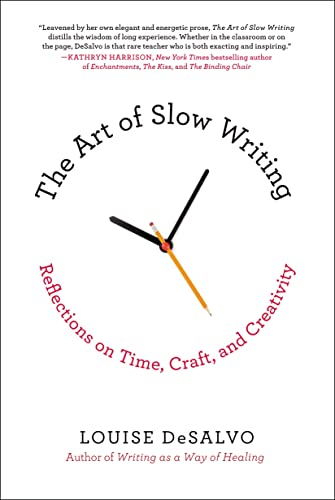
In a series of conversational observations and meditations on the writing process, The Art of Slow Writing examines the benefits of writing slowly. DeSalvo advises her readers to explore their creative process on deeper levels by getting to know themselves and their stories more fully over a longer period of time. She writes in the same supportive manner that encourages her students, using the slow writing process to help them explore the complexities of craft. The Art of Slow Writing is the antidote to self-help books that preach the idea of fast-writing, finishing a novel a year, and quick revisions. DeSalvo makes a case that more mature writing often develops over a longer period of time and offers tips and techniques to train the creative process in this new experience. DeSalvo describes the work habits of successful writers (among them, Nobel Prize laureates) so that readers can use the information provided to develop their identity as writers and transform their writing lives. It includes anecdotes from classic American and international writers such as John Steinbeck, Henry Miller, Virginia Woolf and D. H. Lawrence as well as contemporary authors such as Michael Chabon, Junot Diaz, Jeffrey Eugenides, Ian McEwan, and Salman Rushdie. DeSalvo skillfully and gently guides writers to not only start their work, but immerse themselves fully in the process and create texts they will treasure.
User’s Reviews
Editorial Reviews: Review “Leavened by her own elegant and energetic prose, The Art of Slow Writing distills the wisdom of long experience. Whether in the classroom or on the page, DeSalvo is that rare teacher who is both exacting and inspiring.” ―Kathryn Harrison, New York Times bestselling author of Enchantments, The Kiss, and The Binding Chair“I want to hand a copy of Slow Writing to every writer I know and every writer I don’t know. This book is a gift. Its insights are unparalleled. Louise DeSalvo takes the reader on a joyful, unforgettable journey of reflection and pathos. I can’t thank DeSalvo enough for writing this wise, accessible yet intensely researched master meditation on writing. Read it more than once– the first time for pleasure and many more times for its invaluable insights into the craft.” ―Margaux Fragoso, author of Tiger, Tiger: A Memoir“In this wise and insightful book, Louise DeSalvo draws from her own rich experience – as well as from that a variety of writers – to make the persuasive case that good writing takes time. As I read, I found myself underlining, dog-earing pages, writing notes in the margin, inspired by DeSalvo’s passion and focus. Deep immersion in the process of writing, she says, yields results that surprise and delight us; our work is stronger, more nuanced, and more compelling. The Art Of Slow Writing is a welcome reminder that in this fast-paced world, some things should not be rushed.” ―Christina Baker Kline, #1 New York Times bestselling author of Orphan Train“DeSalvo turns what might have been an exercise in navel-gazing into a lively and inspiring guide for writers of all stripes. Buy two copies–the first will quickly sprout dog-ears.” ―Publishers Weekly (starred review) About the Author Louise DeSalvo (1942-2018) was the multi-award-winning author of such memoirs as Vertigo, Breathless, and Crazy in the Kitchen: Food, Feuds and Forgiveness in an Italian American Family. She was also a renowned feminist scholar and essayist who wrote about such literary figures as D. H. Lawrence, Henry Miller, and Virginia Woolf. Her book Virginia Woolf: The Impact of Childhood Sexual Abuse on Her Life and Work was named one of the most important books of the twentieth century by the Women’s Review of Books.A professor of English, Louise taught creative writing and literature at Hunter College where she implemented the school’s MFA in Memoir program, and she wrote several books on creative writing including Writing as a Way of Healing: How Telling Our Stories Transforms Our Lives and The Art of Slow Writing: Reflections on Times, Craft, and Creativity. Excerpt. © Reprinted by permission. All rights reserved. The Art of Slow WritingReflections on Time, Craft, and CreativityBy Louise DeSalvoSt. Martin’s PressCopyright © 2014 Louise DeSalvoAll rights reserved.ISBN: 978-1-250-05103-5ContentsTitle Page, Copyright Notice, Dedication, Preface, Introduction: The Art of Slow Writing, Part One: Getting Ready to Write, Introduction, 1. Learning How to Work at Writing, 2. Finding Our Own Rhythm, 3. Where to Begin, 4. Routine, 5. Tools of the Trade, 6. A Writer’s Mise en Place, 7. Deliberate Practice, 8. Writing and Real Life, 9. Raw Material, 10. Walking and Inspiration, Part Two: A Writer’s Apprenticeship, Introduction, 11. Apprenticeship, 12. Writing Outside and Elsewhere, 13. Process Journal, 14. Patience, Humility, and Respect, 15. Learning How to Learn, 16. Labor and Management, 17. Game Plan, 18. No Excuses, 19. Writing Rehab, 20. A Writer’s Notebook, 21. The Creative Act, 22. Support for Our Work, 23. Radical Work Takes Time, Part Three: Challenges and Successes, Introduction, 24. Failure in the Middle, 25. Doubt, 26. Writing as Collaboration, 27. Creative Problem Solving, 28. Rejection Letters, 29. Hailstorms, 30. Turning the Corner, 31. Practice Deciding, 32. Successful Outcomes, 33. Ship’s Log, 34. What Worked and Why, Part Four: Writers at Rest, Introduction, 35. Dreaming and Daydreaming, 36. Dumbstruck, 37. Taking a Break, 38. Why I’m a Writer Who Cooks, 39. Slow Reading, 40. Fresh Air, 41. Waiting for an Answer, 42. A New Perspective, 43. What’s in Your Drawer?, Part Five: Building a Book, Finishing a Book, Introduction, 44. How Long Does It Take?, 45. Over Time, 46. Architecture and Design, 47. Turning Pages into Books, 48. Structuring Our Work, 49. The Second Sleeve, 50. Tied Up in Knots, 51. Writing Partners, 52. Revision, 53. The Toughest Choice, 54. Self-Censorship, 55. The Finish Line, Epilogue: Beginning Again, Sources, Acknowledgments, Also by Louise DeSalvo, About the Author, Copyright, CHAPTER 1Learning How to Work at WritingI remember a meltdown I had in college when I was writing an essay. You were given an assignment. You had to hand in a perfect paper on a due date. There were no opportunities for revision, no comments on a draft to help you improve.So there I was, sitting at my desk. I’d reel a sheet of erasable paper into my typewriter and begin. And I’d expect myself to do everything at once—present a coherent argument; write an organized essay in syntactically correct, perfectly punctuated prose.I was writing about Dostoyevsky, my favorite author. I knew what I wanted to say. But I had no notes, no draft. I had an outline, but it felt like a straitjacket. I kept having new insights as I wrote, but instead of tossing my outline, I tossed away my pages. When I wrote an incoherent sentence, I’d tear the paper out of the typewriter and begin anew.Halfway through the night, I was so muddled, so incapable of working, that I began crying and couldn’t stop. A friend calmed me down and sat beside me while I did the best I could. But the paper was a disaster. “You write primer English,” the professor commented. Afraid of making a mistake, short on time, I’d simplified my writing and my argument.I wanted to be a writer. But if this was what writing was like, I couldn’t do it—I didn’t have the necessary skills. I didn’t know it was all right to start anywhere. That most writers compose more than one draft. That it was impossible to do everything at once. But that’s how I thought writers wrote, and no one—not my professors, not the books I read about literature (we were steered away from biography)—told us anything different about how writers worked. The closest I came to seeing a writer’s process was when I typed a few drafts of a collection by a poet who taught at my college.Now, when I teach the craft of memoir, I invite Kathryn Harrison to my class to describe how she wrote The Mother Knot (2004), her memoir describing her tangled relationship with her mother. My students are eager to pen their first full-length work; still, many want to rush the process and don’t yet know how to work at writing. Hearing Harrison discuss the many stages of her work provides them with important information about how to write their own memoirs.Harrison arrived in class with a stack of manuscripts—ten drafts of The Mother Knot that she composed from autumn 2002 through summer 2003. She began the work as a long essay; she realized she was writing a book in the seventh draft. Seeing that pile of drafts was an important learning experience for my students. As one said, “I realized that if it took Harrison that many drafts, it’d take me that long, too.”Because Harrison knows she’ll work through many drafts, she gives herself permission to write badly at first. Although the book’s skeleton—having her mother’s body exhumed and cremated—existed in the first draft, Harrison deleted or shortened self-indulgent material that wasn’t germane to the book. Other subjects—her anorexia, for example—that she raced through, she had to later develop. In time, Harrison deepened the meaning of what breast-feeding and her mother’s sadism meant to her. And what she’d reported—her mother’s behavior, conversations with her own therapist—she later revised into scenelets and full-fledged scenes.Harrison took time between drafts—a few days, a month—and that helped her understand how to fix problems. She often dealt with challenges one draft at a time—how she presented character A, how she presented character B. In another draft, she focused on how she treated images of water that had been present early, refining and expanding them. In later drafts, she worked by association to fill in the blanks of her narrative.The structure of Harrison’s work had been established from the beginning: a linear narrative combined with flashbacks in scenelets, scenes, or exposition. But until almost the last draft, Harrison didn’t know how the memoir would end. From the first draft, it began with a scene of her finding frozen breast milk. She thought she’d end with casting her mother’s ashes into the water. But she intuitively wrote a scene describing her Quaker wedding, which, she realized, was a more apt resolution to the theme of how she came to terms with her mother’s adverse effect upon her.Witnessing how Harrison wrote and revised The Mother Knot helped my students understand that it takes many drafts to create a work of art, that we can’t tackle all our challenges at once, and that composing and revision proceed in stages. After Harrison’s visit, we discussed the stages of the writing process.First, you imagine the work, think about it, and take notes about it, perhaps long before you actually begin writing. (Harrison, though, began the work immediately after a telephone conversation with the undertaker who would exhume her mother’s body.)Second, once you start, you work provisionally, knowing you’ll have many opportunities to get it right.Third, you work in stages, writing, revising, letting yourself learn what your subject is really about as you work.Fourth, you figure out order, structure, and image patterns late in the process, though you may have some ideas from the start. You revise accordingly.Fifth, you fine-tune the work, tightening where necessary, adding information your reader needs when necessary. You go through the work word by word, sentence by sentence, and paragraph by paragraph.Sixth, you don’t show your work until late in the process. And then you revise again, based upon feedback. (After Harrison showed a draft to her editor, she deleted a hospital scene, material about her son, and revised again.)Whether we’re beginning writers or beginning a new project, understanding that working with the stages of the writing process, rather than against it, can help our work immeasurably, as my students learned from Harrison’s visit and her generosity in describing her composition of The other Knot.CHAPTER 2Finding Our Own RhythmInterviewers always ask writers “When do you write? What’s your writing schedule?” I love learning how writers organize their lives because I hope I can apply something I’ve learned to my own writer’s life.J. D. Salinger, author of The Catcher in the Rye (1951), started work each morning at 6 a.m., but not later than 7 a.m., and he wrote, without interruption, throughout the day, and sometimes well into the night. Margaret Atwood, author of The Handmaid’s Tale (1986), writes from ten in the morning until four in the afternoon. Peter Carey, author of Oscar and Lucinda (1988), writes “[m]ostly in the mornings”; “making stuff up for three hours, that’s enough,” although he sometimes returns to the work late in the day to revise it. Jonathan Franzen, author of The Corrections (2001), has said that he can write eight to ten hours a day.Often, I compare my own writing regimen with that of other writers—I write for about two hours a day, fewer when I’m teaching—and sometimes chastise myself for not writing longer. I imagine setting my alarm so I can be at my desk early like Salinger, and working throughout the day and into the night. But I soon realize Salinger’s rhythms aren’t mine; his life wasn’t like mine.One of my jobs as a writer is to learn what my rhythms are. That’s not easy because when it’s best for me to write changes throughout the year, when I’m teaching, from one year to the next, from one project to the next, sometimes even from one day to the next. For years, I worked mornings. Then when I wrote my memoir Vertigo (1996), I discovered I worked best on this particular book during the afternoons. (I later read memory functions best then, so that might be why.)Edward M. Hallowell’s CrazyBusy: Overstretched, Overbooked, and About to Snap! (2006) suggests strategies we can employ so we can understand our work rhythms, reclaim the time we need to write, and discover when we work best.• Limit your commitments so you have time to do what you want to do.• Reserve time to do what matters rather than frittering time away on what isn’t important.• Use the time of day when you’re most alert on what matters most to you.• Train yourself to stay on task—write down what you’re working on and post it close to you.• Sculpt your day to do what matters most to you.• Keep adjusting the way you spend your time until you find what works for you.• Find your own rhythm. Don’t assume someone else’s will work for you.• And understand that sculpting your day will be an ongoing task.Early in my writing life I read Virginia Valian’s essay “Learning to Work,” which taught me how to work at writing. Set a timer, Valian said, and work however long you decide to write. Begin with only five minutes and move on from there. Learning how to sit at our desks without interruption is a necessary skill we can learn. It’s the first—and one of the most difficult—assignments I give my writing students. I like to use a meditation timer; it keeps me focused and helps me regard my writing time as a meditative task.These days, when I’m not teaching, I’m at my desk, and writing, by 10 a.m. I can’t settle down to write unless I meditate, exercise, write in my journal, shower, and dress in something I wouldn’t mind being seen in. I sometimes chide myself for not getting to the desk earlier. But I know that’s when I work best now. As Hallowell suggests, I must sculpt my day to do what matters most to me right now—write that book about my parents’ lives during World War II—during the morning, my most productive time, when I’ve found I work best on this book. And each day, I’ll assess what worked and what didn’t, and make changes when necessary. I also ask my students to discover, and continually reassess, what time of day works best for them.All of us can write. Few of us know how to work at writing. And even fewer of us know how to sculpt our lives so we can write. These are learned skills, acquired through time and practice. And, Hallowell says, it seems more difficult to practice these skills now, because learning how to think deeply about our writing lives is different from just being busy. Reflection takes time, quiet, and patience.Michael Chabon, author of Wonder Boys (1995), has described how he and his wife, the novelist Ayelet Waldman (who was a lawyer before she became a novelist), plan their writing around the demands of raising four children. When an interviewer asked, “How do you make space to craft your work?” Chabon responded that, during the school year, when their children are at school, Waldman works “almost entirely during that period,” getting “her word count in every day,” a routine that “works well for her.”Chabon’s “natural rhythm,” though, “is to work at night, stay up late and to sleep late.” But “that schedule does not work at all well in a family with small children” because Chabon likes to be with them early in the morning. He envies Waldman because she works so well during the day. He’s been struggling with his schedule of “staying up late, and getting up early” for years. To work with, rather than against, his natural writing rhythm, he has to “go away [to write],” to a writing colony, a friend’s cabin, or a hotel. Then he can write late into the night, sleep late, get sufficient rest, and “get a lot done.” In a few days, he can compose what would ordinarily take him a month to write at home.Chabon and Waldman have accepted the reality of their lives with children, and sculpt their days so they can parent their children but also write. Waldman’s solution is different from Chabon’s because their writing rhythms are different.Colum McCann, author of TransAtlantic (2013), has said that although he would work every waking hour if he could, he’s chosen to limit his writing time: “there is also a life to lead—travel, family, the odd jaunt down to the pub.” Writing is an essential part of McCann’s life. Still, “I don’t live my life as a writer,” he says. “It’s what I do, but not necessarily what I am.” McCann has reflected upon what matters most to him, and he organizes his life so that writing, though it is an important part of his life, doesn’t dominate it.CHAPTER 3Where to BeginWhen my students begin their first major projects, they often say, “I don’t know where to begin,” and they sometimes ask me where I think they should begin. I’m inclined to say “Just begin, and see what happens” because there’s no right answer to this question. Successful writers have different ways of launching their works, and it takes a period of experimentation to learn what works best for each of us. And I know, too, that many writers shift the way they enter their projects from one time in their writing lives to another.What worked best for me when I began writing was to begin a book by writing an essay for someone else. I wrote for a magazine and for other people’s essay collections as often as I could. Beginning a book without having something in hand was too scary for me. But if I wrote for someone else’s magazine or book, I felt far less pressure and far more freedom than if I were beginning to write the same material for a book of my own. This wasn’t my book; it was someone else’s, I’d tell myself. And although I was responsible to make my work as good as I could make it, I’d have an editor’s help in refining the work for publication. This freed me to figure out the voice of the book beforehand so that when I turned from writing the essay to writing the book, I had a sense of what the work would sound like, what its subject matter would be, and how it would be structured.I began my biography of Virginia Woolf by writing an essay about when she was fifteen for a friend’s collection. I began my novel, Casting Off (1987), by writing a story, “Gluttony and Fornication,” for Chicago magazine. I began my memoir Crazy in the Kitchen (2014) by writing an essay called “Cutting the Bread” for The Milk of Almonds: Italian American Women Writers on Food and Culture (2002) that I was editing with Edvige Giunta.Getting a book off the ground is sitting down, starting to work, witnessing what happens, and moving on from there. As Anne Tyler, author of The Beginner’s Goodbye (2012), a novel about a man dealing with his wife’s death, has said, “It doesn’t take very long for most writers to realize that if you wait until the day you are inspired and feel like writing you’ll never do it at all.” She’s learned “just to go to my room and plug away.” She keeps a quotation by Richard Wilbur from the poem “Walking to Sleep” in her study about plunging directly into the work—to reassure her that once she begins, she’ll figure out what to do.Tyler has described the challenges she’s faced as a writer in “Still Just Writing”—her kids’ vacations, a sick dog, visits from repairmen, a sick child, long visitations from foreign relatives, grocery shopping, bathroom scrubbing. She feels she’s always “hewing … creative time in small, hard chips from … living time.” She’s learned the necessity of boundaries: how to write when she can but to be fully engaged with the rest of her life when she’s not writing. (Continues…)Excerpted from The Art of Slow Writing by Louise DeSalvo. Copyright © 2014 Louise DeSalvo. Excerpted by permission of St. Martin’s Press. All rights reserved. No part of this excerpt may be reproduced or reprinted without permission in writing from the publisher.Excerpts are provided by Dial-A-Book Inc. solely for the personal use of visitors to this web site. Read more
Reviews from Amazon users which were colected at the time this book was published on the website:
⭐Sit down and actually write. I just gave you about 80% of the book in 5 words. This book describes itself as an “antidote to self-help books that preach the idea of fast-writing”, but it’s really just another self-help book that isn’t even that interesting to read. The premise of the book is to balance “actually sit down and write” with “writing is a long uncertain journey”. Sure, these are good tips, but the book could’ve been a pamphlet.The book belabors these points over and over, to the point that I felt coddled. If there are good ideas in here, they’re hidden behind massive amounts of prose and irrelevant side-characters. This book is a mish-mash of memoir, self-help, and literature non-fiction, but it is not a coherent work. Any lessons in here about writing are only to be learned incidentally.The author is a highly accomplished academic writer, publishing many books on literature figures, but connecting with others’ process of writing is not her forte. I think what the author was trying to convey is “writing is really hard and that’s ok”. Which is a great message, but this book did not get me excited to go write. Though it did make me write this, so…..mission accomplished lol.For anyone looking for a good book on the difficulty of writing that will also make you super excited to write is Stephen King’s “On Writing”. That book is incredible and I found myself putting the book down pretty often because I wanted to go write instead of read more, which I think King would think is the best possible outcome of a book on the craft of writing.
⭐I’m enjoying reading through Slow Writing! Am shoring myself up for writing efforts to come. thanks so much for writing Slow Writing,,,
⭐In short, conversational chapters, author and writing coach Louise DeSalvo offers comfort and inspiration to writers at any stage of development. As a beginning memoirist, I savored the detailed description of the hidden struggles and triumphs of authors like Virginia Woolf, Anne Tyler, and Ian McEwan as they navigate the writing life. Her practical, personal examples include the gamut of genres she has mastered: memoir, fiction, and writing guidebooks.This book felt like a handbook to me. My copy of the work is dog-eared and underlined. The fly-leaf features notes with page numbers of passages I found especially useful. She even suggests a flexible formula for the beginning writer on page 240: ABDCE. Curious? Buy the book!DeSalvo never confuses “slow” with “uninspired” or “careless.” Rather she distills the wisdom of her long experience as she examines the patience and endurance required in the writing process. Her meditative approach to writing along with advice I can use earns this book a 5-star review, one I seldom accord any book, particularly one on writing.
⭐Oh, my! I borrowed this book from the library and have alternated between guzzling it and making my self read only one chapter a night, after work and before sleep. It is such a fine book, with so much good meat and helpful references to the work of others, and the premise–that writing/working slowly is an art, not something for writers to beat themselves up over–is like a refreshing draught of water in this time of instant this and how to do more in less time. I have not yet finished reading–am only on page 278–but I *must* have a copy of my own to read and reread and refer to and savor as I work. If I had the financial wherewithal I would buy copies for all of my friends who write. Thank you, Louise Salvo! (How I wish I could be a student in one of your memoir classes, but this book will be the next best thing.)
⭐I thoroughly enjoyed Louise DeSalvo’s The Art of Slow Writing. I am a slow writer, and when so many others praise the practice of fast writing, this book reassured me that it is indeed okay to be a slow writer. I loved all the references to various authors and books and made a reading list for myself as I read through the book. This will be a book I recommend to other writers.
⭐In our production oriented world, we need a work like this reminding us that good art often takes time to unfold, and that is okay. The book is full of the love and appreciation of writing and inspires the reader to do likewise.
⭐Very informative about famous authors and how they organized their writing activity. Very credible suggestions about how to organize oneself to be more effective as a writer. Very readable and inspiring. There’s hope for more of us. If I had known earlier the facts in this book, I would have been much further along by now.
⭐Using examples from well-known authors, DeSalvo gives a spirited defense of writing as an art form that requires a long and rigorous apprenticeship. Her message couldn’t have come at a better time. It is far too easy now to push writing into the public arena without giving enough care and attention to the skills a writer needs to make his writing the best it can be.
⭐Muy inspirador, me ha encantado. Lo compré y no podía parar de leerlo. Si te apetece escribir pero no te acabas de animar o piensas que no tienes tiempo o simplemente si te apetece leer algo bien escrito e inspirador es un libro buenisimo. La autora habla de su propia experiencia, de la de otros escritores, menciona mucho a Virginia Woolf, qué hacían, qué problemas se les planteaban en su día a día y da ideas sobre el proceso de escribir. No tengo un gran nivel de inglés pero está tan bien escrito que se entiende perfectamente, escritura simple y sofisticada. Lo recomiendo y, de hecho, sé que lo voy a leer varias veces.I’m nearing the end of this book and still glad I bought it. Each chapter is short and laden with ideas about combating the various problems that authors encounter while writing. Ideas like how important it is to work hard to how important it is to to take time off and relax. What can an author do when they are having problems with a block or a feeling that there isn’t enough time to work on their novel. There’s something for every author type in here and all of them are helpful and insightful.The author is obviously nuts about Virginia Woolf. I found it interesting how the author has spend a lot of time reading Virginia Woolf’s diaries and journals and gleaning insight about processes of writing from them.If you’re looking for something to buck you up, give you courage or bring you, as an author, back to earth and realise that you’re not the only one who has problems, then, you can’t go wrong with this book.
⭐This book was, without doubt, the best thing I have read to help with my fledgeling writing career. If you have any desire to be an author, or indeed, a desire to write that won’t be denied, read this book. It’s awesome!
⭐My personal favorite writing book.
Keywords
Free Download The Art of Slow Writing: Reflections on Time, Craft, and Creativity in PDF format
The Art of Slow Writing: Reflections on Time, Craft, and Creativity PDF Free Download
Download The Art of Slow Writing: Reflections on Time, Craft, and Creativity 2014 PDF Free
The Art of Slow Writing: Reflections on Time, Craft, and Creativity 2014 PDF Free Download
Download The Art of Slow Writing: Reflections on Time, Craft, and Creativity PDF
Free Download Ebook The Art of Slow Writing: Reflections on Time, Craft, and Creativity