Ebook Info
- Published: 1956
- Number of pages:
- Format: PDF
- File Size: 1.36 MB
- Authors: bertrand russell
Description
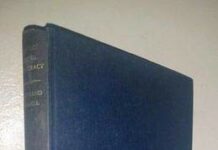
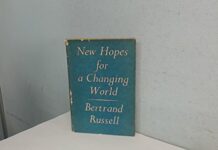
Here for your delectation is the SPECTACULAR AND RARE——————THE AUTOBIOGRAPHY OF BERTRAND RUSSELL 1914-1944 …….Bertrand Arthur William Russell, 3rd Earl Russell OM FRS[55] (/ˈrʌsəl/; 18 May 1872 – 2 February 1970) was a British philosopher, logician, mathematician, historian, writer, social critic and political activist. At various points in his life he considered himself a liberal, a socialist, and a pacifist, but he also admitted that he had never been any of these in any profound sense. He was born in Monmouthshire into one of the most prominent aristocratic families in Britain. In the early 20th century, Russell led the British “revolt against idealism”. He is considered one of the founders of analytic philosophy along with his predecessor Gottlob Frege, colleague G. E. Moore, and his protégé Ludwig Wittgenstein. He is widely held to be one of the 20th century’s premier logicians. With A. N. Whitehead he wrote Principia Mathematica, an attempt to create a logical basis for mathematics. His philosophical essay “On Denoting” has been considered a “paradigm of philosophy”. His work has had a considerable influence on logic, mathematics, set theory, linguistics, artificial intelligence, cognitive science, computer science (see type theory and type system), and philosophy, especially the philosophy of language……..PLUS—-there are L-O-A-D-S of PHOTOS!!…..This is the hardcover stated LITTLE FIRST AMERICAN EDITION FROM 1968. Other than a couple of tears on the dj, both the cover and the book are in excellent condition. There are no rips, tears, markings, etc.—and the pages and binding are tight (see photo). **Note: All books listed as FIRST EDITIONS are stated by the publisher in words or number lines–or–only stated editions that include only the publisher and publication date. Check my feedback to see that I sell exactly as I describe. So bid now for this magnificent, impossible-to-find AUTOBIOGRAPHY COLLECTIBLE.
User’s Reviews
Reviews from Amazon users which were colected at the time this book was published on the website:
⭐One of the best authors writing against nuclear weapons
⭐Well… There are not many people like Bertrand Russell. It makes sense to read other authors about him as well. Sir Robert Skidelsky among other. But personal recollection of things important in his life written by Bertrand Russel himself is priceless.
⭐This is a classic; a must read for philosophy lovers. This book together with The History of Western Philosophy provide more than an introduction to what Russell calls : “Philosophy, the bridge between Science and Theology”.
⭐Bertrand Arthur William Russell (1872-1970) was a British philosopher, logician, mathematician, and social critic, who also won the Nobel Prize for Literature in 1950; the other volumes of his autobiography are
⭐and
⭐. He wrote in the Preface of this 1969 book, “This book is to be published while the great issues that now divide the world remain undecided… It is likely that I shall die before the issue is decided… I have done what I could to add my small weight in an attempt to tip the balance on the side of hope, but it has been a puny effort against vast forces. May others succeed where my generation failed.” (Pg. xi)When a plane he was riding in touched down on the water, and nineteen passengers in the non-smoking compartment were killed, he observed, “I had told a friend at Oslo who was finding me a place that he must find me a place where I could smoke, remarking jocularly, ‘If I cannot smoke, I shall die.’ Unexpectedly, this turned out to be true. All those in the smoking compartment got out by the emergency exit window…” At his hotel, a sarcastic religious telephone caller asked him, “‘When you were in the water, did you not think of mysticism and logic?’ ‘No,’ I said.’ ‘What did you think of ?’ the voice persisted. ‘I thought the water was cold,’ I said and put down the receiver.” (Pg. 11-12) He added, “I was astonished by the commotion caused by my part in this adventure. Every phase of it was exaggerated. I had swum about one hundred yards, but I could not persuade people that I had not swum miles.” (Pg. 13)He laments, “I got into trouble with a passage at the tail end of my last Columbia lecture. In this passage, I said that what the world needs is ‘love, Christian love, or compassion.’ The result of my use of the word ‘Christian’ was a deluge of letters from freethinkers deploring my adoption of orthodoxy, and from Christians welcoming me to the fold… I had thought it obvious that, when I spoke of CHRISTIAN love, I put in the adjective ‘Christian’ to distinguish it from sexual love, and I should certainly have supposed that the context made this completely clear.” (Pg. 24-25)During a visit to Greece, he said, “I found myself in a little church belonging to the days when Greece was part of the Byzantine Empire. To my astonishment, I felt more at home in this little church than I did in the Parthenon or in any of the other Greek buildings of pagan times. I realized that the Christian outlook had a firmer hold upon me than I had imagined. The hold was not upon my beliefs, but upon my feeling. It seemed to me that where the Greeks differed from the modern world it was chiefly through the absence of a sense of sin, and I realized with some astonishment that I, myself, am powerfully affected by this sense in my feelings though not in my beliefs.” (Pg. 84-85)He recalls, “Towards the end of July 1960 I received my first visit from a young American called Ralph Schoenman… I found him bursting with energy and teeming with ideas, and intelligent, if inexperienced and a little doctrinaire… I happened to be approved of by him and, in turn, to approve of what he was then working for… He was very keen to start a movement of civil disobedience that might grow into a mass movement of general opposition to governmental nuclear policies so strong as to force its opinions upon the Government directly.” (Pg. 149-150) [It should be noted that Russell in 1970 broke with Schoenman, who has since been accused to manipulating Russell into supporting an unofficial Vietnam war crimes tribunal, etc.]He mentions a letter from Lord Gladwyn which “advocates advancing my proposals in the House of Lords ‘where they could be subjected to intelligent scrutiny.’ I refrained, in my reply, from remarking that on the occasions where I had advanced proposals in the House of Lords, I had never perceived that my audience, with a few exceptions, showed any peculiar degree of intelligence—but perhaps the general level has risen since the advent of Lord Gladwyn.”Russell was one of the greatest intellectuals and public figures of the 20th century; his story is essential reading for anyone interested in philosophy, mathematics, politics, and modern history. (Pg. 231-232)
⭐Bertrand Arthur William Russell (1872-1970) was a British philosopher, logician, mathematician, and social critic, who also won the Nobel Prize for Literature in 1950; the other volumes of his autobiography are
⭐and
⭐. He begins this 1956 book by stating, “The period from 1910 to 1914 was a time of transition. My life before 1910 and my life after 1914 was as sharply separated as Faust’s life before and after he met Mephistopheles. I underwent a process of rejuvenation, inaugurated by Ottoline Morrell and continued by the War… it shook me out of my prejudices and made me think afresh on a number of fundamental questions. It also provided me with a new kind of activity, for which I did not feel the staleness that beset me whenever I tried to return to mathematical logic.” (Pg. 3)He admits, “Throughout my life I have longed to feel that oneness with large bodies of human beings that is experienced by the members of enthusiastic crowds. The longing has often been strong enough to lead me into self-deception. I have imagined myself in turn a Liberal, a Socialist, or a Pacifist, but I have never been any of these things, in any profound sense. Always the sceptical intellect, when I have most wished it silent, has whispered doubts to me, has cut me off from the facile enthusiasms of others, and has transported me to a desolate solitude.” (Pg. 35)He wrote in a 1916 letter, “I wrote a lot of stuff about Theory of Knowledge, which [Ludwig] Wittgenstein criticized with the greatest severity. His criticism, tho’ I don’t think you realized it at the time, was an event of first-rate importance in my life, and affected everything I have done since. I saw he was right, and I saw that I could not hope ever again to do fundamental work in philosophy… Wittgenstein persuaded me that what wanted doing in logic was too difficult for me… So I want to work quietly, and I feel more at peace as regards work than I have ever done since Wittgenstein’s onslaught.” (Pg. 66-67)While recovering from a serious illness in China, he mused, “Lying in my bed feeling that I was not going to die was surprisingly delightful… I discovered… that life was infinitely sweet to me… there came heavy rains bringing the delicious smell of damp earth through the windows, and I used to think how dreadful it would have been to have never smelt that smell again… I have known ever since that at bottom I am glad to be alive. Most people, no doubt, always know this, but I did not.” (Pg. 188)He records wryly, “The Japanese journalists were continually worrying Dora [his wife] … At last she became a little curt with them, so they caused the Japanese newspapers to say that I was dead. This news was forwarded by mail… It provided me with the pleasure of reading my obituary notices, which I had always desired without expecting my wishes to be fulfilled.” (Pg. 189)Of his
⭐, he states, “I was sometimes accused by reviewers of writing not a true history but a biased account of the events that I arbitrarily chose to write of. But to my mind, a man without a bias cannot write interesting history—indeed, if such a man exists… I think the best that can be done with a large-scale history is to admit one’s bias and for dissatisfied readers to look for other writers to express an opposite bias. Which bias is nearer to the truth must be left to posterity.” (Pg. 340-341)Russell was one of the greatest intellectuals and public figures of the 20th century; his story is essential reading for anyone interested in philosophy, mathematics, politics, and modern history.
Keywords
Free Download The Autobiography of Bertrand Russell. 1914-1944 in PDF format
The Autobiography of Bertrand Russell. 1914-1944 PDF Free Download
Download The Autobiography of Bertrand Russell. 1914-1944 1956 PDF Free
The Autobiography of Bertrand Russell. 1914-1944 1956 PDF Free Download
Download The Autobiography of Bertrand Russell. 1914-1944 PDF
Free Download Ebook The Autobiography of Bertrand Russell. 1914-1944