Ebook Info
- Published: 2013
- Number of pages: 718 pages
- Format: PDF
- File Size: 13.25 MB
- Authors: John Hemming
Description
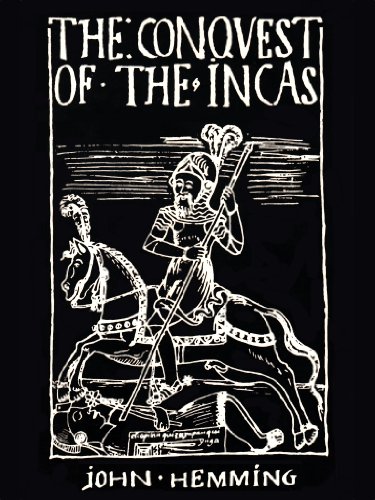
The Conquest of the Incas, John Hemming’s masterly and highly acclaimed account of one of the most exciting conquests known to history, has never been surpassed.From the first small band of Spanish adventurers to enter the mighty Inca empire to the execution of the last Inca forty years later, it is the story of bloodshed, infamy, rebellion and extermination, told as convincingly as if it happened yesterday. It also tells the social impact of the conquest, on ordinary Peruvians forced to work for Spanish masters or in hellish silver and mercury mines, on change of religion and government, and how survivors of the Inca elite reacted to the new order.FULLY REVISED AND UPDATED EBOOK EDITION FOR 2012This 2012 e-book edition includes an extensive revision and update of the text, bibliography, notes and other end-material, to report the latest theories and discoveries. It also has a new appendix about recent finds of Inca ruins in Vilcabamba beyond Machu Picchu.A must-read book for anyone considering a trip to Peru or wanting to know more about the final days of the Inca empire.PRAISE FOR THE CONQUEST OF THE INCAS”The Conquest of the Incas is an extraordinary book. In it, rigorous historical research and profound analysis combine with stylistic elegance to produce a work that conveys to us, in all its richness and diversity, the tragic and fabulous history of the Inca realm; and it is as delightful to read as the best novels.”- Mario Vargas Llosa, Peruvian, Nobel Laureate in Literature”Simply put, The Conquest of the Incas by John Hemming is the bible for historians and archaeologists studying the final days of the Inca. There is no other book which is even in the same class. For South American scholars, visitors to Peru, or any adventurer, it is an unmatched must-read book. The publication of a new e-version insures that it will continue to inspire readers well into the future.”- Professor Brian S. Bauer, University of Illinois at Chicago, leading Inca archaeologist”It is distinguished by an extraordinary empathy, a feeling of one’s way into the minds of the 16th-century Spaniards and Indians… it seizes hold of the imagination. It tells a dirty story. It makes you wonder why. It should be read.”- John Leonard, New York Times”It is a delight to praise a book of this quality which combines careful scholarship with sparkling narrative skill… his works brims with fresh facts and insights.”- Philip Magnus, The Sunday Times”A superbly vivid history distinguished by formidable scholarship, uncluttered language, a graphic sense of the craggy or desolate terrain in which the tragic combat took place.”- Dennis Potter, The Times”A mountain of a book… but there is nothing arduous about the reading of it: the hard work has all been done by John Hemming. It is a superb work of narrative history…”- Antonia Fraser, Financial Times”To read Hemming’s Conquest was to be taken by a tireless traveler, scholar and expert guide… through the deserts, mountains and jungles in which the tragic conflict raged. Every description… rang with the authority of one who had spent time there and read everything which both sides had to say.”- Ronald Wright, Times Literary Supplement
User’s Reviews
Reviews from Amazon users which were colected at the time this book was published on the website:
⭐This book is very interesting, but I read it with others at the same time.Time has passed and I have found that in this book there is a white Page, then I cannot read it.This book has to be changed.I cannot write directly to client service. Please I need my request solved.Walter Saavedra.
⭐In the chapter in this book entitled `The Elimination of the Incas’ the belief of the Spanish administrator Francisco de Toledo that any remnants of the Inca empire must be eliminated is based on his view that the Incas’ right to rule Peru was no more justified that that of the Spaniards. And as the author describes in vivid detail, Toledo goes on to finish off any leftovers of Inca “enclaves” with great zeal and efficiency. Toledo proved himself to be quite adept and instigating mass murder or what is now called genocide, as the study of this chapter readily reveals. Toledo was of course correct in believing in the equivalence between Spaniards and Incas with respect to their status as rightful rulers of Peru. Neither had such a right, and both groups engaged in behavior towards the native populations of Peru in a manner that appears like they were competing for the status of who is the most evil. Both Incas and Spaniards had an official religion that they represented, with that of the Incas being tied more to natural objects such as the sun, while that of the Spaniards to an institution that had shown itself to be capable of sustained brutality throughout its history. One noted difference between the Spaniards and the Incas is the keeping of written records, and the history delineated in this book could not have been accomplished if the Spaniards had not done this in fairly meticulous detail. The book is long but highly interesting, and even more so for readers, such as the reviewer, who have visited Peru and are curious about its history, with enough details that cannot be obtained by tour guides. And in that regard, such readers may find that the historical picture given by such guides is sometimes at odds with what is reported in this book. The author makes a conscious effort to refute the notion that the Incas did not resist Spanish conquest, and also addresses the “legend of Spanish atrocities” as he puts it. The book sometimes reads like a story rather than one of history, but this does not detract from the richness of information on each page and the overall quality of presentation. The participants of the conquest, both Inca and Spanish, are sometimes described as having intentions and emotions that would be impossible to verify however. It is difficult for historians in general to refrain from imputing their own attitudes or those of their culture to those of others, and this author is no different. From a study of the book it is fair to say that gold and religion were the driving forces behind the conquest. It seems that greed and the lust for evangelizing use similar strategies, and moral judgments and empathy are suspended during their execution. The author brings out several cases however where conscience apparently gnawed at some Spaniards of clerical persuasions both in Peru and back in Spain, and there were many attempts to arrest the attempts to enslave native populations and exact unreasonable tribute. None of these pangs of conscience however were of the degree that would instigate any official, whether religious or governmental to advocate the complete withdrawal from Peru.Readers interested in the military tactics and strategies used by the conquistadors will find ample food for thought in this book. From studying these, it is apparent that the conquest was not a cake-walk, even though from their use of horses and superior weaponry by the Spaniards it might appear that the fighting was definitely one-sided. It is also interesting to learn, but not surprising, that some of the Indian populations allied themselves with the Spaniards to get rid of the Incas. At the time that the Spaniards entered the Inca territories, civil strife was tearing at the Inca empire, and the Spaniards took full advantage of the resultant disorganization and decimation. This and the willingness of the Indian populations to fight against the Incas set the fate of this empire, taking only about a decade to do so.
⭐Very readable, scholarly, and balanced.
⭐This very readable book told the incredible story of the Spanish conquest of the Incas, 168 Spaniards with horses who defeated several Inca armies of 40,000 soldiers each. The book never explicitly acknowledges the sad ending, but doesn’t shy away from describing Spanish brutality toward the Indians and the Inca, and implicitly admits the hypocrisy of the Spanish/European theory that they were bringing Christianity to the Indians for their salvation. Only the most naive of 21st century people could believe that the Spanish were really concerned about the souls of the Indians, when all they seemed to do was loot Inca treasure and melt it down for their own gain. The only defense which seems at all plausible is the notion that the superior technology of the Spanish (horses, stirrups, steel weaponry and some arquebuses and cannons) simply overwhlemed the Inca armies and leaders, along with their lack of knowledge that Pizarro’s little band was just the vanguard for an enormous number of rapacious invaders. The long history of inhumanity exemplified by the Spanish to the Incas didn’t start or end with them. The Incas themselves were conquerors, and none too kind to the conquered either, although not on the scale of the Europeans. Is it worth imagining what the Incas could have done had they had more than 100 years to expand and “civilize” the Americas? Probably not, but their culture seemed poised to bring stability to a large region of South America. Perhaps if they had reached Central America earlier, they could have protected their society. It has only been in the last 100 years or so that the Peruvian people have been able to realize what they lost and what the Spanish invasion cost them. 1821 was an opportunity for the native people to overcome their years of enslavement, and they are making the most of it now. Congratulations to them on their efforts to document the Quecha society at the heart of their culture.
⭐If a reader wants to dig deeply into this fascinating historic topic, this has to be the book to read. Hemming goes into as much detail as possible, considering the evidence available. For the most part, we must rely on the Spanish perspective of what happened during the Conquest because the Incas had no written language. Thus, the major challenge for Hemming was to provide as objective an accounting of the events as possible. I believe he accomplished this, evidenced, for example, by his clear demonstration that the Spanish conquistadors could not have pulled off their goal without considerable assistance from indigenous groups that did not feel a sense of allegiance to the dominating Incas. I still must find what the best history of the Conquest is in Spanish – having that will give even greater balance to the story.
⭐This was an exceptionally well-written and thorough treatment of the Spanish Conquest. I read it BEFORE and then again AFTER a trip to Peru. If you are considering a trip like ours to Lima, Machu Picchu, Cuzco, and Lake Titicaca I strongly urge you to read this book. The background it provided was essential to understanding a lot of what we did and saw and enhanced the trip after our return by rereading it. In combination with “1491” and “1493” it provides a solid foundation for understanding the effect of European empire-building on the west.
⭐Had I known this was a busted-ass library book, I would have bought from a more reputable seller.I will not make that mistake again.
⭐To tell the truth I have only read 7% of this book so far, the details are so depressing I am having trouble continuing; the behaviour of the conquistadors is utterly unedifying with nothing noble about it at all; they were just opportunistic thugs with a lust for gold using a cover story of bringing Christianity to the masses. And the Incas were so stupid! OK, the conquistadors arrived at a time of maximum internal strife but the Incas missed so many opportunities to deal with this existential threat that to a degree they deserved what they got. Sadly, this behaviour of willfully exploiting other human societies continues to this day leaving not much hope that we are maturing as a species.
⭐I have used world of books before and expect nothing but the best in quality and value from them Because that is what they have maintained. The book i bought, Conquest of the Incas was a present and the copy looked brand new. Needless to say the recipient was delighted. Thankyou *****+**
⭐This book, first published 40 years ago, but revised and updated by the author for this new 2012 edition, has always been acknowledged as the definitive work on the collapse of the Inca empire. It is wonderfully readable, wearing its immense scholarship lightly and bringing the period magically back to life. The book is required reading for those with any interest in the region or the period.It is also worth noting that the e-book is beautifully executed; the maps, for example, which are often rendered virtually unreadable by the digitisation process, are as good as on the printed page. I cannot recommend it highly enough.
⭐Fascinating historical account of the Conquest. Clear view of the actions and motivations of both “sides”.
⭐Fantastic insight into the INCA societies. John hemming is a master of research and detailed but well presented information making this fascinating reading. Really enjoyed it.
Keywords
Free Download The Conquest of the Incas 2012 Edition in PDF format
The Conquest of the Incas 2012 Edition PDF Free Download
Download The Conquest of the Incas 2012 Edition 2013 PDF Free
The Conquest of the Incas 2012 Edition 2013 PDF Free Download
Download The Conquest of the Incas 2012 Edition PDF
Free Download Ebook The Conquest of the Incas 2012 Edition