

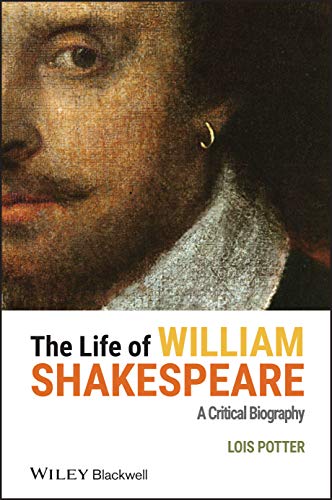
Ebook Info
- Published: 2012
- Number of pages: 512 pages
- Format: PDF
- File Size: 2.97 MB
- Authors: Lois Potter
Description
The Life of William Shakespeare is a fascinating and wide-ranging exploration of Shakespeare’s life and works focusing on oftern neglected literary and historical contexts: what Shakespeare read, who he worked with as an author and an actor, and how these various collaborations may have affected his writing. Written by an eminent Shakespearean scholar and experienced theatre reviewer Pays particular attention to Shakespeare’s theatrical contemporaries and the ways in which they influenced his writing Offers an intriguing account of the life and work of the great poet-dramatist structured around the idea of memory Explores often neglected literary and historical contexts that illuminate Shakespeare’s life and works
User’s Reviews
Editorial Reviews: Review “Two of the Mighty dead have been brought back to life in exemplary fashion: Shakespeare in Lois Potter’s The Life of William Shakespeare: A Critical Biography, which very cleverly uses expert theatre-knowledge as a way of making her enigmatic subject seem plausibly substantial; and Keats in Nicholas Roe’s John Keats: A New Life, which puts the poet properly in his place.” (The Guardian, 24 November 2012)“This study will have wide appeal to readers who wish to expand their appreciation of the works of William Shakespeare. Summing Up: Highly recommended. Upper-division undergraduates through faculty; general readers.” (Choice, 1 November 2012)“These form the narrative spine of this richly suggestive, undogmatic book in which Lois Potter ranges across the entire canon and the period that helped produce it.” (Around the Globe, 1 October 2012)“Lois Potter’s Life of William Shakespeare, ranks with the most distinguished examples of its kind … Her achievement lies in her catholicity, her simultaneous commitment to matters personal, historical, theatrical, literary, cultural. She exhibits an absolute command of the available facts, a lifetime’s acquaintance with the works gained in teaching and playgoing, an unparalleled familiarity with theatrical history from 1567 to the present, and a talent for connecting the fictional and the actual.” (Times Literary Supplement, 10 August 2012) Review “Lois Potter’s book provides a delightful guide through Shakespeare’s world. A splendid introduction for those new to the facts about Shakespeare’s life, it is also a revelation for anyone all too familiar with them. The Life of William Shakespeare revitalizes old truths by asking questions where none seemed necessary, by filling in new detail, and most of all, by approaching the material from the perspective of a would-be, then practicing and collaborating, player-playwright. Lois Potter’s unique emphasis, on Shakespeare’s imaginative life and the words that fed it, works brilliantly to produce what I would have thought impossible: a really new biography that never thins into mere speculation. Learned, modest, witty and above all smart, the book will be a must-read for anyone who cares about early modern theater.” ―Meredith Skura, Rice University“By keeping her eye on the enduring power of Shakespeare’s writing, Lois Potter manages to gather all the interesting and puzzling questions we have asked about his life into a focused and authentically critical biography. She is adventurous in taking on speculation and counter-speculation but never allows us to confuse conjecture with fact. Richly informative and engagingly written, this book should appeal to general readers as well as to professional Shakespeareans.” ―Edward Pechter, Concordia University“Lois Potter has produced an astonishing, revelatory, fully literary biography. The Life of William Shakespeare is a product of deep reservoirs of historical knowledge, theatrical experience, and critical acumen, all deployed with an extraordinarily sympathetic imagination. Potter adjudicates standing quarrels about the life story with intelligence and dispassion, offers up scintillating new readings of the works, and produces interesting and original observations on every page.” ―Lena Cowen Orlin, Executive Director, Shakespeare Association of America, and Professor of English, Georgetown University“This is not just (just!) a biography of Shakespeare: it is a theatrical biography. It uses Potter’s immense, unrivalled knowledge of things theatrical to draw very logical and frequently original inferences.” ―Laurie Maguire, Oxford University“This is a lively, fresh new introduction to the life of Shakespeare, no mere regurgitating of earlier lives. It reads well. It is judicious, intelligent, coherent, and well documented.” ―David Bevington, University of Chicago From the Inside Flap In this remarkable new biography, distinguished Shakespeare scholar and theater critic Lois Potter explores literary and historical contexts often neglected in other studies, drawing in particular on the idea of the literary personality and on new discoveries about collaboration. She looks at Shakespeare’s possible role models, both real and fictional, with particular attention to the people with whom he worked as both author and actor, and considers how these various kinds of collaboration may have affected him. The focus throughout is on Shakespeare’s words and on what he learned about writing for his audiences – which, Potter suggests, were more varied than has been thought. The result is a unique and wide-ranging study of the life and work of the great poet and dramatist. From the Back Cover The Life of WILLIAM SHAKESPEAREIn this remarkable new biography, distinguished Shakespeare scholar and theater critic Lois Potter explores literary and historical contexts often neglected in other studies, drawing in particular on the idea of the literary personality and on new discoveries about collaboration. She looks at Shakespeare’s possible role models, both real and fictional, with particular attention to the people with whom he worked as both author and actor, and considers how these various kinds of collaboration may have affected him. The focus throughout is on Shakespeare’s words and on what he learned about writing for his audiences – which, Potter suggests, were more varied than has been thought. The result is a unique and wide-ranging study of the life and work of the great poet and dramatist. About the Author LOIS POTTER recently retired as Ned B. Allen Chair at the University of Delaware. She has also taught at the Universities of Aberdeen, Leicester, and Paris III-Sorbonne Nouvelle, and at Tsuda College, Tokyo. Her publications include Twelfth Night: Text and Performance (1986), the Arden edition of The Two Noble Kinsmen (1997, 2001), and Shakespeare in Performance: Othello (2002). She is also the editor of two volumes in the Revels History of Drama in English series (1981 and 1984), and has been a frequent reviewer of plays for the Times Literary Supplement, Shakespeare Quarterly, and Shakespeare Bulletin. Read more
Reviews from Amazon users which were colected at the time this book was published on the website:
⭐One of the best biographies of Shakespeare. Avoids too many assumptions and guesses about Shakespeare’s life–a common fault in much Shakespeare biography since the facts of his life are few-Potter focuses on fine readings of the plays and what that can tell us about his life.
⭐An interesting account that contained details not found in other recent biographies–lots of inference and speculation, but well-informed and intriguing speculation.
⭐Perfect. Fast delivery.
⭐This book is encyclopedic in its treatment of Shakespeare. It covers not only the little that contemporaneous records tell us about him, but also discusses his poetry and plays, and the theater of Elizabethan England. This is one case where the publisher’s blurbs do not overstate the overwhelming amount of detail included in this book. The book is chronological, covering each period of his life and his work, but it is so much more. For instance, there are sections that cover things like:· Playwrights of the 1580’s· Shakespeare the actor· Shakespeare’s coat of arms· Satire and satiric drama (as well as other aspects of drama)· The financing of theater companies and theaters, including the Globe theater· A detailed discussion of Shakespeare’s death, his will, and what became of his descendants· Discussions regarding the production of the Shakespeare folios, how the various folio versions changed over time, how his plays have been produced in altered forms both for the stage and for film and TV, and the appropriation of characters he created for derivative modern playsHis poems and each play are discussed. This discussion includes the influence of other poems and plays on his writing, how his individual poems and plays influenced his later works, the influences of history and politics on the creation and presentation of his plays, the nature of the presentation of the plays and their popularity, and much more. The book contains a lot about the history of Elizabethan England, both as background and how it influenced individual plays. The book also goes into detail about Shakespeare’s father, discuses other playwrights such as Christopher Marlow and Ben Jonson, and aspects of Shakespeare’s life such his marriage (and why the wrong name for his wife was recorded in the marriage record), and his relationship with his brothers, sisters and children. There are copious endnotes after each chapter, 31 pages of bibliography, a very useful genealogy chart, an index and 24 black and white illustrations interspersed in the text.The question of the claim that Shakespeare was not the true author of all of the material attributed to him is covered in only one lengthy paragraph, which does not support the contention that someone else wrote what is attributed to Shakespeare. While not specifically addressed, I think that the book provides a lot of evidence that point to the conclusion that William Shakespeare was indeed “Shakespeare”. Professor Potter shows that Shakespeare was a gentleman in the Elizabethan sense of the word (his father was relatively rich (at least while William was a boy), a bailiff (mayor) of Stratford, and William was maternally descended from the noble Arden family), which entitled him to his own coat of arms. This meant that he would have had a good grammar school education, which would have provided him with the ability to read the Latin classics in the original Latin, as well as the overall background to have written what is attributed to him. There is no evidence that Shakespeare traveled outside England and this has led to the charge that he could not have written the plays that take place outside England because he would not have had the knowledge of place that is evident in the plays. However this is refuted by the fact that these plays are based on the prior widely available work of others. Thus, the material in this book does not support the argument that Shakespeare did not write what is attributed to him. However, I am sure that this will not still the controversy surrounding the authorship of all that is attributed to Shakespeare. To a large extent I think that the scope and importance of Shakespeare’s poems and plays makes it difficult for many to believe that a man about which relatively little is known could have authored all this body of work. However, I feel that this book fills in many of the blanks regarding Shakespeare and makes his authorship much more plausible.The level of detail in this book is overwhelming, which is not without its downside. So much is covered that I feel that that the details and the numerous subchapters compromised the narrative flow of the book and made it quite dry, making it a four-star book for me. This will be not problem for those who are looking for this level detail, but the more casual reader may be overwhelmed. This is definitely a five-star book for hardcore Shakespeare lovers and those interested in theater and the history of Elizabethan England.
⭐BOOK REVIEW BOOK REVIEW #27: ” The Life of William Shakespeare ” by Lois PotterBy Lorenzo MarchessiThis book really enlightened me about – The Life of William Shakespeare and was a truly fascinating, wide-ranging exploration and detailed explanation of Shakespeare”s life. It gives mazing insight to what literary and historical contexts of what Shakespeare read, who he worked with as an author and an actor – how these various collaborations may have affected his writing., his persona, his friends and his family.Written by an eminent Shakespearean scholar and experienced theatre reviewer Lois Potter, She pays particular attention and focus to Shakespeare’s theatrical contemporaries of the times – his education, religious upbringing and possible influences of his time growing up – and, of course – how this all influenced his writings.Although written as text book, it reads like a well-researched biography and offers an intriguing account of the life and work of the great poet-dramatist structured around the idea of memory, memories and what empirical data is available on his life.Since very little is known about the Life of William Shakespeare; indeed, it is partly because we know so little about him that his achievements in his ‘afterlife’ have become as important as his achievements during his lifetime.In this remarkable new biography and text, Potter explores what Shakespeare might have remembered, what other people have remembered about his work, and what and why we remember it now. She incudes maps, diagrams – sketches of people and locations where Shakespeare became the man he was.Potter’s critical biography also pays particular attention to literary and historical contexts often neglected in other studies: who Shakespeare worked with as an author and an actor, and how these various kinds of collaboration may have affected his writing. The result is a unique and wide-ranging study of the life and work of the great poet-dramatist. Created the most famous plays in history!More than a remarkable new biography, Lois Potter deeply explores literary and historical contexts often neglected in other studies, drawing in particular on the idea of the literary personality and on new discoveries about collaboration. She looks intensely at Shakespeare’s possible role models, both real and fictional, with particular attention to the people with whom he worked as both author and actor, and considers how these various kinds of collaboration may have affected him.The focus throughout is on Shakespeare’s words and on what he learned about writing for his audiences – which, Potter suggests, were more varied than has been thought. The result is a unique and wide-ranging study of the life and work of the great poet and dramatist.I loved this book because it was easy to read, had an incredible amount of factual references for further research and detailed accounts in a manner that made you wonder what the real man was like.The author, Lois Potter recently retired as Ned B. Allen Chair at the University of Delaware – And taught at the Universities of Aberdeen, Leicester, and Paris III-Sorbonne Nouvelle, and at Tsuda College, Tokyo. She has published Twelfth Night: Text and Performance (1986), the Arden edition of The Two Noble Kinsmen (1997, 2001), and Shakespeare in Performance: Othello (2002). Potter is also the editor of two volumes in the Revels History of Drama in English series (1981 and 1984), and has been a frequent reviewer of plays for the Times Literary Supplement, Shakespeare Quarterly, and Shakespeare Bulletin.From a knowledgeable author – a fine documentation of history and a wonderful insight into the man who grew up and became William Shakespeare! A definite must for al fans of the greatest playwright in history! It was great, fast read….400+ pages!
⭐Biographies of Shakespeare must account for whatever recent discoveries scholars may have revealed, and they usually reflect the prevailing theoretical or critical stances of recent Shakespeare scholarship. This Blackwell Biography, within the perameters of that series, manages to do both of those, and to provide the curious reader with a dependable and enjoyable narrative that sums up what is known and much that is thought–especially about Shakespeare’s life in the theater of his time–that would be useful. It is not as challenging nor exciting a book as Ackroyd’s, for example, and is unlikely to stir controversy–but that latter is a good thing. The tiresome continuation of the “anti-Stratfordian” arguments, in all their preposterous variety, will offer those who wish for it all the excitement (empty, pointless, even malign in some cases) they could ask for. The prose style is modest and the critical comments about the plays and poems are illuminating without usurping the reader’s ability to make judgments on her or his own. On the whole, while this is not the most brilliant work of its kind, it can certainly be given enthusiastic support as a trustworthy and readable introductory study of Shakespeare’s life, and that is a good thing to have available.
⭐Published by Wiley-Blackwell, this is an academic `biography’ of Shakespeare which places the texts in their historicised, intellectual context. If you’re looking for a personal biography of Shakespeare the man then this may well disappoint. There is only sparse evidence for Shakespeare’s life but what little there is, primarily on his early life and retirement to Stratford, is subjected here to Potter’s cool, measured and eminently sensible gaze.This isn’t a hagiographical book and moves away from the idea of Shakespeare as some kind of unique genius, a hangover from the nineteenth-century to which people may still subscribe today. Instead, Potter foregrounds the extent to which Shakespeare’s plays were nearly all collaborations with other writers (Lodge, Greene, Kyd, possibly Marlowe, Jonson), often re-writing known and recognised sources. Writing for the sixteenth century theatre was more akin to being part of the scriptwriting team on a TV series today such as The Killing, The Bridge, The Wire – where the show itself wins accolades but the writers (and directors) of individual episodes are generally unacknowledged. London theatre audiences certainly rushed to see the new show at the Globe, but wouldn’t necessarily have known that it was by Shakespeare.So this is an integrative text with full notes, references and bibliography that summarises well the current general position of Shakespeare in the academy, and is one that I would recommend to undergraduates or even postgraduates wanting a quick and dirty way-in to contemporary Shakespearean studies. Would I also recommend it to non-academics? It’s certainly accessible, elegantly-written, and welcoming to the non-specialist – but if you’re looking for a traditional biography, then this isn’t it.
⭐This is not a biography in the sense of a life story, since too little is known to allow that. Rather events in Shakespeare’s life, in England’s political upheavals and above all in contemporary literature and dramaturgy are linked to the putative dates of the plays and connections drawn or hypothesised.The most successful feature of the book was that in reading about each play as a collaboration with actors, with company, with privy council, with patron, with fellow playwrights and as a response to contemporary events, the excitement of the plays was brought out. Having read the book I find myself looking for the works of Middleton, Kyd and Marlowe and thinking about the characterisation of (e.g.) Falstaff/Oldcastle in new ways.The brief studies of the plays are sometimes too short to say much and I’d recommend the Blackwell Companions to Literature and Culture and Emma Smith’s Oxford University Podcasts for deep literary analysis, but in terms of placing plays into a possible chronology and examining development they may succeed.The times when Potter made guesses into the life of Shakespeare seemed to me least satisfying: speculation about how he might have been perceived in School or the mental state of his family members based on nothing but the need to fill gaps didn’t entirely wash.I enjoyed all of this book, but I was captivated by the close literary biography, not by the nod toward traditional biography.
⭐What we know for certain about Shakespeare’s life is remarkably little, and here are nearly 500 pages to confirm it. But that is not really the point. The back cover of Lois Potter’s critical biography features five endorsements – all from eminent professors. This is clearly a book by an academic that will resonate most strongly in academic circles.Its strength is in its portrait of the world in which the playwright lived – the theater, its actors and Shakespeare’s fellow authors; collaboration features prominently in Ms Potter’s analysis. Less fruitful are the early years where such terms as “possibly,” “it is likely,” “probably,” “may,” “we can conjecture” occur too often for the reader to benefit. The pages of speculation about who might or might not have attended the young William’s christening, complete with details of their place in Warwickshire society, are a tribute to research but fail to enlighten.Scholars will profit from the author’s painstaking work, less dedicated readers would do better to turn to Bill Bryson for a readable biography or to Jude Morgan for a novel which does not distort the sparse known facts and does a decent job of bringing to life the ways and means of Elizabethan theatre.
⭐The number of books about Shakespeare far exceeds the small number of facts we know about his life, and it can sometimes be a daunting task trying to decide which books are worth reading.This is a very comprehensive overview of the times of Shakespeare, paying particular attention to the theatrical and literary world in which he lived. It is unashamedly erudite, and is most certainly an absolutely essential text to anyone starting out on a university course. That’s not to say that only students should read this book: it is packed with far more information than most Shakespeare biographies manage.Written in a clear and non-judgemental tone, it contains a wealth of information about Stratford, Shakespeare’s family and colleagues, the theatrical situation in London, textual differences between versions of the text and the language of the plays themselves. As with all the best Shakespeare biographies an attempt is made to draw a portrait of Shakespeare by painting a backdrop into which the reader must put his or her own understanding of the writer. What sets this book apart is the level of detail that the background takes on.Like Schoenbaum’s
⭐William Shakespeare: A Compact Documentary Life (Oxford Paperbacks)
⭐, it steers clear of fanciful suggestions (Shakespeare’s possible employment in Lancashire in the late 1570s, is given particularly short shrift, for example). The book deals with the facts as they are known, and then discusses legends and rumours from a strictly evidence-based viewpoint.If you have not read any biographies of Shakespeare this is not the place to start (for that I would recommend the eminently readable ones by Peter Ackroyd:
⭐Shakespeare: The Biography
⭐or Bill Bryson:
⭐Shakespeare: The World as a Stage (Eminent Lives)
⭐). Nor is it an in-depth study of the language of the plays –
⭐Shakespeare’s Language
⭐would be the initial place to go for that. But if you already know the general story of Shakespeare’s life and want to increase your understanding of the times and people with whom he lived, then this book is highly recommend.
⭐U.S. theatre critic and lecturer Lois Potter delivers a biography of Shakespeare that has a deceptively simple structure. She intertwines a chronological description of her subject’s life with a chronological description of his work.This approach enables Potter to speculate on how the major events of Shakespeare’s life, the death of his son, the marriage of his daughter etc, influenced the plays and poems he was writing at the time.Since we have surprisingly few concrete facts about William Shakespeare, this approach sheds light on his life and also his work. Inevitably, much of the conclusions she draws remain speculative but her experience in theatre means the speculation is well grounded.The concluding chapter veers dangerously close to diminishing the biograhy’s great subject, implying Shakespeare’s prominence is based on the pure luck of the fact that so much of his work has survived : “As I have already indicated, it is the sheer number of Shakespeare’s surviving plays and poems…that makes them an inexhaustible field of study…”(p439)This is the very opposite of Samuel Johnson’s assertion that if only one couplet of William Shakespeare had come down to us (he chooses “I do all that does become a man/Who dares do more is none” from Macbeth) his reputation would be safe.I suppose the truth, as usual, lies between these two extremes, but certainly I am pleased Potter does not end at this negative note.A short and much more uplifting passage actually finishes this readable and interesting book, celebrating Shakespeares’ writing as a “highest common denominator”.Historical context is never far away and sensible attention is given to collaborators but this rarely detracts from the study of one of world literature’s true greats.
Keywords
Free Download The Life of William Shakespeare: A Critical Biography 1st Edition in PDF format
The Life of William Shakespeare: A Critical Biography 1st Edition PDF Free Download
Download The Life of William Shakespeare: A Critical Biography 1st Edition 2012 PDF Free
The Life of William Shakespeare: A Critical Biography 1st Edition 2012 PDF Free Download
Download The Life of William Shakespeare: A Critical Biography 1st Edition PDF
Free Download Ebook The Life of William Shakespeare: A Critical Biography 1st Edition