Ebook Info
- Published: 2012
- Number of pages: 3192 pages
- Format: PDF
- File Size: 36.57 MB
- Authors: M. H. Abrams
Description
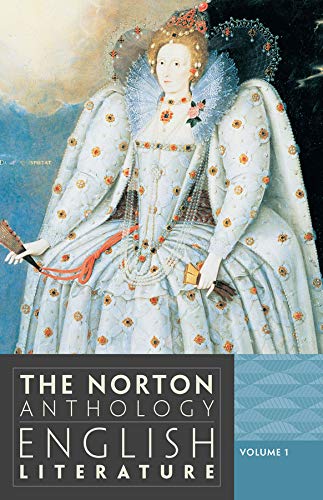
The most-trusted literature anthology of all time, now in its 50th year.The Ninth Edition offers more complete works and more teachable groupings than ever before, the apparatus you trust, and a new, free Supplemental Ebook with more than 1,000 additional texts. Read by more than 8 million students, The Norton Anthology of English Literature sets the standard and remains an unmatched value.The Norton Anthology of English Literature is now available as an interactive ebook, at just a fraction of the print price.
User’s Reviews
Editorial Reviews: About the Author Stephen Greenblatt (Ph.D. Yale) is Cogan University Professor of the Humanities at Harvard University. Also General Editor of The Norton Anthology of English Literature, he is the author of eleven books, including Tyrant, The Rise and Fall of Adam and Eve: The Story that Created Us,The Swerve: How the World Became Modern (winner of the 2011 National Book Award and the 2012 Pulitzer Prize); Shakespeare’s Freedom; Will in the World: How Shakespeare Became Shakespeare; Hamlet in Purgatory; Marvelous Possessions: The Wonder of the New World; Learning to Curse: Essays in Early Modern Culture; and Renaissance Self-Fashioning: From More to Shakespeare. He has edited seven collections of criticism, including Cultural Mobility: A Manifesto, and is a founding coeditor of the journal Representations. His honors include the MLA’s James Russell Lowell Prize, for both Shakespearean Negotiations: The Circulation of Social Energy in Renaissance England and The Swerve, the Sapegno Prize, the Distinguished Humanist Award from the Mellon Foundation, the Wilbur Cross Medal from the Yale University Graduate School, the William Shakespeare Award for Classical Theatre, the Erasmus Institute Prize, two Guggenheim Fellowships, and the Distinguished Teaching Award from the University of California, Berkeley. He was president of the Modern Language Association of America and is a fellow of the American Academy of Arts and Sciences, the American Philosophical Society, and the American Academy of Arts and Letters.Carol T. Christ (Ph.D. Yale) is Professor Emeritus of English at the University of California, Berkeley, and President of Smith College. She is the author of The Finer Optic: The Aesthetic of Particularity and Victorian Poetry and Victorian and Modern Poetics and editor of the Norton Critical Edition of The Mill on the Floss and, with John Jordan, Victorian Literature and the Victorian Visual Imagination. She is the recipient of an NEH Fellowship and a member of the American Academy of Arts and Sciences.Alfred David (Ph.D. Harvard) is Professor of English Emeritus at Indiana University. He is the author of The Strumpet Muse: Art and Morals in Chaucer’s Poetry, and editor of the “Romaunt of the Rose” in The Riverside Chaucer and, with George B. Pace, “Chaucer’s Minor Poems I” in The Variorum Chaucer. He is the recipient of a Sheldon Travelling Fellowship and Guggenheim and Fulbright Research fellowships and past president of the New Chaucer Society.Barbara K. Lewalski (Ph.D. Chicago) is William R. Kenan Professor of English and of History and Literature at Harvard University. She is the recipient of the MLA’s James Russell Lowell Prize for Protestant Poetics and the Seventeenth-Century Religious Lyric and the Explicator Prize for Donne’s Anniversaries and the Poetry of Praise. Her other books include Paradise Lost and the Rhetoric of Literary Forms, Writing Women in Jacobean England, Milton: A Critical Biography, and The Polemics and Poems of Rachel Speght (editor). Lewalski is the recipient of Guggenheim and NEH Senior fellowships and is a fellow of the American Academy of Arts and Sciences and Honored Scholar of the Milton Society.Lawrence Lipking (Ph.D. Cornell) is Professor of English and Chester D. Tripp Professor of Humanities at Northwestern University. He received the Phi Beta Kappa Christian Gauss Prize for The Life of the Poet. He is also the author of The Ordering of the Arts in Eighteenth-Century England; Abandoned Women and Poetic Tradition; and Samuel Johnson: The Life of an Author and editor of High Romantic Argument. Lipking is the recipient of Guggenheim, ACLS, Newberry Library, Wilson International Center for Scholars, and NEH Senior fellowships and is a fellow of the American Academy of Arts and Sciences.George M. Logan (Ph.D. Harvard) is a Senior Fellow of Massey College in the University of Toronto and the James Cappon Professor of English Emeritus at Queen’s University, Canada, where he was head of the English Department for nine years and an award-winning teacher. He is the author of The Meaning of More’s Utopia and principal editor of the Cambridge edition of Utopia (Latin and English), editor of the Norton Critical Edition of Utopia (3rd edition), More’s History of King Richard the Third, and The Cambridge Companion to Thomas More, and coeditor, with Gordon Teskey, of Unfolded Tales: Essays on Renaissance Romance; he has also written a history of the Indiana University School of Music.Deidre Shauna Lynch is Chancellor Jackman Professor and Associate Professor of English at the University of Toronto. She is the author of The Economy of Character, which was awarded the MLA’s Prize for a First Book, and editor of Janeites: Austen’s Disciples and Devotees and, with William B. Warner, Cultural Institutions of the Novel. She is also an editor of The Norton Anthology of English Literature. She is the recipient of fellowships from the National Humanities Center and the John Simon Guggenheim Memorial Foundation, of the State University of New York Chancellor’s Award for Excellence in Teaching, and of the Northeast Association of Graduate Schools’ Graduate Faculty Teaching Award.Katharine Eisaman Maus (Ph.D. Johns Hopkins) is James Branch Cabell Professor of English at the University of Virginia. She is the author of Being and Having in Shakespeare; Inwardness and Theater in the English Renaissance; and Ben Jonson and the Roman Frame of Mind; editor of a volume of Renaissance tragedies; and coeditor of English Renaissance Drama: A Norton Anthology, The Norton Anthology of English Literature, and a collection of criticism on seventeenth-century English poetry. She has been awarded Guggenheim, Leverhulme, NEH, and ACLS fellowships, and the Roland Bainton Prize for Inwardness and Theater.James Noggle (Ph.D. UC Berkeley) is Professor of English at Wellesley College. He is author of The Skeptical Sublime: Aesthetic Ideology in Pope and the Tory Satirists; his second book, The Temporality of Taste in Eighteenth-Century British Writing, is forthcoming from Oxford. He is the recipient of fellowships from the American Council of Learned Societies and the American Philosophical Society.Jahan Ramazani (Ph.D. Yale and M.Phil. Oxford) is Edgar F. Shannon Professor of English at the University of Virginia, previously the Mayo NEH Distinguished Teaching Professor. He is the author of Transnational Poetics, which won the Harry Levin Prize of the American Comparative Literature Association, and of Poetry of Mourning: The Modern Elegy from Hardy to Heaney, which was a finalist for the National Book Critics Circle Award. He is also the author of The Hybrid Muse: Postcolonial Poetry in English and Yeats and the Poetry of Death: Elegy, Self-Elegy, and the Sublime. He is coeditor of The Norton Anthology of Modern and Contemporary Poetry. Ramazani is the recipient of a Guggenheim Fellowship, a National Endowment for the Humanities Fellowship, a Rhodes Scholarship, and the William Riley Parker Prize of the Modern Language Association.Catherine Robson (Ph.D. UC Berkeley) is Associate Professor of English at New York University and a faculty member of the Dickens Project. She is the author of Men in Wonderland: The Lost Girlhood of the Victorian Gentleman and Heart Beats: Everyday Life and the Memorized Poem (forthcoming), and has received fellowships from the NEH, the Guggenheim Foundation, the University of California, and the Wissenschaftskolleg zu Berlin.James Simpson (Ph.D. Cambridge) is Douglas P. and Katherine B. Loker Professor of English at Harvard University and former Chair of Medieval and Renaissance English at the University of Cambridge. An Honorary Fellow of the Australian Academy of the Humanities, he is the author of Piers Plowman: An Introduction to the B-Text (1990); Sciences and the Self in Medieval Poetry (1995); Reform and Cultural Revolution, 1350–1547; Volume 2 of The Oxford English Literary History (2002); Burning to Read: English Fundamentalism and Its Reformation Opponents (2007); and Under the Hammer: Iconoclasm in the Anglo-American Tradition (2010).Jon Stallworthy (M.A. and B.Litt. Oxford) is Senior Research Fellow at Wolfson College of Oxford University, where he is an Emeritus Professor of English Literature. He is also former John Wendell Anderson Professor at Cornell, where he taught after a career at Oxford University Press. His biography of Wilfred Owen won the Duff Cooper Memorial Prize, the W. H. Smith Literary Award, and the E. M. Forster Award of the American Academy of Arts and Letters. His biography of Louis MacNeice won the Southern Arts Literary Prize. He is also the author of Rounding the Horn: Collected Poems and Singing School: The Making of a Poet, and editor of the definitive edition of Wilfred Owen’s poetry, The Complete Poems and Fragments; The Penguin Book of Love Poetry; The Oxford Book of War Poetry; and coeditor of The Norton Anthology of Poetry. Stallworthy has received a Guggenheim Fellowship and is a Fellow of the British Academy and the Royal Society of Literature.Jack Stillinger (Ph.D. Harvard) is Center for Advanced Study Professor of English Emeritus at the University of Illinois. He is the author of The Hoodwinking of Madeline and Other Essays on Keats’s Poems, The Texts of Keats’s Poems, the standard edition of The Poems of John Keats; Multiple Authorship and the Myth of Solitary Genius; Coleridge and Textual Instability; and Reading “The Eve of St. Agnes.” He is the recipient of Guggenheim and Woodrow Wilson fellowships and is a fellow of the American Academy of Arts and Sciences.M. H. Abrams (1912―2015) was Class of 1916 Professor of English, Emeritus at Cornell University. He received the Phi Beta Kappa Christian Gauss Prize for The Mirror and the Lamp and the MLA’s James Russell Lowell Prize for Natural Supernaturalism. He is also the author of The Milk of Paradise, A Glossary of Literary Terms, The Correspondent Breeze, and Doing Things with Texts. He is the recipient of Guggenheim, Ford Foundation, and Rockefeller Postwar fellowships, the Award in Humanistic Studies from the Academy of Arts and Sciences (1984), the Distinguished Scholar Award by the Keats-Shelley Society (1987), and the Award for Literature by the American Academy of Arts and Letters (1990). In 1999 The Mirror and the Lamp was ranked twenty-fifth among the Modern Library’s “100 best nonfiction books written in English during the twentieth century.”
Reviews from Amazon users which were colected at the time this book was published on the website:
⭐Norton Anthology is usually never under $50 even if it’s used or secondhand. This was a great condition copy and for an incredible price.
⭐This product arrived in perfect condition. The Professor changed the editions for class a few times creating a rush. The seller delivered promptly. The is a three volume set that makes holding the text book easier. I highly recommend this seller. Worth ten stars. Thank you!
⭐(Please note: this is a review of the edition, not of English Literature – or the seller of my copy.)There are some advantages to this 9th ed over the 8th. The Anglo-Saxon selection is greatly improved: the translations now are all in verse, and give much more sense of the originals as poetry. Some changes are an ambiguous blessing: we now get the whole of Utopia, which sounds like a good idea, but is more than most teachers will want to include in a survey class (so now we have to do our own selections instead). Other changes are a big mistake, like the new text of Margery Kempe – haphazardly semi-modernized, and really unusable.The best thing, apart from the Anglo-Saxon selection, is the new font, which is bigger and clearer than that of the 8th ed. For choice of texts, I’m inclined to prefer the 6th ed., which included more from the Canterbury Tales (the beautiful Franklin’s Tale), and the 7th ed., which included some strange and wonderful Ranter writing – very briefly fashionable in academia.
⭐Honestly, these Amazon questions about this book are kind of irrelevant because this is a collection of early British literature; there are a lot of stories in this set. I used this as my text for Intro to Early English Literature. We read a lot of stories. I plan on keeping this book set because I am an English Major, and it’s great for reference and historical anecdotes. I have had to purchase Norton Anthologies before and my biggest complaint was how big and bulky they are. I would have to carry it to class every day, but not ever need more than 30 pages in any one lecture. That’s a lot of weight to my backpack, and I’m not a young student. I’ve seen students carry multiple large copies around for different English classes! This version though came broken up into three different sections, and I liked it much better because then I could just take the necessary volume to class and not lug around as much weight.
⭐Like other reviewers, I received a single volume rather than the expected multi-volume edition. When I began the return, like others here, I realized that Norton publishes both the multi-volume edition (alluded to in the title description) and the single-volume phone-book edition and the vendor sent the single edition. While it’s the same content, that should be made explicit in the title.
⭐okay, so i was a little hesitant getting this book as it comes in as a set of three, Vol A, B, and Ci was worried that it would be different that the one whole book, revised or edited in any way.now, it does have a different ISBN number than the whole book does, that is not an issue here.it wasnt, if anything i love that its separated, it means when i go to class my book is lighter and i have less weight to carry around.the book came in on time, packaged nicely for such a heavy book.i have had this book for over a month now and it happened to be cheaper than the whole book and man did i luck outits great. i would definitely recommend, and buy from them again.
⭐I purchased the Kindle Edition of Volume One, and it looks like it mirrors the book exactly. The format is not exactly suited to tablet screens, but at least it doesn’t split the page into segments to fit. The pages in the kindle book seem to match up with the physical book. It has everything that it is supposed to include, and it is a pretty good price for the set. If you buy the physical set new from Amazon; however, I think they might offer the Kindle Matchbook option. I’m not sure about that, but it could be a good deal.
⭐Like most other reviewers here, I had to buy this book for my English Lit. class. I found the book itself to be an excellent collection of British literature and a gem for anyone interested in the subject. The price (when I bought it at least) is far better then you can find anywhere else and it arrived within the promised time frame and in the condition that was represented to me. However, this book is extremely thick and heavy, with over three thousand pages stuffed between its covers, so be prepared to drag its weight around if you have to carry it to class daily.
⭐Excellent. It seems pricey, but not when you see how many books and authors are included. It’s great for Uni work and much better than buying all of the individual works. The covers are quite thin and therefore a bit fragile for such a big book, especially if you use it often, so it may be worth covering it to keep it in better condition. Again, if using for work or uni, the online access (via password inside the cover) is really useful for understanding the texts better, with quizzes, more detailed information, and revision resources. The whole book is quite bulky, so I recommend this ABC version, as it’s split into 3 volumes. Much easier to carry around and read comfortably.
⭐This was a perfectly good book, with many, good texts in it, including the entirety of Paradise Lost, and also the Canterbury Tales, and other fascinating works. The only downside is that they didn’t get the best translations. The medieval texts, are kept with the older wording, where every word has to have a footnote in order to be understood. Shakespeare is easily understandable, but other texts like “By housbondrie, of swich as God hir sente, / She foond hirself and eek hire doghtren two.” This is really hard to understand, and more research is then needed on a modern translation on the Internet. But other than that the book was really helpful on my literature course and came within the alloted time. It’s worth having these books on your bookshelves.
⭐I only bought this as a requirement for studies.
⭐as advertised.
⭐I thought it was divided into 3 volumes (A,B and C) but it’s a complete edition. Still very satisfied of my purchase: it arrived quickly and in perfect conditions.
Keywords
Free Download The Norton Anthology of English Literature (Ninth Edition) (Vol. 1) in PDF format
The Norton Anthology of English Literature (Ninth Edition) (Vol. 1) PDF Free Download
Download The Norton Anthology of English Literature (Ninth Edition) (Vol. 1) 2012 PDF Free
The Norton Anthology of English Literature (Ninth Edition) (Vol. 1) 2012 PDF Free Download
Download The Norton Anthology of English Literature (Ninth Edition) (Vol. 1) PDF
Free Download Ebook The Norton Anthology of English Literature (Ninth Edition) (Vol. 1)