Ebook Info
- Published: 2012
- Number of pages: 720 pages
- Format: PDF
- File Size: 5.22 MB
- Authors: Oskari Kuusela
Description
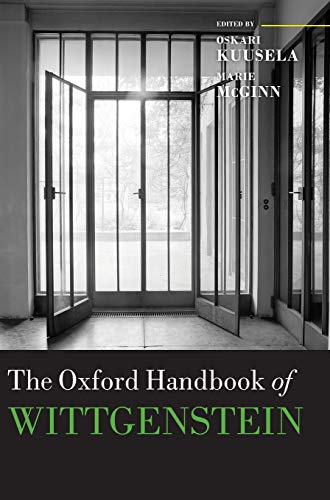
Since the middle of the 20th century Ludwig Wittgenstein has been an exceptionally influential and controversial figure wherever philosophy is studied. This is the most comprehensive volume ever published on Wittgenstein: thirty-five leading scholars explore the whole range of his thought, offering critical engagement and original interpretation, and tracing his philosophical development. Topics discussed include logic and mathematics, language and mind, epistemology, philosophical methodology, religion, ethics, and aesthetics. Wittgenstein’s relation to other founders of analytic philosophy such as Gottlob Frege, Bertrand Russell, and G. E. Moore is explored. This Handbook is the place to look for a full understanding of Wittgenstein’s special importance to modern philosophy.
User’s Reviews
Editorial Reviews: About the Author Oskari Kuusela is Lecturer in Philosophy at the University of East Anglia. He is the author of The Struggle Against Dogmatism: Wittgenstein and the Concept of Philosophy (Harvard UP, 2008) and the co-editor of Wittgenstein’s Interpreters: Essays in Memory of Gordon Baker (Blackwell, 2007). Marie McGinn is Professor Emerita of the University of York, and Professor of Philosophy at the University of East Anglia. She is author of Sense and Certainty (Blackwell, 1989), Wittgenstein and the Philosophical Investigations (Routledge, 1997), Elucidating the Tractatus: Wittgenstein’s Early Philosophy of Logic and Language (OUP, 2007), and Wittgenstein and the Philosophical Investigations, 2nd Edition (Routledge, forthcoming).
Reviews from Amazon users which were colected at the time this book was published on the website:
⭐This is a well though through collection of very good and excellent essays on Wittgenstein’s philosophy. Wittgenstein specialists will find it extremely helpful, both for their own research and for organizing their teaching. Every university and college library ought to have it, too. However, the hard cover edition is too expensive to recommend to people interested in philosophy but not specifically working on Wittgenstein. Hopefully a cheaper paperback edition will be printed.
⭐Books were very informative. Showing genius at work, via a private language these works shine on.Regards,C A Nelson
⭐Probably the best book on the subject
⭐The Oxford Handbooks are guaranteed to be a mixed bag, since they’re usually huge compendiums offering less a comprehensive view than an aggregation of overlapping essays by a wide assortment of scholars. This humongous collection (800 pages) is neither as focused nor as consistent as the excellent
⭐, but it has a large number of solid essays and is worth picking up by anyone curious to see the current, somewhat diffuse state of Wittgenstein studies. The material does not proceed chronologically but by subject, so the whiplash between people covering one time period and attempting to survey (or integrate) the whole of Wittgenstein’s philosophy can get confusing. Nonetheless, the overall impression is of a thoughtful and comprehensive effort and editors McGinn and Kuusela deserve a lot of credit for making the anthology far better than it might have been, and far better than the average Oxford Handbook.As expected, the essays by Marie McGinn, David Stern (a concise, comprehensive overview of the ever-mysterious private language argument), William Child, Joachim Schulte, and Oskaari Kuusela are utterly solid and form the backbone of the anthology. They know the primary and secondary sources front to back and they have a good idea of where to place their essays between recapitulating past debates and setting forth their own views. Many of the remaining essays are of high quality, such as those by Duncan Pritchard, Ian Proops, Kim van Gennip, Barry Stroud, Wolfgang Kienzler, and Anne-Marie Christensen.The section on philosophy of mathematics is particularly valuable in bringing together work on an especially baffling aspect of W’s work, marred by Russell expert Gregory Landini’s worship of Russell and bizarre hostility toward Wittgenstein. (See his book on Russell for a lot more hostility–this goes well beyond disagreement. And I’ll just say that it’s a bit ironic to refer to “Wittgenstein’s hubris” while contending that “Logic is the essence of philosophy” and “logical atomism collapses in the hands of Wittgenstein into mysticism.” Well all right then.) The other sections are a mixed bag.Aside from a perfunctory and shallow piece by Marjorie Perloff on literary form (an underexplored issue in Wittgenstein that deserves better), the weakest essays generally come from the so-called “resolute” readers, those insisting that the logical stuff in the Tractatus is meant to be taken as real nonsense or else you’re “chickening out” (in Cora Diamond’s phrase). While other contributors like Kuusela and Stern have taken this approach under consideration and reconciled it with the more orthodox interpretive traditions, Diamond, Edward Minar, Edward Witherspoon, and James Conant back down from the more extreme past claims of the resolute readers while still being unwilling to entertain other perspectives. Contributions from Juliet Floyd and Warren Goldfarb, both more thoughtful exponents from this territory, would have been welcome.Overall: lots of good stuff despite the inconsistency, worth the money for anyone seriously interested in Wittgenstein.
⭐This is more of an armbook than a handbook, as it is huge. I have only been able to work through a few chapters. My only complaint, up to this point, is that it lacks a biographical chapter (there is a short chapter by McGuinness on Wittgenstein’s biographical sense, but that is not quite the same thing). For most non-philosophers, and some philosophers, Wittgenstein’s life is a ‘way of life”, that has generated a wide range of responses about the philosophical life, gender, marginality, etc. This also leads to some strange lacunae: the early influence of Schopenhaur would be hard to discover from this book. Tolstoi is nowhere to be found.
⭐A great collection of thoughtful pieces on a great many aspects of Wittgenstein’s work. Can be a bit hit and miss (Charles Travis’s work on the Proposition’s Progress was disappointing) but that is often the way.
Keywords
Free Download The Oxford Handbook of Wittgenstein (Oxford Handbooks) 1st Edition in PDF format
The Oxford Handbook of Wittgenstein (Oxford Handbooks) 1st Edition PDF Free Download
Download The Oxford Handbook of Wittgenstein (Oxford Handbooks) 1st Edition 2012 PDF Free
The Oxford Handbook of Wittgenstein (Oxford Handbooks) 1st Edition 2012 PDF Free Download
Download The Oxford Handbook of Wittgenstein (Oxford Handbooks) 1st Edition PDF
Free Download Ebook The Oxford Handbook of Wittgenstein (Oxford Handbooks) 1st Edition