

Ebook Info
- Published: 2015
- Number of pages: 288 pages
- Format: PDF
- File Size: 3.26 MB
- Authors: Louisa Lim
Description
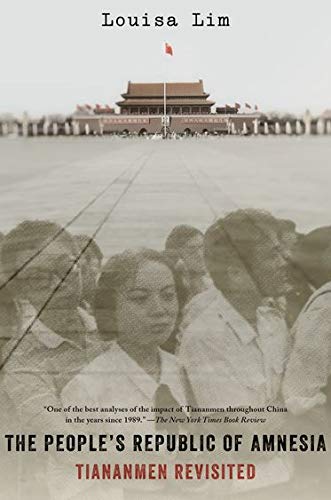
Finalist for the 2015 Helen Bernstein Book Award for Excellence in JournalismLonglisted for the Lionel Gelber Award for the Best Non-Fiction book in the world on Foreign AffairsAn Economist Book of the Year, 2014A New York Times Book Review Editor’s Choice”One of the best analyses of the impact of Tiananmen throughout China in the years since 1989.” –The New York Times Book ReviewOn June 4, 1989, People’s Liberation Army soldiers opened fire on unarmed civilians in Beijing, killing untold hundreds of people. A quarter-century later, this defining event remains buried in China’s modern history, successfully expunged from collective memory. In The People’s Republic of Amnesia, Louisa Lim charts how the events of June 4th changed China, and how China changed the events of June 4th by rewriting its own history.Lim reveals new details about those fateful days, including how one of the country’s most senior politicians lost a family member to an army bullet, as well as the inside story of the young soldiers sent to clear Tiananmen Square. She also introduces us to individuals whose lives were transformed by the events of Tiananmen Square, such as a founder of the Tiananmen Mothers, whose son was shot by martial law troops; and one of the most important government officials in the country, who post-Tiananmen became one of its most prominent dissidents. And she examines how June 4th shaped China’s national identity, fostering a generation of young nationalists, who know little and care less about 1989. For the first time, Lim uncovers the details of a brutal crackdown in a second Chinese city that until now has been a near-perfect case study in the state’s ability to rewrite history, excising the most painful episodes. By tracking down eyewitnesses, discovering US diplomatic cables, and combingthrough official Chinese records, Lim offers the first account of a story that has remained untold for a quarter of a century. The People’s Republic of Amnesia is an original, powerfully gripping, and ultimately unforgettable book about a national tragedy and an unhealed wound.
User’s Reviews
Editorial Reviews: Review “One of the best analyses of the impact of Tiananmen throughout China in the years since 1989.” –The New York Times Book Review”Lim presents a sequence of sensitive, skillfully drawn portraits of individuals whose lives were changed by 1989…These portraits show us how the party tightly constrains those who defy it, but they also depict determined resistance and even suggest an optimism among those most directly affected by the events of 1989…[This book] enhances our sense of the human costs of suppressing the past.” –Wall Street Journal”[Lim] offers a series of meticulously (and often daringly) reported portraits of participants, the events of that night and what has followed.” –The Economist”Lim tells her stories briskly and clearly. She moves nimbly between the individuals’ narratives and broader reflections, interspersing both with short, poignant vignettes.” –New York Review of Books”Lim’s outstanding book skilfully interweaves a wide range of interviews in China with an account of the protests in Beijing and ends with the fullest report to date of the crackdown in Chengdu, the capital of Sichuan province.” –Financial Times”STUNNING and important…The People’s Republic of Amnesia provides a powerful antidote to historical deception and a voice to those isolated by the truth.” –Los Angeles Review of Books”Louisa Lim peers deep into the conflicted soul of today’s China. Twenty-five years after the bloody suppression of pro-democracy demonstrations in Beijing, the government continues to deploy its technologies of forgetting — censorship of the media, falsification of history, and the amnesiac drug of shallow nationalism — to silence those who dare to remember and deter those who want to inquire. But the truth itself does not change; it only finds new ways to come out. Lim gives eloquent voice to the silenced witnesses, and uncovers the hidden nightmares that trouble China’s surface calm.” –Andrew J. Nathan, coeditor, The Tiananmen Papers”For a country that has long so valued its history and so often turned to it as a guide for the future, the Chinese Communist Party’s efforts to erase actual history and replace it with distorted narratives warped by nationalism, has created a dangerous vacuum at the center of modern-day China. With her carefully researched and beautifully reported The People’s Republic of Amnesia: Tiananmen Revisited, Louisa Lim helps not only restore several important missing pieces of Chinese posterity that were part of the demonstrations in 1989, but also reminds us that a country which loses the ability to remember its own past honestly risks becoming rootless and misguided.” –Orville Schell, Arthur Ross Director, Center on US-China Relations, Asia Society”In The People’s Republic of Amnesia veteran China correspondent Louisa Lim skillfully weaves the voices that ‘clamor against the crime of silence’ to recover for our collective memory the most pivotal moment in modern China’s history.” –Paul French, author of Midnight in Peking”Astonishingly Beijing has managed to obliterate the collective memory of Tiananmen Square, but a quarter-century later Louisa Lim deftly excavates long-buried memories of the 1989 massacre. With a journalist’s eye to history, she tracks down key witnesses, everyone from a military photographer at the square to a top official sentenced to seven years in solitary confinement to a mother whose teenaged son was shot to death that night. This book is essential reading for understanding the impact of mass amnesia on China’s quest to become the world’s next economic superpower.” –Jan Wong, author of Red China Blues and A Comrade Lost and Found”A deeply moving book-thoughtful, careful, and courageous. The portraits and stories it contains capture the multi-layered reality of China, as well as reveal the sobering moral compromises the country has made to become an emerging world power, even one hailed as presenting a compelling alternative to Western democracies. Yet grim as these stories and portraits sometimes are, they also provide glimpse of hope, through the tenacity, clarity of conscience, and unflinching zeal of the dissidents, whether in China or in exile, who against all odds yearn for a better tomorrow.” –Shen Tong, former student activist and author of Almost a Revolution”Lim’s intimate history of the events of 1989 deepens our understanding of what happened, and touches our hearts with its humanity. Where other writers succumb to describing history in impersonal terms, Lim brings the history to our doorsteps, reminding us that we aren’t so different from those who lived and shaped history and tragedy. The People’s Republic of Amnesia is a wholly original work of history that will alter how China in 1989 is understood, and felt.” –Adam Minter, author of Junkyard Planet”NPR’s veteran China correspondent Lim shows how the 1989 massacre of student human rights protesters in Beijing’s Tiananmen Square continues to shape the country today… A forceful reminder that only by dealing with its own past truthfully will China shape a decent future for coming generations.” –Kirkus Reviews About the Author Louisa Lim is an award-winning journalist who has reported from China for a decade, most recently for National Public Radio. Previously she was the BBC’s Beijing Correspondent. She lives with her husband and two children in Ann Arbor, Michigan.
Reviews from Amazon users which were colected at the time this book was published on the website:
⭐This brave, searing, beautifully and sensitively written book builds, Bolero-like, quietly, through profiles of carefully selected Tiananmen “types” – the soldier, the stay-behind, the exile, the student – up to the shattering chapter on “the mother,” as in the “Tiananmen Mothers,” what we’d call a lobbying group of “little old (Chinese) ladies”/activists who, for 25 years, have sought to get the truth out and to get the Chinese Communist Party and the Chinese government to “reverse verdicts,” on 3-4 June 1989. (Very emotional reading.)And then and onward, with a score that beguns to thump a little, to martial strains…and a chapter on the thoroughly mobilized contemporary “patriot,” completely ignorant – as are most Chinese his age – of the events of 3-4 June, the core of whose patriotism is the aggressive, increasingly militaristic nationalism the Party and government has sought (since the early 1990s) to cultivate in the populace as a substitute for ideology (I mean, who knew that a third of the output China’s huge Hengdian film studio involves battles against Japanese “devils” and that some call the studio “a huge anti-Japanese revolutionary base”?)Down into the home stretch, very like Ravel, Ms. Lim hits a revelatory (no pun intended) peak (especially for an old China hand) in a remarkable chapter on a man some of us will remember as pivotal in late-1980s China: Bao Tong, then the Politburo Standing Committee’s secretary and deposed Party General Secretary Zhao Ziyang’s right hand man. Bao was arrested little more than a week after Zhao’s last public appearance and the declaration of martial law in mid-May 1989. He spent seven years in solitary at the famous Qincheng Prison for disgraced senior officials, and now, an octogenarian, lives under perpetual surveillance. Why? Because he has the superpower of “seeing through” and has the system of China’s “success” figured out, all the way down to the ground. Bao describes it to Ms. Lim as a long chain of “mini-Tiananmens” that go all the way back to the night the People’s Liberation Army fired on its own children. Each odious event – the constant watching, the constant suppression if not quite forcible repression (but that too), the arrests of grandmothers, the obsessive following around and, if need be, putting away anyone seen as possibly threatening the Great Power by saying the wrong words to the wrong person, anyone who threatens to chip away at the collective amnesia, to undo the technique of forgetting history, and thus expose the rotten foundations of today’s China – stands as a small-reproduction of mindset that mandated the actions of June 1989 at the Gate of Heavenly Peace. And all these take place with with the nearly perpetual complicity of a silent West, which shuts its eyes, covers its ears, and rakes in its profits from “People’s China.” Thus do all these single events that accumulated into one mountainous malignancy that ultimately renders “the China miracle” possible and all the Chinese who benefit complicit in the monstrosity of Tiananmen.Finally, Ms. Lim’s – and our – remarkable journey ends, in a Ravelian crescendo, in one of the not-so-mini Tiananmens that have, until now, dwelt in obscurity to both Western and Chinese eyes: Chengdu, capital of Sichuan Province, where Zhao Ziyang had as First Secretary led successful free-market agricultural reforms that dramatically increased production and led to a local jingle – “yao chifan, zhao Ziyang” (“if you want to eat, look for Ziyang” – punning on “Zhao”). Chengdu was another scene of the bloody suppression of students in June 1989 – reportedly one of the more than 60 major Chinese municipalities that experienced disorder similar to that of Beijing, but the stories of which have never been told, except in occasional snippets (we’ve heard, for example, about former President and CCP Chief Jiang Zemin’s successes as Shanghai party chief, part of his hagiographic resume when he was named to head the party, state, and military).Ms. Lim drags the Chengdu story out of the dark, and in doing so stimulated distant memories. Long before the events of 1989, I had stayed at the Jinjiang Hotel, scene of the most heinous events Lim has been able to surface and report. I can imagine looking out my window, into the courtyard where I had watched chefs skinning snakes for the night’s dinner, and witnessing instead atrocities, committed by Chinese against Chinese.And atrocities of a different sort are committed today in the Chinese leadership’s failure to admit the success China today enjoys is built upon lies and serial inhumanity. We think of Lu Xun: men eat men. I know: we have our own ghosts in the American closet. (Think, for instance, of Ta-Nehisi Coate’s persuasive argment that the greatest of the US economic achievement is built on the grimmest, ugliest feature of US history, indeed, an American holocaust: slavery and its ugly, prejudicial aftermath of lynchings, the denial of Federal benefits to African Americans, neighborhood redlining, overcharging, and on and on and on…) But here in the United States, we can discuss our ghosts, and worry about and become activists for solutions. We’re able to expose the lie and have the power to TRY to disinfect the wounds.But in China, one cannot raise the lies and serial inhumanities, because to begin that discussion risks bringing the entire corrupt house of cards down…and with it, the lives and fortunes of the families and friends who have benefited the most from the rot and corruption that permeates the “China miracle.”We owe Louisa Lim a debt of gratitude for bringing so much of the hidden story to light, and we can only hope that she has a legion of successors who will expose other stories of June 1989 from across China.
⭐Probably one of the best books one could find on a chapter in history that everyone should know.
⭐After reading a positive review in the Economist, I bought this book immediately and received it the next day (thanks, Amazon). After 25 years, it is certainly necessary to revisit Tiananmen, and from the book’s description, I figured it would do a good job. This is a subject of great interest for me. I was in China on June 4, 1989, an expatriate American just beginning a new job in Shanghai. I stood in the beautiful gardens of the Xing Guo Guest House, now the site of a Radisson Hotel, as word of what had happened in Beijing filtered in from CNN and by telephone. Shanghai was spared the carnage of Beijing, of course, and after decamping to Hong Kong and back to the USA for a couple of months, I returned to Shanghai where my project proceeded–as did life in China in general.Ms. Lim’s book focuses very much on personal stories of those who were either directly involved in the events in Beijing leading up to June 4–students, officials, soldiers, mothers–and their reminiscences are valuable and shed some new light on what happened. They are marred by gaps of memory, however, and by the author’s unwillingness to ask the really hard questions, such as about the treatment some of the interviewed people received in prison. Instead, Lim fills in the gaps by citing reports from Amnesty International and other sources. While there is no reason to doubt these, they weaken the narrative.A far more serious weakness is that when reading these interviews, the reader needs a good knowledge of the chronology of the events leading up to June 4 and all the players involved to appreciate what those who were directly involved are saying. For me, this wasn’t an issue, having read Gordon Thomas’ Chaos Under Heaven, a painstaking almost minute-by-minute account of the events in Beijing written by a reporter who was there, as well as various other books. I find it ironic that in a book lamenting the amnesia that now persists regarding June 4 that Lim has actually further contributed to that amnesia by failing to fill in enough background information for readers who might be looking to this book for an introduction to what happened 25 years ago. (The book is short and could certainly have spent a few more pages on background. But Lim is a radio reporter, not a historian, and this weakness prevents her from providing the depth of research and perspective that is necessary.)This book is much more effective in showing how the Chinese government turned to extreme, xenophobic nationalism as a way to distract the students from the corruption and other shortcomings of Communist Party rule. The current mindset of China as perpetual victim, seems to be working quite well, at least in keeping students distracted. And, of course, it isn’t just made up. From the Opium Wars to the unequal treaty of 1919 to the Rape of Nanjing to the foreign extraterritorial settlements that lasted until the Communist Revolution, there is much for Chinese to be angry about. Despite the famines, the terror campaigns, and the other egregious errors since 1949, the Communist Party can at least rightfully claim that China has regained its independence and is now an economic power that doesn’t have to bow down to the demands of Japan, America, or anyone else.The nationalist message still hasn’t prevented an almost uncountable number of other anti-government protests, however, as newly prosperous Chinese citizens demand better protections against out-of-control local party officials who seize property without adequate compensation, the terrors of pollution, and the lack of the rule of law. There is every chance that at some point these will build into another incident to rival 1989.Lim also provides additional details about the extent of the demonstrations in Chengdu, the capital of Sichuan province, that results in (probably) dozens of deaths and students and others took to the streets after hearing what happened in Beijing. I think this is probably just the tip of the iceberg when it comes to describing the events elsewhere in China. When I visited Chengdu in 1992, the city block that burned down had already been replaced, in true modern Chinese fashion, by a shopping center.While focusing on Chinese amnesia, Lim only partially points out the amnesia the rest of the world has practiced about what happened. In their quest to take advantage of the Chinese market, international businesses have even less reason to care about June 4 than do the vast majority of Chinese citizens. There are also a lot of details of Lim’s account that show the shortcomings of Western journalists who covered the event and in some cases left out accounts of the violence perpetrated by some extremist students against the police and Army. While this was minuscule in comparison with the violent acts committed by police and soldiers (some of which are well documented in this book), the lack of complete truth in some Western reporting has only provided support for Chinese paranoia.The other major fault with this book is that it portrays the violence as almost inevitable. The students were disorganized and splintered. Although there were “leaders”, no one was really in control and could enforce a decision to leave Tiananmen Square before the evening of June 3/morning of June 4. Deng Xiaoping emerges as the biggest villain here. He was the one who ordered the troops in and was prepared to spill blood. But the book shows that many others, including the students, share the responsibility for what happened.Finally, I must say that despite its failures, this book is a fast, compelling read. Lim writes clearly and occasionally vividly. For someone looking for a few new grains of information, it is a worthwhile read.
⭐As Tiananmen features in every account of modern China that one reads, including biographies of any statesman at the time, or simple accounts of mdoern history, this reader was already very familiar with the event, and as such was somewhat uncertain about reading a whole book on the subject. However, I was pleasantly surprised at not just the informative nature of the book, but also of the emotionally harrowing accounts.People’s Republic of Amnesia addresses several key issues not included in accounts one reads in modern history books. Amongst these are;The extent to which the Chinese government has successfully whitewashed Tiananmen from popular memory, along with the weapon of nationalistic education. To such an extent that when one witnesses the flag raising ceremony at Tiananmen, one cannot help but marvel at how a place of national shame has become a place of national pride.The extent to which Tiananmen mothers have been denied any kind of closure, and how they are subject to monitoring by a constant faceless bureaucracy, and the truly faceless nature of the regime on this matter.The extent of the division within the leadership. Not just Zhao Ziyang, but also the Commander of the Beijing Military Region General Xu Qinxian, who personally remarked that he would rather be beheaded than go down in history as a murderer, and paid for this with his career and a life spent under supervision.The truly shoddy nature of how the operation was executed. Not only were most of the soldiers deployed badly trained, and ill informed, but the fact was that initial attempts to deploy them failed. The citizens blockaded them and it seemed as though the implementation of martial law was in standstill, looking almost like a joke at first. However, what followed was no joke. Amongst the killed and wounded were even government officials and their families, as the troops fired up warning shots and hit residential compounds at Muxidi.Perhaps the best was saved until last, which was Chengdu. Perhaps it is inappropriate to say best, but Chengdu and it’s brutal crackdown on June 5th is almost entirely forgotten. It is a story that should be told, and here it is solemnly told.People’s Republic of Amnesia is a strongly recommended read for all China enthusiasts and history enthusiasts. It should be read because it details one of the greatest thefts of history in modern times. Indeed there are other thefts of history, not least of which is the Japanese amnesia that routinely agitates China, however this testimony is a perect expose at China’s very own amnesia. Everyone should read it!
⭐This book deals with the way the Chinese government has attempted to control the public memory of recent historical events, and in particular the Tiananmen Square massacre. It uses interviews with former soldiers, activists and the relatives of victims. Lim also interviews contemporary Chinese students who, chillingly, are not merely unaware of the events of 1989 but entirely disinterested in politics. Lim also looks at parallel events that took place in Chengdu and elsewhere in China at around the same time as the events as Tiananmen.This is a short book but one that succeeds in providing a snapshot of modern China and the way that the Chinese Government uses a mixture of fear and incentives to manipulate the public discourse and maintain its position.
⭐One of the bravest actions I have ever witnessed.
⭐It was a brave decision to write this book. Louisa Lim didn’t talk to anyone about her plans, not even her own family. She kept her notes like a treasure, and wrote the book on a brand new laptop which has never been connected to the internet, says Ms Lim – because she was scared of the Chinese surveillance.25 years after the brutal crackdown of the students’ protest movement which has become a part of (Western) history as Tiananmen-massacre, the topic is still a taboo in China. The government wants its people to forget what has happened, and unfortunately, it is quite successful with its strategy – China, finally, has become the “People’s Republic of Amnesia”, as Louisa Lim states in the title of her book.„Memory is dangerous in a country that was built to function on national amnesia.“In her book, the author breaks the silence and revives the memories of probably the biggest taboo of China. She enlightens the students’ movement of 1989 from various perspectives – the soldier who had to follow the government, the students, their mothers.For example, there’s Chen Guang, a former soldier who is now an artist obsessed with painting images related to the trauma – even though he knows he will never be allowed to show his artwork in mainland China. „Of course there is guilt“, he admits. „Over a long period of time, you realize that there were many things you could have chosen not to do.“ Or Wu’er Kaixi, the most prominent of the students’ leaders who met Li Peng in the Great Hall of the People in his pajamas, painfully undernourished, and who interrupted China’s Premier harshly – he lives in exile today. There are the Tiananmen Mothers, the highest-ranking official Bao Tong, today’s Beijing students.Ms Lim talked to all of them. She and her protagonists can’t answer all of the open questions regarding Tiananmen 1989; many of them will probably remain unanswered forever. But the author succeeds in painting a diverse and deeply emotional picture of what happened in this summer 1989 in Beijing.That she is talking out of her own perspective from time to time, adds a personal touch to the book. Because „People’s Republic of Amnesia“ is not only a scientific work, but it is Ms Lim’s search for information, it is her long journey of research on which she takes the reader with her. She tells how she met her interviewees, where the appointments took place, how she felt during the talks – for example, when she met the former student Zhang Ming who continues his very own hunger strike by not eating solid food, but only milk, and she suddenly felt she was hungry. Or, on another occasion: „To find out more, I dug up an old copy of an Asia Watch report detailing the treatment of those 11 prisoners at Lingyuan. As I read the account, I felt a low pulse of shame at my attempts to excavate those long-buried memories.”The last chapter “Chengdu” deserves special credit. Because it wasn’t only in Beijing that students were fighting for a better China. Wuhan, Chengdu – in many more cities there were smaller versions of Tiananmen. Some say it was in up to 80 cities in the whole country. With previously unreleased pictures and sources, Ms Lim reconstructs on the example of Chengdu how those movements took place. This way, she does not only focus on Beijing, but remembers all the others “Tiananmens” that took place in 1989.No-one knows which consequences the publishing of this book will have for Louisa Lim – or if it does have any consequences at all. However, it was worth the risk. Because Ms Lim takes her readers as close to Tiananmen as no other author did before. She paints a deeply intense, very touching picture of the democratic movement, its brutal end and consequences that will also help to understand contemporary China in a better way.More reviews of books concerning China at www.china-blog.org/china-bücher – I’m looking forward to your visit!
⭐Louisa Lim glorifiziert die Bewegungen von damals nicht und sie behauptet nicht, zu wissen, wie China heute wäre, wenn Deng Xiaoping und die damalige Führungsriege anders entschieden hätten. Dennoch: Das heutige China ist unter der Führung derselben Partei entstanden, die nach der blutigen Niederschlagung der Demonstrationen ihren Machtanspruch durch Wirtschaftswachstum, Armutsbekämpfung und Propagierung einer selbstbewussten starken chinesischen Nation bewahrt und gefestigt hat. Dass aber die Armee auf die Bevölkerung geschossen hat, ist eine Tatsache. Dass das Äußern abweichender Meinungen und das Eintreten für eigene Rechte nach wie vor kriminalisiert werden kann, wenn sich die Parteiführung in ihrer Machtposition bedroht sieht, bleibt Status Quo. Das Erinnern wird immer wieder bekämpft.Louisa Lims Ansatz, über die Ereignisse nachzudenken und zu forschen, ist ein sehr menschlicher und ein sehr moralischer. Eine Lösung kann auch sie nicht bieten, aber sie lässt keinen Zweifel daran, dass durch die aktuelle Politik der Moral und der Menschlichkeit in China nachhaltig Schaden zugefügt wird. Ich empfehle die Lektüre von The People’s Republic of Amnesia, weil das Buch nicht nur an die Geschichte erinnert, sondern auch an viele mutige Menschen; und damit hebt es Moral und Menschlichkeit.
⭐
Keywords
Free Download The People’s Republic of Amnesia: Tiananmen Revisited in PDF format
The People’s Republic of Amnesia: Tiananmen Revisited PDF Free Download
Download The People’s Republic of Amnesia: Tiananmen Revisited 2015 PDF Free
The People’s Republic of Amnesia: Tiananmen Revisited 2015 PDF Free Download
Download The People’s Republic of Amnesia: Tiananmen Revisited PDF
Free Download Ebook The People’s Republic of Amnesia: Tiananmen Revisited