Ebook Info
- Published: 2012
- Number of pages: 320 pages
- Format: PDF
- File Size: 1.33 MB
- Authors: Edward N. Luttwak
Description
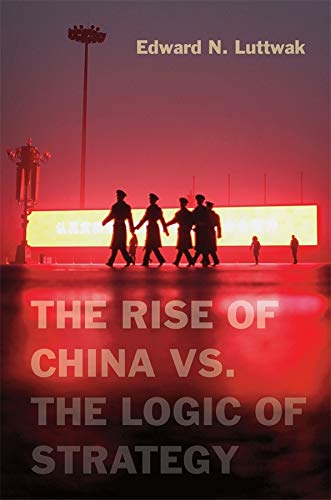
As the rest of the world worries about what a future might look like under Chinese supremacy, Edward Luttwak worries about China’s own future prospects. Applying the logic of strategy for which he is well known, Luttwak argues that the most populous nation on Earth―and its second largest economy―may be headed for a fall.For any country whose rising strength cannot go unnoticed, the universal logic of strategy allows only military or economic growth. But China is pursuing both goals simultaneously. Its military buildup and assertive foreign policy have already stirred up resistance among its neighbors, just three of whom―India, Japan, and Vietnam―together exceed China in population and wealth. Unless China’s leaders check their own ambitions, a host of countries, which are already forming tacit military coalitions, will start to impose economic restrictions as well.Chinese leaders will find it difficult to choose between pursuing economic prosperity and increasing China’s military strength. Such a change would be hard to explain to public opinion. Moreover, Chinese leaders would have to end their reliance on ancient strategic texts such as Sun Tzu’s Art of War. While these guides might have helped in diplomatic and military conflicts within China itself, their tactics―such as deliberately provoking crises to force negotiations―turned China’s neighbors into foes. To avoid arousing the world’s enmity further, Luttwak advises, Chinese leaders would be wise to pursue a more sustainable course of economic growth combined with increasing military and diplomatic restraint.
User’s Reviews
Editorial Reviews: Review “National security strategist Edward Luttwak’s provocative and insightful analysis of the ‘logic of strategy’ provides a well-documented, contrarian assessment of whether China’s ‘rise’ will be peaceful or polarizing. He stresses the paradox that China’s economic strength and territorial aggrandizement are inciting opposition by a growing coalition of states determined to weaken Beijing’s power and influence. Luttwak asserts that only by maintaining Deng Xiaoping’s policy of ‘low posture’ development, and downplaying military modernization, can China avoid international ‘geo-economic resistance’ and attain the domestic growth and global stature it seeks.”―Richard H. Solomon, former President of the U.S. Institute of Peace, Senior Fellow at the RAND Corporation“Luttwak presents a rich, persuasive, and lucid analysis of the strategic implications of China’s rise and of the anxieties it generates. China’s foreign policy and military investments are raising concerns that require the sort of well-informed, precise argumentation that Luttwak delivers. Based on a long-term view of China’s strategic inclinations and extensive research on current developments, this book offers medium-term predictions of the likely outcomes that the ‘logic of strategy’ may dictate, and thus explains with great clarity the issues at stake. Luttwak’s work is a must-read for laymen and specialists alike, and an essential contribution to the political debate.”―Nicola Di Cosmo, Institute for Advanced Study, Princeton“With muscular behavior and rhetoric on the uptick and China pouring money into its military, political strategists have begun to consider Chinese military dominance of the Pacific and a concurrent American decline as foregone conclusions. So it is refreshing to see Edward Luttwak take a different tack in The Rise of China vs. the Logic of Strategy and argue that Chinese military dominance in the Pacific is ‘the least likely of outcomes.’ China can’t simultaneously enjoy a burgeoning economy and a rapidly growing military, he contends, because countries will band together to protect themselves, using military coalitions and trade protectionism to counter China’s rise.”―Mary Kissel, Wall Street Journal“Most commentators on China focus on its seemingly inexorable rise and the threat that this poses to other world powers. In this well-argued book, Luttwak takes a different view. He questions whether China’s rising power is sustainable. China’s continued and rapid growth in economic capacity and military strength and regional and global influence cannot persist, he argues, because of the mounting opposition it is evoking.”―Frank Dillon, Irish Times“Luttwak detects a fundamental conflict between China’s search for continuing economic growth, which the Communist Party has made its prime claim to rule, and its quest for military expansion combined with increased foreign policy assertiveness…Luttwak’s book, which includes a refreshing put-down of the supposed superiority of traditional Chinese statecraft so admired by Henry Kissinger among others, is timely, coming as it does amid the current maritime confrontations in East Asia.”―Jonathan Fenby, Times Higher Education“The Rise of China vs. The Logic of Strategy is a sober book. Staying with the evidence, it avoids flights of fancy but grips readers’ attention all the way through. Here, finally, is an expert on China who knows what he’s talking about.”―Caleb Nelson, World“Luttwak’s contribution to the China debate is to be welcomed. We need informed outsiders to weigh in with their views, and he has spent years visiting the country and talking to the Chinese, including the People’s Liberation Army. Written with his customary panache, his vigorous and highly readable contribution will challenge congealed thinking.”―George Walden, Bloomberg.com“Over the past few decades, Edward Luttwak has gained a reputation as the bad boy of strategic theory and historical scholarship. This time, he has outdone himself. He has debunked Sun Tsu, the Clausewitz of the East and much beloved by teachers of military theory for decades…In The Rise of China vs. the Logic of Strategy, Luttwak goes beyond an attack on Sun Tsu. He argues that the dominant strategic and cultural arrogance of the Han people–the largest ethnic group in China–could undermine efforts to lift the Middle Kingdom to the ranks of true superpower status. Luttwak further argues that this assumption of cultural and intellectual superiority is driving China’s neighbors into a camp of strategic containment similar to what Germany created for itself in the years leading up to World War I…It will be interesting to see whether the book is read with interest or banned once it is translated and made available on the Chinese mainland. It is a cautionary tale that deserves Chinese attention.”―Gary Anderson, Washington Times“[Luttwak’s] thesis is sensible and not to be discounted lightly.”―The Economist blog“Edward Luttwak’s book on the limitations of China’s ascent to power blends careful observation of recent events with an understanding of its past…The explanatory innovation that lifts Luttwak’s book above the ruck of recent books on China’s rise is his use of geo-economics–an expression he coined in 1980–to explain global resistance to Beijing’s march. He argues that countries across the world, without explicit coordination, will resist China’s export-oriented strategy to generate wealth and military power. This “invisible hand” explanation is in refreshing contrast to the usual containment and other political explanations about what may happen in East China in the coming years.”―Siddharth Singh, Mint“Entertaining and provocative…A bold book that flatly predicts that China won’t successfully rise as a superpower, indeed that it cannot in its current incarnation…If accurate, Luttwak’s theory means Americans don’t have to worry too much. China will essentially self-destruct, at least diplomatically. And the list of problems facing China make it seem that this could well be happening right now.”―Ian Johnson, New York Review of Books“[A] though-provoking book.”―Jonathan Mirsky, Prospect About the Author Edward N. Luttwak serves or has served as a contractor for the Office of Net Assessment of the U.S. Department of Defense and for the U.S. armed forces, and as a consultant to the U.S. National Security Council, the White House Chief of Staff, and several allied governments.
Reviews from Amazon users which were colected at the time this book was published on the website:
⭐I disagree with the author’s definition of strategy and his method. He writes of `strategy’ in deterministic terms, almost like a Marxist. At best, he is a structuralist without acknowledging it. For him, the Great Powers are `trapped by the logic of strategy’. I think to the opposite: ‘Strategy’ is an Art practiced by people at the apex of state power. Also, I think the leitmotif through the book `strategy is stronger than politics’ doesn’t make sense. One does not put the cart before the horse. Strategy is the way you carry out your policy. You got to have a policy first which is a function of politics.I find it odd that the author almost sounds joyful writing about the military competition in Asia and emerging strategic cooperation in response to the China’s rise, especially between countries like Japan, Vietnam, and the Philippines. It makes me worried, because the U.S. will likely be sucked-in if the conflict flares up. There is no mention in the book that Russia and China are the allies in the Shanghai Cooperation Organization. Will the conflict with China be one with Russia also?America needs a strategy vis-a-vis China to ‘dissuade it’? Perhaps. The U.S. must come to terms with its own financial situation first. Then, the U.S. needs to look into the policies concerning several centers of power which are in turn are trying to hedge against America: Europe, China and Russia, India, Brazil, not least Iran. North Korea is a wild card. If strategy vis-a-vis China means a more ‘activist’ foreign policy, it could hurt America more than benefit. Deterrent moves by the U.S. might be interpreted in China as encirclement.Is it a clever book? Very much so, but it offers an ersatz-strategy. I think it’s a clever stratagem from a man who is not lacking in intelligence. In addition to a persona of public intellectual, Mr. Luttwak is an intelligence operative, at least according to Wiki: Eastern Europe-born, well-travelled, well-connected, and multilingual. I believe he thinks of himself — in a Machiavellian sense – as a kind of a thinker-scholar-practitioner who can advise ‘the Prince’. So far so good. The problem is this: not sure who ‘the Prince” might be. It’s not clear to whom the advice could be given.Surely the Chinese will not be patronized. If the White House is `the Prince’, it doesn’t need the advice that China’s rise threatens only China itself by way of stiffening the opposition of its neighbours. Mr. Luttwak would have done better service by offering a fair criticism of his own adopted country’s policies. For example, by pointing out that the costly military commitments abroad are eroding the foundations of the American power. Instead he delivers a sop: he sees no flaws in American sprawling commitments or the U.S. policies. All the faults are Chinese: it’s really a ‘Blame China First’ strategy. The book is lecturing the Japanese and Russians how to make an anti-Chinese coalition (pages 142-3). It is all a little strange.The book reflects a mildly arrogant attitude which infected the American elites. According to Mr. Luttwak China is `autistic’ – i.e. China is unable to see itself through other peoples’ eyes, to relate to others. Not only that, it doesn’t really have `strategy’, only `stratagems’. But the truth is nearly the opposite – it’s the U.S. today who is unable perceive itself through the foreigners’ eyes. The American long-term strategy is vacillating, especially vis-a-vis China and Russia. The US has become the house divided and the largest nation debtor. The mighty U.S. dollar is the world’s reserve currency and so far the printing press had hid many problems. But if something to happen to the mighty dollar, there will be a precipitous and sudden decline of the American power, we can be sure of that.The Master-idea of the book is semi-revealed: China presents a challenge to hegemonic stability established and maintained by America. Unlike Luttwak I think the hegemonic stability is an illusion. It is a fleeting delusion which has bankrupted America already. I think it isn’t China, but America who needs to choose a different strategy — the strategy of `offshore balancer’, not the multi-regional hegemonic strategy. It doesn’t mean America should submit to China – the U.S. needs to choose the Grand Strategy which corresponds to America’s strengths and weaknesses.As a native Russian I believe a misguided U.S. policy vis-a-vis Russia during the last 20 years — especially when the US spearheaded NATO expansion up to the Russian borders — has become today a factor blocking an effective U.S. policy vis-a-vis China. It turned out it’s all connected. An effective strategy is impossible without Russia which is engaged by the U.S., at least not painted black gratuitously. But this is exactly what he does. I disagree with his image of Russia. For him the Russians are always perverted or at least like the little children: they `always evaluate the motives of others in exclusively Russian terms’. The Russians ostensibly mirror-image the foreign motives negatively. So does China. For Mr. Luttwak China even more so.Luttwak writes that for the Americans the goal of NATO expansion was to `stabilize fragile new democracies’ in the Eastern Europe, but the Russians viewed NATO’s enlargement as `a calculatedly hostile American move’. I disagree with this caricature. The Russians were disappointed, yes, but also some American realists and neo-realists who disapproved the U.S. policies to maintain the forward-deployed military power which would guarantee to make enemies of the Russians and complicate things for the Americans. For example, George Kennan considered NATO expansion a big mistake. The Russians, like Kennan and other old-school conservative realists and even skeptical liberals, thought America should pursue the strategy of `offshore balancer’. But the U.S. chose the preponderance of power and the strategy of multi-regional hegemony. The result is suspicious Russia and disarray in the U.S. Chinese policy. This strategy is wrong. Even more to the point, America cannot afford it. I don’t recommend the book, I think it is a sop to those in power who are unwilling or unable to re-think American strategy today.
⭐Like a wave building unseen beneath the ocean’s surface, the incredibly fast rise of the Chinese economy, along with a concomitant growth in its military strength and a rapidly expanding geopolitical clout has suddenly risen like a tsunami upon the receding economic shores of nations around the globe.International leaders and pundits seem to be scratching their heads in confusion as to why the obvious mutual benefits of China’s increasing prosperity to the global community is now causing increased consternation and mistrust. The book’s author, Edward Luttwak, offers a very clear framework with which to evaluate China’s actions and other nations’ reactions.So what is “The Logic of Strategy”? It is to this reviewer another way of describing self-preservation. Actions taken by an individual or a nation are, up to a point, necessary and beneficial. Indeed, other nations benefit by the increased wealth, production, and trade as the subject nation grows and prospers. With that economic growth comes a perceived need to have increased military protection. And, with that increased strength comes increased political clout. At some point, the simultaneous expansion of the wealth, the military, and the political influence transitions from increased mutual benefit to perceived increased threat. “Hubris” is a term often used in this book to describe the ultimately counterproductive attitudes and actions of a nation with new-found wealth and influence. It is a word that seems to fit well when viewing China’s words and deeds since the global economic crisis beginning in 2007.As Mr. Luttwak points out, a “logical” strategy would be for that growing nation to have “adequate” military force for self-preservation but not keep expanding its expenditures on forces to a point that other nations feel threatened. Likewise, it might be “logical” strategy to not throw one’s weight around too much on the world’s geopolitical stage.China’s manipulation of its currency and WTO commerce rules, its rapidly increasing expenditure and development of military technologies, and its intimidation of its South China Sea neighbors over a few remote islands may strategically not be too logical, but insteasd all too human.
⭐First the positives.There are some interesting ideas in this book, like great power autism: a huge country like China must by necessity devote much of its governmental energy on internal affairs. Therefore, the complexities of foreign affairs rarely get the detailed attention they deserve.Furthermore, as a huge, largely self sufficient country with over 2 thousand years of supremacy in East Asia Chinese diplomacy finds introspection a difficult concept. In the words of Edward Luttwak, this leads them to falsely assume that foreign people think and see the world in Chinese terms.Now, some of my negative points.For someone held in high regard as a military strategist, Luttwak displayed a rather glaring lack of knowledge of the PRC armed forces. In Chapter 19 he mentions on two occasions “Chinese Mig-29 Fulcrums” that were intercepted by the Philippine Air Force. Yet, the PRC has never operated Mig-29 aircraft!Finally, his view of China’s history and thinking is too Han centric in my opinion. He confuses the notion of Huaxia (Chinese civilisation) with the Han people. Huaxia is much more than just the Han. I think his core message still stands, if on shaky foundations.
⭐Nuttig overzicht van geschiedenis van de buitenlandse politiek van China. Geeft veel feiten, achtergronden, verklaringen van hoe China reageert en zal reageren nu het zo’n snelle economische groei doormaakt.I was impressed to the contents of this book and amazed how insightful and foretelling the book contents were at the time of this book publication. I recommend any readers who are interested in the current ongoing trade wars between China and US with its coalitions. Highly recommendable. HN
⭐ルトワック本にハズレなし。但し、ルトワック本の英文は少し苦手。どれを読んでも単語が難解で読み進むのに通常の倍の時間がかかる。これってバブーちゃんだけの現象?漢民族の歴史的思考修正にまで遡り、展開した的確な戦略論で、日本人には大いに参考になる書籍である。
⭐
Keywords
Free Download The Rise of China vs. the Logic of Strategy in PDF format
The Rise of China vs. the Logic of Strategy PDF Free Download
Download The Rise of China vs. the Logic of Strategy 2012 PDF Free
The Rise of China vs. the Logic of Strategy 2012 PDF Free Download
Download The Rise of China vs. the Logic of Strategy PDF
Free Download Ebook The Rise of China vs. the Logic of Strategy