

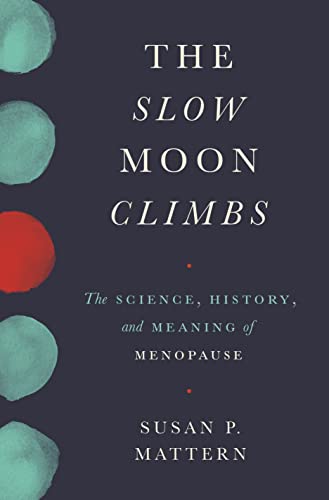
Ebook Info
- Published: 2019
- Number of pages: 480 pages
- Format: PDF
- File Size: 4.49 MB
- Authors: Susan Mattern
Description
The first comprehensive look at menopause from prehistory to todayAre the ways we look at menopause all wrong? Historian Susan Mattern says yes, and The Slow Moon Climbs reveals just how wrong we have been. Taking readers from the rainforests of Paraguay to the streets of Tokyo, Mattern draws on historical, scientific, and cultural research to reveal how our perceptions of menopause developed from prehistory to today. For most of human history, people had no word for menopause and did not view it as a medical condition. Rather, in traditional foraging and agrarian societies, it was a transition to another important life stage. This book, then, introduces new ways of understanding life beyond fertility.Mattern examines the fascinating “Grandmother Hypothesis”―which argues for the importance of elders in the rearing of future generations―as well as other evolutionary theories that have generated surprising insights about menopause and the place of older people in society. She looks at agricultural communities where households relied on postreproductive women for the family’s survival. And she explores the emergence of menopause as a medical condition in the Western world. It was only around 1700 that people began to see menopause as a dangerous pathological disorder linked to upsetting symptoms that rendered women weak and vulnerable. Mattern argues that menopause was another syndrome, like hysterical suffocation or melancholia, that emerged or reemerged in early modern Europe in tandem with the rise of a professional medical class.The Slow Moon Climbs casts menopause, at last, in the positive light it deserves―not only as an essential life stage, but also as a key factor in the history of human flourishing.
User’s Reviews
Editorial Reviews: Review “Winner of the PROSE Award in History of Science, Medicine, and Technology, Association of American Publishers””A celebration of menopause as a life stage vital to our species’ survival, but one that has now been trivialized as a disease to be treated. . . . A wise history of a subject that is ‘deeply . . . implicated in the human condition.'” ― Kirkus Reviews”That menopause may enable a new role and stature for women is the central argument of The Slow Moon Climbs . . . . Mattern sees [menopause] as an opening-up.”—Liza Mundy, The Atlantic”By historicizing menopause the syndrome and showing how the long lives of post-menopausal women may have been a crucial factor in the success of our species, Mattern offers a counternarrative to the harridans and hags of our cultural consciousness.”—Anna Reser, Lady Science”By viewing [menopause] through the lenses of anthropology, evolutionary psychology, sociology, medicine and culture, Mattern describes how our understanding of this biological rite of passage has itself evolved. [The Slow Moon Climbs] is also a polemic, a plea to reject the medicalisation of menopause and its language of loss and deficiency. All of this makes it a refreshing and scholarly change from the mostly folksy, self-help offerings in this genre.”—Anjana Ahuja, Financial Times”Mattern’s book . . . makes a strong argument for embracing the menopause and treating its symptoms singly rather than bundling it into this female syndrome.”—Kate Spicer, The Telegraph”The Slow Moon Climbs: The Science, History and Meaning of Menopause, surely could not have been published 50 or even 20 years ago.”—Anne-Marie Slaughter, Financial Times”A brilliantly wide-ranging study of the menopause across the centuries . . . Mattern’s remarkable book fits perfectly into this cultural moment.”—Emma Rees, Times Higher Education”The Slow Moon Climbs is a deeply satisfying book. . . . It tells the reader that women reach their most important roles later in life. It insists that what makes women special is not their sexuality, but who they are independent of their sexuality. And it invites them to understand that the social world they chose shapes the bodies they experience. Grandmothers rule.”—T. M. Luhrmann, Times Literary Supplement”The Slow Moon Climbs is much more than a history of how menopause came to be understood as ‘hormonal chaos’. It is a sustained argument about the nature of humanity and the way our societies are structured, a far-reaching account of menopause’s significance in human evolution.”—Katherine Foxhall, History Today”Susan Mattern’s scholarly and interpretive skills make this remarkable book recommended reading for evolutionary and cultural anthropologists as well as other historians, philosophers, and other scientists.”—Kristen Hawkes, Evolutionary Studies in Imaginative Culture Review “In The Slow Moon Climbs, Mattern dispels old myths about menopause and illuminates the evolutionary, social, and personal advantages of a long-misunderstood natural phase of life: freedom from fertility. This is an important book, filled with vivid examples, scientific realities, and new insights.”―Adrienne Mayor, author of The Amazons “In a masterful survey of breathtaking scope, Mattern reveals that menopause has played an essential role in making us human and building civilization. A truly transformative breakthrough―and a joy to read.”―Walter Scheidel, author of The Great Leveler”The Slow Moon Climbs is a work of great breadth on an essential subject.”―Laura Betzig, editor of Human Nature: A Critical Reader About the Author Susan P. Mattern is Distinguished Research Professor of History at the University of Georgia. Her many books include The Prince of Medicine: Galen in the Roman Empire and Rome and the Enemy. She lives on a farm in Winterville, Georgia. Read more
Reviews from Amazon users which were colected at the time this book was published on the website:
⭐Loved this book! Thoughtful and original, wide-ranging and inclusive, accessible and thought-provoking, I found myself pondering oner and over the many new ideas presented by the author.
⭐Love this perspective
⭐I came to this work having read several of Mattern’s other books, drawn to the topic by dint of life circumstances. “Slow Moon” is well worth reading: it is comprehensively researched, powerfully argued, and deeply stimulating, and if you want to know about evolutionary theories of menopause and its status as a cultural institution, you could scarcely ask for more.Mattern’s two-part thesis can be simply stated: (1) menopause is nature’s gift to the species, a solution that maximizes human births, brings us additional food, child-care, and shared experience, and generally has enabled us to prevail over many obstacles; and (2) menopause today is primarily a culturally constructed experience, perceived and felt in very different ways among societies throughout the world, with the West suffering an unfortunate tendency to dramatize and medicalize this most beneficial life passage. The two halves of the thesis absolutely go together (see below).Though Mattern musters considerable learning and common sense to expound her thesis, I think she overstates the case in several regards. This points me to important weaknesses in the book:(1) It bears noting that though a prodigious scholar, Mattern is not in fact an evolutionary biologist, a medical anthropologist, or a doctor. She has conducted no original research of any kind for this study, and in many portions it reads like a very, very long book report.(2) At a certain point, it becomes clear that Mattern is not so much arguing a thesis as creating a legal brief — on behalf of menopause. She tends to employ the rhetorical tool of highlighting potential counter-arguments and qualifications, only to cast them aside as she barrels forward with her presentation. (E.g., “The most important point I wish to make is not that menopause *is* a cultural syndrome — which is, after all, just a made-up name for a certain type of phenomenon — but that, for some purposes, it is useful to see it as one.” Whatever this means.) She is so convinced of the evolutionary value and triumph of menopause that she is led to dismiss any countervailing consideration. It’s not until the final part of the book that she fully lays her cards on the table: “[H]ow we think about menopause is important, and as my research on this book has progressed I have become increasingly impatient with how it is talked about in my society and how this talk unnecessarily demeans a transition and stage of life that are, by any measure, useful and honorable.”(3) The overall effect of this approach is to dismiss the lived experience of modern women in Western societies, and to cast them, somewhat shockingly, as a bunch of whiners. Mattern acknowledges that the symptoms of menopause are real, but sees the Western view of menopause as a sort of false consciousness, entirely constructed by historical contingencies and the greed of big pharma, pushing women to link menopause with depression, pump themselves full of estrogen, etc. It’s notable that she nowhere draws on diaries, letters, or other evidence of how Western women actually process menopause; for Mattern, it’s only the non-Western women (who don’t recognize menopause as “a thing”) whose experience counts. Ultimately this comes across as unsympathetic, verging on cruel, and I don’t think it adequately credits the role of science in relieving human suffering. Here as elsewhere Mattern has a point (she cites Lock’s work on Japan, which I’ve read, though at the end of the day I don’t think she really advances the ball much beyond Lock’s “biocultural” understanding of menopause), but the hard-line stance of the book left me unconvinced and vaguely uncomfortable.So … I recommend this book — to ponder, discuss and argue with — as much as I found important parts of it wanting.
⭐I picked this book up from my local library recently because I wanted to read about menopause in a non-self-help and non-gimmicky way. I enjoy learning about cultural differences and how culture shapes our experience, and that’s exactly what this book delivers.Based on the description, I’d thought this book would be for general audiences, more like a popular nonfiction book, but this is meant for a more academic audience (the notes & citations at the end make up more than 100 pages). At times, it got pretty boring, and I felt like so much of it could have been summed up more concisely for easier consumption. I ended up skipping a big chunk in the middle because I wanted to get through the book before it was due. That’s why I’m giving it 4 stars instead of 5, but I still appreciate the intensive research that went in to creating this book. As the author says, this is not something that can be boiled down to a TED Talk if you hope to understand what menopause is and has been across the planet. The whole point is that menopause is a complex subject, so if you want something that’s easy to digest, you’re not going to get those complex details.And as I enter this stage in my own life, this book is not only fascinating but empowering. It helps me to situate my own experiences culturally and to recognize that, perhaps, my symptoms say as much about what’s going in my life than they do about my particular physiological l experience. And I also find it uplifting and useful to think about this midlife stage as one of purpose, strength, and wisdom, rather than a decline or a deficiency. As I straddle both having a young child and possibly being peri-menopausal, this book has helped me understand both the roles I’d like to play in midlife as well as why, with a young child at home, I can’t ever seem to get anything done!This book, I think, also highlights a need for better studies of aging (it seems like there’s a lot of confirmation bias around the topic of menopause). Overall, this book is thorough and I hope a lot of people read it so we all can have better conversations with and about middle-aged women in our society.
Keywords
Free Download The Slow Moon Climbs: The Science, History, and Meaning of Menopause in PDF format
The Slow Moon Climbs: The Science, History, and Meaning of Menopause PDF Free Download
Download The Slow Moon Climbs: The Science, History, and Meaning of Menopause 2019 PDF Free
The Slow Moon Climbs: The Science, History, and Meaning of Menopause 2019 PDF Free Download
Download The Slow Moon Climbs: The Science, History, and Meaning of Menopause PDF
Free Download Ebook The Slow Moon Climbs: The Science, History, and Meaning of Menopause