

Ebook Info
- Published: 2013
- Number of pages: 244 pages
- Format: PDF
- File Size: 2.32 MB
- Authors: Alyssa Ney
Description
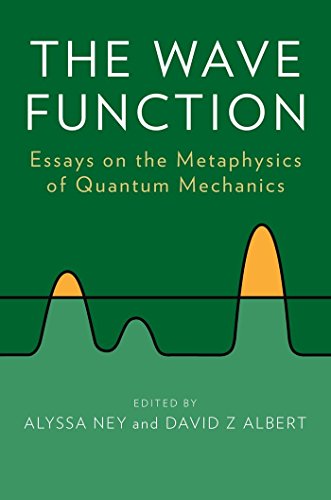
This is a new volume of original essays on the metaphysics of quantum mechanics. The essays address questions such as: What fundamental metaphysics is best motivated by quantum mechanics? What is the ontological status of the wave function? Does quantum mechanics support the existence of any other fundamental entities, e.g. particles? What is the nature of the fundamental space (or space-time manifold) of quantum mechanics? What is the relationship between the fundamental ontology of quantum mechanics and ordinary, macroscopic objects like tables, chairs, and persons? This collection includes a comprehensive introduction with a history of quantum mechanics and the debate over its metaphysical interpretation focusing especially on the main realist alternatives.
User’s Reviews
Reviews from Amazon users which were colected at the time this book was published on the website:
⭐I found this to be an enjoyable tour of the various mainstream schools of thought and personal interpretations of the meaning of the wave function in quantum mechanics. I particularly liked the high level primer on the wave function, entanglement and the measurement problem, along with an overview of the most mainstream interpretations of the wave function at the beginning of the book. The primer does assume a little knowledge of differential equations and some calculus, but it’s certainly better than the pure laymen books that gloss over the math and just focus on personalities. But don’t let the light math scare you, it’s optional and does not exclude a reader from skipping the math and enjoying the essays themselves. I found the essays to be well written and interesting reading. The book presents a fair mix of opinion that tends to support most of the mainstream interpretations as well as few less common points of view.
⭐I know much more about wave function than before I read the book. Very interesting discussions about configuration space by philosophers with diverging views. Good explicatory material which I supplemented on the internet see Alyssa Ney 2010 for configuration space and Feynman QED for vectors. Wallace excellent re: wave function realism and entanglement.
⭐Not worth He money unless you are really into the philosophy of wave functions.
⭐This magnificent and timely series of ontology essays (what’s real and what isn’t, in a nutshell) brings us up to date on both physics and philosophical thinking about quantum waves, states and phases. Superposition (essentialy solutions that are linear in the sense that, when added, are still solutions), wave collapse, and quantum waveforms (probabilities equalling 1 because there is a 100% chance the particle is there in that probability wave/cloud “somewhere”) have long been debated as either in the observer’s mind, or “real” in the tiny, chilly subatomic quantum universe(s).That little (s), was added because, yes, topics like Everett (the many worlds interpretation) are covered along with other more “populist” observer ideas, but not in the usual “wow” mess of speculative, inexact pop ramblings– the authors and contributors strike a wonderful balance between the math, physics and philosophy, without either degenerating into pseudo-spiritual “this is like Buddhism” or the equally painful semantic parsing of terms so prevalent in philosophy.The book is mind bending, and even though decidedly realist and relatively dry, doesn’t trash talk or remove the mystery. There is an unusual humility, and even though many of the earlier debates have been clarified with new research, they certainly haven’t been solved. Although the arguments are at a very sophisticated level, some of the contributors do break the dryness with “quantum humor” like the mysterious power of the observer changing reality by just “looking” — albeit looking with high energy xray eyes!The book, even though it doesn’t pretend to solve the issues it debates and raises, covers enough pro con to give the reader’s brain a great workout, updating the classical arguments with both new data and new arguments. After all, the greatest minds in physics couldn’t agree on whether, essentially, all quantum reality is human-projected, a Platonic ideal form we’re groping at like the blind folks and the elephant, or a completely ideal sim we just use to understand the ineffable. There are still mathematical constructs that defy discounting, and truly seem to be “there” in the sense of the “matrix” — running beneath reality regardless of or despite our “discovery” vs. “creation” of their graphs, waveforms and formulas.The “with it” trend in materialistic science today is to try to ascribe “mini Darwinism” at the molecular level, and soon, the quantum level. The alternative is the amazing teleology of human thought wave-sims (a whole new take on plasticity), which can happen without even firing off that neuron spike. Tse’s fascinating new book looks at this in detail:
⭐. The contributors here, though sympathetic to realist-reduction, are also open to far beyond probable aspects of “reality.” As such, most of the articles focus on the details of individual quantum quandaries more than global metaphysical issues.It is interesting that the publisher allows a LOT of “inside” argument– complex to the point of being for physicists/ between physicists rather than “popular science.” I’m hoping this courage won’t lessen the appeal of this volume for those of us willing to spend the extra work to get it. IOW, I hope the authors are rewarded for not dumbing down or trivializing the controversies to sell more copies. To be cruelly honest, in a Christian culture, many debates like this either turn off the reader by acting like people of faith are idiots, or pandering to them by creating mysteries where there aren’t any, or where we don’t have a clue why we don’t get it. There are plenty mysteries covered here, but the authors and contributors, in general, are professional and sympathetic to multiple viewpoints. I mean, in quantum, if being a “realist” can include every possibility happening in some universe– wow, you’ve got to be at least a LITTLE out of the box, even if you’re a determined, skeptical, “show me” Iowan!!! Highly recommended, but not a page turner or populist exploration.EMAIL QUESTION: “Is there a lot of math in this book?” Actually, no, not as formulas, Hermitian operators in Hilbert Space, derivations of the gravitational constant, etc. But there are some excellent “verbal” discussions of some of the problems behind the math. For example, rather than give details of the wave function, the articles explore questions of whether the wave function “operates” as some law of motion (or as a “physical” wave) in some dimension, or is just a mental/mathematical tool (or, I’d add: both?). There is some math explaining N-dimensional space to ask, again for example, where the function would “operate” — but nothing very complex or detailed. So… don’t worry! The authors also go over a LOT of basics to prepare you if you’re not up on the latest questions, so the book really is accessible to the general math-shy reader.Library Picks reviews only for the benefit of Amazon shoppers and has nothing to do with Amazon, the authors, manufacturers or publishers of the items we review. We always buy the items we review for the sake of objectivity, and although we search for gems, are not shy about trashing an item if it’s a waste of time or money for Amazon shoppers. If the reviewer identifies herself, her job or her field, it is only as a point of reference to help you gauge the background and any biases.
⭐thanks
⭐Excellent book and quick delivery.
⭐Having spent the better part of a year trying to catch up with the literature about Quantum Mechanics, I was delighted to find the book “The Wave Function” listed by Amazon. And the fact that this book is written by several individuals psssessing a philosophic orientation just made the book seem more appealing. I am reminded as I write of the famous letter written by Albert Einstein to Sir Karl Popper. A different perspective isn’t necessarily helpful. Thus, if you desire to know more about quantum mechanics, and you wish not to get sidetracked into a peripheral, make-believe world, I urge you to look carefully at this book–very carefully–before buying it.
⭐Excellent comparison of the consequences of the various interpretations of quantum theory.
⭐very good
⭐This book seems to miss the point entirely, The key to the interpretation of the solution to Schrodinger’s equation (aka the wave function) was given by Born. Namely that the solution to Schrodinger;s equation is a probability amplitude the modulus squared of which gives rise to a probability density function. Or in other words the solution to Schrodinger’s equation is the square root of a probability density function and nothing physical. That being so a quantum state is a superposition of possibilities not anything physical.The book claims it is not interested in the issue of indeterminism vs determinism. Yet given Born’s interpretation the issue of indeterminism would appear to be crucial. As such most of the attempts to put a realist gloss on the solution to Schrodinger’s equation is misguided. This book is a classic example of where a ‘realist interpretation of the Solution to Schrodinger’s equation leads namely a belief in 10,000 impossible things before breakfast.Finally I am some what surprised that in a book which contains essays by people who have a spent a lifetime studying the interpretation of quantum mechanics fall for the old canard that Einstein claimed that God does not play dice. In his latter life he endorsed a statistical interpretationas the following quote shows”The attempt to conceive the quantum-theoretical description as the complete description of the individual systems leads to unnatural theoretical interpretations, which become immediately unnecessary if one accepts the interpretation that the description refers to ensembles of systems and not to individual systems.”This idea was taken up by many people notably Popper and Ballentine.If the book has any merit it vindicates the Einstein quote above. Of course seeing the solution to Schrodinger’s equation as non physical (or non realist) does not rule out the reality of particles or their interactions. One does not for example claim that because the distribution of the heights of a a given sample of people gives rise to a Gaussian distribution that the people aren’t realThose who want a sounder view to the interpretation of quantum mechanics would do better to read Ballentine’s book or those by Mark Silverman especially his book ‘Quantum Superposition’ and learn how to ‘Shut up and calculate’
Keywords
Free Download The Wave Function: Essays on the Metaphysics of Quantum Mechanics 1st Edition in PDF format
The Wave Function: Essays on the Metaphysics of Quantum Mechanics 1st Edition PDF Free Download
Download The Wave Function: Essays on the Metaphysics of Quantum Mechanics 1st Edition 2013 PDF Free
The Wave Function: Essays on the Metaphysics of Quantum Mechanics 1st Edition 2013 PDF Free Download
Download The Wave Function: Essays on the Metaphysics of Quantum Mechanics 1st Edition PDF
Free Download Ebook The Wave Function: Essays on the Metaphysics of Quantum Mechanics 1st Edition