

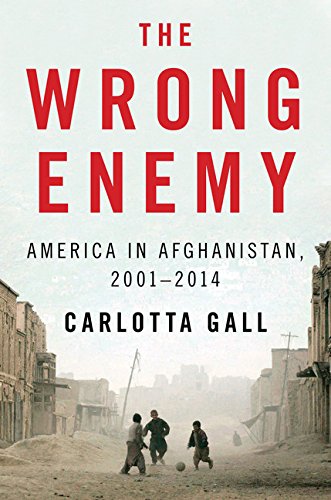
Ebook Info
- Published: 2014
- Number of pages: 352 pages
- Format: PDF
- File Size: 7.09 MB
- Authors: Carlotta Gall
Description
Carlotta Gall has reported from Afghanistan and Pakistan for almost the entire duration of the American invasion and occupation, beginning shortly after 9/11. She knows just how much this war has cost the Afghan people, and how much damage can be traced to Pakistan and its duplicitous government and intelligence forces. Now that American troops are withdrawing, it is time to tell the full history of how we have been fighting the wrong enemy, in the wrong country.Gall combines searing personal accounts of battles and betrayals with moving portraits of the ordinary Afghanis who endured a terrible war of more than a decade. Her firsthand accounts of Taliban warlords, Pakistani intelligence thugs, American generals, Afghani politicians, and the many innocents who were caught up in this long war are riveting. Her evidence that Pakistan fueled the Taliban and protected Osama bin Laden is revelatory. This is a sweeping account of a war brought by well-intentioned American leaders against an enemy they barely understood, and could not truly engage.
User’s Reviews
Editorial Reviews: Review “A valuable contribution to a hefty body of work on the American war in Afghanistan that has become stale and somewhat hackneyed. It provides a raw, unvarnished and important look at one of the darkest and least understood parts of the Afghan war….Ms. Gall, a reporter for The New York Times in Afghanistan and Pakistan for more than a decade, beginning shortly after Sept. 11, is in an extraordinary position to write this important and long overdue book.” –The New York Times”The Wrong Enemy is a timely survey of a military and diplomatic undertaking that has exacted a stiff tribute from Afghans and NATO forces in lives, treasure, and national prestige. Gall is right to confront the uneasy truths involving Pakistan’s double-dealing while also identifying coalition shortfalls…When it comes to informative, credible reporting from Central Asia over the past decade, Gall ranks with journalists like Dexter Filkins and David Rohde who have written about Afghanistan with authority and context. But Gall is perhaps uniquely positioned to tackle the troubling questions she raises about Pakistan’s alleged support of terrorism…As the US and NATO prepare to possibly withdraw all forces from Afghanistan at the close of this year, Gall’s book qualifies as a must-read.” –The Christian Science Monitor”Gall’s long years of reporting for the New York Times from the front lines of the war are clear in this book, particularly in her vivid reconstruction of how things went rapidly downhill after the easy U.S.-led victories over the Taliban at the end of 2001…To her credit, Ms. Gall gets the most important thing right. She underscores the danger of the U.S. turning its back on Afghanistan, which, while still fragile, shows more signs of modernity than ever before. The repercussions of the U.S. drawdown ‘are already inspiring Islamists, who are comparing it to the withdrawal of the Soviet Union’ after its defeat at the hands of the mujahedeen. Unlike the Obama administration, Ms. Gall recognizes that radical Islam can’t be ignored or wished away.” — The Wall Street Journal”A strong, well-crafted account by an informed observer.” –The Economist”The author offers a compelling account of the attack on bin Laden’s compound, the repercussions of which are still being felt. Gall admirably never loses sight of the human element in this tragedy.” –Kirkus From the Inside Flap As America winds down its thirteen-year war in Afghanistan, a prize-winning New York Times reporter offers a searing history that asks: have we been fighting the wrong enemy at every step? Carlotta Gall has reported from Afghanistan and Pakistan for almost the entire duration of the American military campaign, beginning shortly after 9/11. She knows how much this war has cost American forces and the Afghan people. She knows the source of power of our real enemy, Pakistan: its duplicitous military and intelligence forces and its numerous jihadist groups have been supporting the Taliban and fueling its insurgency throughout. Yet we have chosen not to challenge our supposed ally directly, relying instead on diplomatic engagement that has failed our troops and the Afghans. Now that American troops are withdrawing, it is time to tell the full history of how we have been fighting the wrong enemy, in the wrong country. Gall combines harrowing personal accounts of battles and betrayals with moving portraits of the ordinary Afghans who endured a terrible war of more than a decade. Her firsthand accounts of Taliban warlords, Pakistani intelligence thugs, American generals, Afghan politicians, and the many innocents who were caught up in this long war are riveting. Her evidence that Pakistan fueled the Taliban and protected Osama bin Laden is revelatory. This is the definitive account of a war brought by American leaders against an enemy they barely understood, and could not truly engage.” From the Back Cover WHO IS OUR TRUE ENEMY?On our fifth and last day in Quetta, four plainclothes men detained my photographer colleague at his hotel downtown. They seized his computer and photo equipment and brought him to the parking lot of my hotel. There they made him call me and ask me to come down to talk to them. “I’m in trouble here,” he told me. It was after dark. I did not want to go down to meet a bunch of ISI men, but I told my colleague I would get help. I alerted my editor in New York.Before I could reach any Pakistani officials, the agents raided my hotel room. I had earlier refused to admit them, but now they got the hotel staff to open the door with a key card, and then they broke through the door chain. The lintel splintered. They burst in in a rush, snatching my laptop from my hands. They were plainclothes intelligence, I realized. Among them was an English-speaking officer wearing a smart new khaki-colored fleece. The other three were the muscle, in bulky winter jackets over dark-colored shalwar kamize, loose-fitting shirt and pants. One of them had the photographer in tow. They went through my clothes and seized my computer, notebooks, and a cell phone. When one of the muscle men grabbed my handbag from me, I protested. He punched me twice, hard, in the face and temple, knocking me over. I fell back onto the coffee table, smashing the cups there, grabbing at the officer’s fleece to break my fall and nearly pulling him down on top of me. For a moment it was funny. I remember thinking it was just like a hotel-room bust-up in the movies . . . I was later told by a diplomat that the rough treatment was ordered by the head of the ISPR, the Inter-Services Public Relations, the press department of the Pakistani military, in order to discourage me in my reporting.— From The Wrong Enemy About the Author CARLOTTA GALL has worked for the New York Times since 1999, including over ten years in Afghanistan and Pakistan. She previously worked for the Financial Times and The Economist. In 2007 she was featured in the Academy Award-winning documentary Taxi to the Dark Side. Excerpt. © Reprinted by permission. All rights reserved. The Wrong EnemyAmerica in Afghanistan, 2001–2014By Carlotta GallHoughton Mifflin Harcourt Publishing CompanyCopyright © 2014 Carlotta GallAll rights reserved.ISBN: 978-0-544-04669-6ContentsTitle Page, Table of Contents, Copyright, Dedication, Epigraph, Foreword, Prologue, The Taliban Surrender, The People Turn, Pakistan’s Protégés, The Taliban in Exile, Al Qaeda Regroups, The Wrong Enemy in the Wrong Country, The Taliban Return, The Suicide Bomb Factory, Photos, Militancy Explodes in Pakistan, The Taliban Close Their Grip, Karzai’s Turn, Obama’s Surge, Osama’s Safe Haven, Springtime in Zangabad, Afterword, Acknowledgments, Notes, Index, About the Author, CHAPTER 1The Taliban Surrender”We should not wash blood with blood.”— General Abdul Rashid Dostum on the surrender of Mullah Fazel, the Taliban commander in the northNovember 2001. Even in defeat the Taliban were ferocious. They came fast out of the darkness, in a convoy of muddy pickups and SUVs, hurtling through the old fortress gatehouse and skidding to a halt at the headquarters building. Black-turbaned guards armed with rifles and rocket launchers leapt from the backs of their vehicles and flanked their leader’s car, a white Land Cruiser with blackened windows. They carried their weapons with the ease of long practice, and moved with an arrogance and sense of purpose that made us onlookers scatter. Two guards stayed atop their vehicles, manning antiaircraft guns. The remainder formed a perimeter, marking the opposition. It was 10 o’clock, a cold November night. The Taliban had driven into the heart of the enemy camp, inside the high walls and inner courtyards of the Qala-i-Janghi, the House of War.The nineteenth-century fort lies southwest of the city of Mazar-i-Sharif in northern Afghanistan. Its massive earth embankments, battlements, and mud-brick walls, twenty feet thick, were built by Amir Abdul Rahman, the creator of the modern state of Afghanistan. Until recently the fort had been a Taliban military base, but for the last month, U.S. bombers had been striking military targets in Afghanistan, and the Taliban had abandoned the fort and its arsenal of weapons. Now it was in the hands of their opponents, the American- backed fighters of the United Front, who had swept down from their mountain hideouts and seized power.The men on guard were a mixed crowd. The United Front was a coalition of ethnic groups from northern and central Afghanistan. There were stocky Uzbeks with Asiatic features in long corduroy tunics and Uzbek police commanders in Communist-era uniforms, who wore mustaches rather than beards; small, wiry Hazaras wearing checkered headscarves, members of a Shiite group that had fought ferocious battles against the Taliban; and Tajik commandos of the Northern Alliance, in combat fatigues and army boots, the best-trained men of the anti-Taliban forces. The United Front was brought together by the late legendary resistance commander Ahmed Shah Massoud. His own faction, the mostly Tajik Northern Alliance, made up the backbone of the fighting force, but he had sought to broaden the resistance to the Taliban with support from other ethnic and regional groups. The fighters were mostly illiterate farmers and laborers, hardened men from mountain villages who had fought for ten years as mujahideen, resistance fighters against the Soviet occupation, and then through another decade of Afghan civil war and Taliban offensives.The United Front hated the Taliban. The Uzbeks, Hazaras, and Tajiks had been driven deep into the mountains over the last few years where they had struggled to survive. The Taliban were a predominantly ethnic Pashtun movement, whose fighters were mostly from southern Afghanistan and spoke Pashtu, a different language from the Persian-dialect Dari of the northerners. The northern fighters watched the Taliban warily but with weapons shouldered. Their leaders were inside the building, and the Taliban were expected.The door of the Land Cruiser opened and a thickset, bearded man in loose white clothes appeared. Mullah Fazel Mazloom, deputy defense minister in the Taliban regime and commander of all Taliban forces in northern Afghanistan, scowled out from under his heavy black turban. He was a man with a fearful reputation for cruelty and for sweeping military offensives that spared no one. Behind him was Mullah Noorullah Noori, a slighter, younger man who served as the Taliban governor of Balkh and was the senior political figure in the north. The two men had led the Taliban’s offensive across northern Afghanistan, conducting bloody reprisals against communities that resisted. They were feared across the region. Just the sight of their convoy speeding through the darkened streets of Mazar-i-Sharif on their way to the fort that night had started a rumor that the Taliban were returning to recapture the town.I was among a group of Western journalists who jostled forward as the car door opened. A television cameraman switched on his camera light, illuminating the scene and momentarily blinding everyone. The Taliban leader drew back into his car and slammed the door. There was a short silence as everyone looked around, confused. Then the order came: “No lights! No lights!” Television was banned under the Taliban government, and its officials usually refused to be filmed. They were still insisting on this rule, even in defeat, so the cameraman turned off his light. The cleric emerged a second time, his face obscured by a woolen shawl wrapped round his head and shoulders. He stepped down into the crowd, hurrying into the building and up the stairs, followed closely by a coterie of commanders and guards. The jostling eased once they were gone. The journalists spread out, talking among themselves, switching on satellite telephones to report the arrival of the Taliban for talks. The Taliban guards turned their attention to the foreigners. They advanced on me and another female reporter with curious stares until the guards shooed them away.Upstairs, in a long, low-ceilinged meeting room, Mullah Fazel was confronting his deadliest enemies. Assembled on dilapidated sofas and armchairs along the sides of the room were men who, in the last week, with U.S. air support, had smashed his dominion and grasped control of northern Afghanistan: General Abdul Rashid Dostum, the growling Soviet-trained Uzbek militia leader who had often played kingmaker in the wars of the last twenty-five years, switching sides at critical moments and precipitating coups; Atta Mohammad Noor, the tall, lean leader of the Northern Alliance fighters, a bitter rival of Dostum for control of the north when they were not fighting the Taliban; and Mohammad Mohaqiq, the leader of the Shiite Hazara forces in the north, whose people had suffered some of the worst sectarian violence at the hands of the predominantly Sunni Taliban.Each of these men had been fighting for the last quarter century, ever since the Soviet invasion of Afghanistan, sometimes on opposing sides. They had come together in recent months to stem the Taliban advance across northern Afghanistan. Since its formation seven years earlier, the Taliban had sought to gain control over the whole country and establish a fundamentalist Islamist regime, the Islamic Emirate of Afghanistan. By 2001, they had come close to achieving that aim. Then came the attacks of 9/11 against the World Trade Center in New York and the Pentagon in Washington, D.C., and everything changed.As we waited outside in the courtyard with the guards, we watched some of the United Front’s new American allies enter the meeting room that night: a tall, broad-shouldered CIA operative who used the name Dave — or Daoud to the Afghans — wore a long Afghan tunic and hiking boots and spoke the local languages; and several bearded men in the plain fatigues of the U.S. special forces, who had been dropped in weeks earlier to assist the different groups of the anti-Taliban coalition. Several dozen Afghan elders and commanders had gathered too, among them a former Taliban commander, Amir Jan Naseri. An influential Pashtun mujahideen figure from the ancient city of Balkh, Amir Jan had fallen out with the Taliban and defected to the United Front six months earlier. His contacts on both sides allowed him to serve as an intermediary in bringing Mullah Fazel to negotiate.The meeting was a severe turn of fortune for Mullah Fazel. He had commanded over ten thousand Taliban fighters along with hundreds more al Qaeda and other foreign fighters across several battlefronts in northern Afghanistan. He had come close to annihilating the men with whom he now negotiated. When two al Qaeda members posing as journalists assassinated Ahmed Shah Massoud on September 9, 2001, they removed the most important opposition figure standing in the way of the Taliban advance. The United Front had seemed bound to collapse. Mullah Fazel was poised to overrun the last northern districts and complete the Taliban plan to conquer all of Afghanistan.That was just two days before the attacks of 9/11. Within a month, U.S. missiles began demolishing Taliban frontline positions and military camps with a pinpoint accuracy that shook the Islamist fighters and awed ordinary Afghans. American special forces personnel in the mountains with the United Front called in strikes on Taliban positions. Afghans on horseback raced in after the strikes to seize villages and hilltops, and finish off stragglers. The Taliban were forced to abandon their command posts and take cover in civilian buildings. They smeared mud over their trucks and cars, covering every bit of glinting chrome in a vain attempt at camouflage. It was no protection against modern guided missiles. Even in the cities, missiles were finding the Taliban, guided by Afghan informers working undercover and equipped with GPS locators and satellite telephones. It took just over a month for Taliban rule to collapse in the north. The first major town, Mazar-i-Sharif, fell to United Front troops on November 9. Two other northern towns, Taloqan and Bamiyan, fell on November 11, and Herat, the main city in western Afghanistan, on November 12. The Taliban were suddenly on the run.Mullah Fazel’s forces fell back to the town of Kunduz, under fire from American missiles. Afterward we saw the detritus of their retreat: their vehicles, shredded into fist-sized pieces of metal, littered the desert from Mazar-i-Sharif. Farming villages were dotted with yellow canisters, lethal cluster bombs that had decimated the Taliban foot soldiers. In Kunduz, a market town of low, walled houses and horsecarts, the retreating fighters were quickly surrounded by advancing United Front forces. The Taliban were cut off from the rest of their army hundreds of miles away in southern Afghanistan with no chance of reinforcements. Among them were thousands of Afghans, mostly Pashtuns whose homes were in the south, and hundreds of al Qaeda and foreign fighters — Arabs; North Africans; Muslims from Central Asia, Russia, and China; and a few men from Western countries, including several British Pakistanis and the American Muslim convert John Walker Lindh. They had nowhere to go and were dependent on their Afghan hosts. There were also hundreds of Pakistanis: scores of military advisors and trainers, members of Pakistan’s Inter-Services Intelligence, which was secretly assisting the Taliban; trained fighting men from Pakistan’s militant groups, which had long used Kunduz as a base in northern Afghanistan to train recruits and support the Taliban campaign; and hundreds of illiterate villagers and religious students who had rushed to support the Taliban on the urging of their religious leaders when the United States began bombing.The collapse in the north rippled through the country. Taliban soldiers, police, and government officials began deserting their posts and escaping south to their home base in Kandahar — or east into Pakistan. On the night of November 13, the Taliban withdrew from the capital, Kabul, slipping away under cover of darkness. United Front forces drove into the city with barely a fight the next day. Their fighters claimed Jalalabad, the main city in the east, on the same day.Trapped in Kunduz, Mullah Fazel faced being overrun or, worse, massacred by Northern Alliance troops who had surrounded the town and were set on avenging the death of their leader, Ahmed Shah Massoud. Their commanders threatened daily to storm the town and slaughter the Taliban and al Qaeda forces unless they surrendered.Mullah Fazel’s forces were depleted and badly shaken by the bombing raids. Dozens had been wounded. His units were struggling to hold the outskirts of Kunduz. Those who could were escaping the besieged town, bribing opposition fighters or using tribal contacts to smuggle themselves out. Most were ready to surrender, said one fighter who had been captured trying to escape Kunduz and who stood chained up in an underground pit guarded by Northern Alliance fighters when I interviewed him. “It is the bombing, there is no defense against it,” he told me, shivering in his muddy hole.As the Taliban lines disintegrated, Pakistan’s leader, General Pervez Musharraf, put three telephone calls through to General Dostum, asking him to broker a surrender with the Taliban trapped in Kunduz. Musharraf did not want to approach the Northern Alliance, the followers of Massoud who had long opposed Pakistan’s attempts to dominate Afghanistan. The Taliban, for their part, did not want to surrender to the Shiite Hazaras, fearing revenge for the two thousand Hazaras whom they had slaughtered in Mazar-i-Sharif three years earlier.So Musharraf approached Dostum, a most treacherous and untrustworthy leader but an opportunist who could be expected to do a deal. Dostum was already cooperating with the United States, and he had an American special forces team at his side. Musharraf confided to Dostum that he had been wrong to support just one group in Afghanistan — the Taliban — and said he wanted to rectify that. It suited Dostum to be the dealmaker who ended the war in northern Afghanistan. It would let him emerge once again as an important power broker.Musharraf’s intervention came just in time for Mullah Fazel. Dostum sent Pashtun emissaries to Kunduz, men with tribal contacts who were able to approach the Taliban leaders. They offered the Taliban a straightforward way out: surrender your weapons and you will be allowed to go home. Most of the Taliban were from the south and wanted above all to get away from the north where they had vengeful enemies and feared a slaughter. The tribal leaders in Kunduz urged the Taliban to spare the town from American bombing, which was already causing heavy destruction in outlying villages.Yet the Taliban despised Dostum. He had been trained by the KGB and had fought on the side of the Communists during the ten-year Soviet invasion of Afghanistan in the 1980s. His militias were notorious for their ruthless pogroms around the country, just as he himself was notorious for repeated betrayals of alliances. Mullah Fazel ultimately had no other choice. He was receiving orders from his leaders in the southern capital, Kandahar, and from his Pakistani mentors to make a tactical retreat and conserve forces for the future.In testimony he later gave before a military tribunal in Guantánamo Bay, Mullah Fazel denied receiving any orders and said it was his own decision to surrender to Dostum. The deal, he said, was that his forces would give up their weapons and then be allowed to go home. Yet according to American military prosecutors, he received orders from the Taliban defense minister to surrender. The Taliban leadership maintained command and control throughout their retreat.That leadership, under the direction of Mullah Omar and his defense minister, Mullah Obaidullah Akhund, had crucial support from Pakistan. During the Kunduz siege, Pakistan began evacuating its own people on secret military flights from the airfield on the edge of town. According to Afghan intelligence officials, there were two to three thousand Pakistanis trapped there, including trained military operatives. Pakistan had long boosted the Taliban’s military campaign with its own troops and advisors but had always kept them hidden from international scrutiny, using retired officers on contract, civilians, and only occasionally active soldiers, never in uniform.For ten to fifteen days in the second half of November, one or two Pakistani military flights had flown into Kunduz airfield every evening, airlifting a total of approximately two thousand people as well as weapons and communications systems, according to Afghans who were monitoring Taliban radio communications. Two battalions of Pakistanis, including special forces, artillery units, and hundreds of snipers, had controlled the airport and strengthened the Taliban frontlines in the north. Neither they nor their equipment were found when the town was finally captured by the Northern Alliance. Not everyone was so lucky. Hundreds of Central Asian fighters were killed in the U.S. bombing or drowned trying to ford the river north into Tajikistan. Nearly a thousand low-level Pakistani fighters were left behind to fend for themselves, ending up as prisoners of Dostum’s troops. Pakistan was bowing to the superior might of the United States, pulling out of the fight in Afghanistan and advising the Taliban to change tactics to a guerrilla campaign. (Continues…)Excerpted from The Wrong Enemy by Carlotta Gall. Copyright © 2014 Carlotta Gall. Excerpted by permission of Houghton Mifflin Harcourt Publishing Company. All rights reserved. No part of this excerpt may be reproduced or reprinted without permission in writing from the publisher.Excerpts are provided by Dial-A-Book Inc. solely for the personal use of visitors to this web site. Read more
Reviews from Amazon users which were colected at the time this book was published on the website:
⭐WELL-WRITTEN JOURNALISMGall has used strong journalism skills to render a compelling discussion of the U.S. experience in Afghanistan since the 9/11 Jihad. The reader quickly understands that there are truths about our War in Afghanistan that we have not learned in the Mainstream Media. We all have heard countless times that our enemy is al Qaeda and its enabler, the Taliban. But what Gall teaches us is that the Taliban is not just some organic organization left over from the Soviet occupation. The Taliban owes its founding and continued existence to the Pakistan Government, more specifically the ISI (Directorate for Inter-Services Intelligence).Gall’s story is mostly linear so it is easy to follow. It is replete with details of her fact finding over a dozen years in Afghanistan and Pakistan and years before in that part of the world. Gall gives eyewitness accounts of the collapse of the Taliban crushed on the ground by the Northern Alliance and the United Front and completely decimated by U.S. bombing.Gall spends some time describing Hamid Karzai and Mullah Omar. Karzai quickly rose to the top the U.S. list of trusted Afghans and then was elected President. Omar was an Afghan and the long-time leader of the Taliban. Gall contradicts the standard wisdom that has evolved over the years about the ineptness of Karzai. She maintains that Karzai is a skilled politician and effectively bonded together the War Lords into an Afghan State and has tried to get the U.S. and the Media to understand that the real enemy lies in Pakistan. His great failing, however, is his ineptness at administration and his micromanaging. Toward the end of the book, Gall relates that one of Karzai’s greatest failures is in not seeing the value of distributing the police power to the districts. Had he effectively trained and armed local police forces instead of holding the power centrally in Kabul, the districts might have been able to stand up to the legions of Taliban fighters pouring into Afghanistan from Pakistan. This was the movement that Generals McChrystal and Patreaus began in 2010, though with no support from Karzai.”The Wrong Enemy” guides the reader through the maze of characters on both sides of the border in making the case against the ISI. Gall does project a ray of hope in the last chapter. Chapter 14, “Springtime in Zangabad,” describes the popular uprising in southern Afghanistan by a group of villagers who finally had enough persecution by the Taliban and, importantly, also had a competent and aggressive local police force. This combination, even in the heartland of the Taliban, was enough for the people to exercise their own initiative and drive the Taliban thugs away.In the words of Gall: <<"What had changed in Panjwayi was the shift in the balance of power. The surge had routed the Taliban in much of Kandahar province in 2010, and it had taken another two years for the secondary and tertiary phases of the counterinsurgency strategy, the "hold and build" stages to keep the Taliban out and build a security and administrative system in the area, to take effect. A watershed moment came in 2012 in neighboring Zhare district, according to the American commander in southern Afghanistan in that period, Major General Robert B. Abrams. The Taliban had declared their intention to regain lost territory in Zhare in 2012 but failed to do so. Instead, they had steadily ceded ground and by 2013, had fallen back across the river, making southern Panjwayi their last stronghold. They were forced to retreat because of the newfound strength of the Afghan security forces, people told me. The surge had not only flooded the southern provinces with thousands of American troops, but also with twice their number of Afghan soldiers and police. By 2013, there were 17,000 American and coalition troops in the four provinces of Regional Command South, as well as 52,000 Afghans across various agencies of police, army, and intelligence. Kandahar had two Afghan army brigades and 10,000 police manning checkpoints on virtually every road in the province, and another 2,000 local police in the villages.">>The lesson is that this could happen across Afghanistan with properly trained–and armed–local police. This harkens to the American Revolution when the local militias, which were self armed, were able to be organized to defeat the strongest army on earth. After this glimmer of hope, reality sets in when we realize that, with the U.S. forces due to withdraw this year (2014), the popular uprising is probably too little and/or too late. [p.s. 4-14-2014–The second sentence of this paragraph is incorrect. A reader (johnc) was kind enough to point out that the militias had little effect on the outcome of our Revolutionary War. Read his comments at the end for details.]DISARMING THE PEOPLEThis leads to a deficiency in Gall’s narrative. In an interview with Wudood, the leader of the popular uprising, he said: “They came by force. We could not say anything to them. We did not have weapons.” In other words, the farmers were unarmed. Gall’s only other reference to this condition of being disarmed prior to 2001 was in Chapter Four: <<"Through murderous methods and with Pakistani help, the Taliban took power in the south. ... but they did deliver law and order, gaining a monopoly of force and disarming the population.">>Disarming the people is a critical and classic strategy in subduing a population. It has been used countless times by monarchs and dictators throughout history. It prevented the people from defending themselves and deserves much more consideration in this book than these two minor references.ISLAMIC JIHADNow let’s get to the real reason why I am critical of this otherwise fine and vital book. It’s hard to imagine a book about Jihad in Afghanistan and Pakistan without at least some discussion of Islam. The political and religious ideology of Islam is at the very heart of the war in Afghanistan. Since human nature is so complex, there are, of course, many other power, money, and tribal issues that muddy up the waters. But make no mistake that Islam is at or near the core of all the problems in the region. One of my motives for picking up the book was to see if the principles of Jihad and the Caliphate are the same there as what I know of them in the Arabic regions.Since the Quran (the absolute and eternal word of Allah) and the Hadith (the teachings and traditions of Muhammad, the perfect model for all men) are written in Arabic and are spread to believers throughout the world as much by the spoken word as by the written word, there may be differences in emphasis from place to place. The Quran says: “And fight them until persecution is no more, and religion is all for Allah.” (Surah 8. Verse 39) Remember that one meaning of “persecution” to Muhammad was having his demand to convert and submit to Islam rejected by someone. Is this what Afghans and Pakistanis believe? Is this what is taught in the madrassas?The closest Gall comes to this is in the Foreword: <<"I came across international jihadis in the Pakistani city of Peshawar then, too. We called them Wahhabis, after the fundamentalist Islamic sect that has its roots in Saudi Arabia. ... I saw Wahhabis turn up in Chechnya in 1995 and watched how they transformed the Chechens' deserving cause for self-determination into an extremist Islamist struggle. ... They wrought even greater havoc in Afghanistan and Pakistan. They dreamed of creating an Islamic caliphate stretching across South and Central Asia, home to some 500 million Muslims. Pakistan, the first nuclear-armed Muslim state, would be at its core.">>Wahhabism is the aggressive form of Islam that dominates North America, Europe, and the Middle East, where Islam is mostly Sunni. Thus I would suppose that Islam in Afghanistan and Pakistan is leaning toward Saudi Arabia. What the madrassas teach is important, as is the motivation of a young person or their parents to attend or send their children to them. This should be discussed.SUNNI vs. SHIAGall also does not treat the important Sunni/Shia split. Since Wahhabism, al Qaeda, and the Taliban are Sunni, and I assume many in Afghanistan’s northern districts are Shia, this must create significant friction. Gall also mentions “emirate” as if it is the same as “caliphate.” An emirate is a physical Muslim state, whereas THE caliphate is the capitol of the worldwide body of believers. Islam has been without a caliphate since the Caliphate of Istanbul was terminated at the end of WWI.One final issue is maps. It is important for me to have a sense of place when studying history. Thus I was frequently consulting my atlas maps, however many of the place names were not on my maps, probably because the places were so small. A few maps in the book showing the places discussed would have been very helpful.THE FUTUREDespite these critiques, I found the book very well written and absorbing. I also consider it to be essential information for understanding Afghanistan and especially Pakistan and for putting America’s huge human and financial investment into perspective.I will close with a quote from Gall: <<"America should have selected to crush al Qaeda and the Taliban in Pakistan, rather than go to war in Iraq," the former senator and leader of the Baloch National Party in Quetta [Pakistan], Habib Jalib Baloch, told me in May 2003. He warned that the Taliban were being reorganized with funding from Arab countries, and that Mullah Omar and the top Taliban commanders were all in Pakistan, protected by their links to the Pakistani establishment. "You need to cut the funding," he said. "You will not kill them with a hammer. You must cut the funding and the connection.">>That wisdom still applies eleven years later.
⭐Like many Americans, I have supported our nation’s response to 9/11, including our now 13 year adventure in Afghanistan. My heart goes out to those families who have sacrificed the most in prosecuting this war against Al Qaeda and to a limited extent, its affiliates. I use the words limited extent because, as we learn from Carlotta Gall, our campaign to destroy Al Qaeda stopped, apparently, at the border to Pakistan, our nominal ally in that war. Our strategy instead found its way to Iraq in 2003. The role of Pakistan in funding, enabling, and fueling the conflict in neighboring Afghanistan is the central theme in The Wrong Enemy: America in Afghanistan, 2001-2014, by Carlotta Gall of the New York Times. Her gripping first hand account is must reading for anyone who seeks to understand how America got to where we are today in our war to eradicate militant Islam. Gall lays out the history and timeline of our war in Afghanistan, the triumphs and defeats, the advances and setbacks. In particular, she chronicles the suffering of the Afghan people in living with three decades of continuous war. The book ends with the Obama surge led by Gen. Petraeus, and the broader context of the raid to kill Bin Laden who found safe haven in Pakistan. The emergent theme of the book is the duplicity and deceit of the Pakistani government and their role in orchestrating the Taliban campaign to restore its brutal occupation of Afghanistan, terrorize the Afghan people, and kill coalition soldiers. The Gall account puts the previous book I read, The Outpost: An Untold Story of American Valor, by Jake Tapper, into larger context as well. The Tapper book gives the tragic account of Outpost Keating, and the horror visited upon our soldiers in trying to defend this country. We now know what many long suspected, the slaughter visited upon our soldiers at Keating and elsewhere was funded and directed by the Pakistani ISI security apparatus in a proxy war against the U.S. military. We know that President Bush promised the American people that we would carry the fight to Al Qaeda and to all those that harbor and support it. The Gall book clearly indicates that was not the case. And I say this as a Bush voter and supporter. I am not an expert in diplomacy or geopolitical strategy. But I am old enough to remember Vietnam and the handcuffs our military wore to not carry the fight into Laos or Cambodia. Just as the Vietcong used those countries to marshal and arm its forces against us, Pakistan played a similar though far more active role in the current war on militant Islam, exploiting its status as our ally. Some ally. It is chilling to consider the hundreds of millions of U.S. taxpayers dollars we poured into Pakistan over the years, and how many of our dollars were used to fund the militants that Pakistan harbored and supported and unleashed against us. The very same militants who brought so much suffering to the Afghan people and the families of our soldiers. It’s very difficult to read The Wrong Enemy without imagining U.S. laser guided bombs raining down on the HQ of the Pakistani ISI and the so-called madrassas that Pakistan used to brainwash waves of cannon fodder militants sent to Afghanistan drunk on jihad and wholesale slaughter. To some extent, the perverse calculus of Secy. Rumsfeld as it relates to the war on terror was spot on. Can we kill these militants at faster rate than the Pakistan ISI can manufacture them?
⭐This is a very good book that should rank high in those lists of publications explaining the perennial wars and crisis of the Middle East. The author knows very well her grounds after having reported from Afghanistan for over ten years (plus being the daughter of a long time correspondent in the same country).So Ms Gall makes clear where the problem lies from the very title. “The Wrong Enemy” refers to the invasion and long (the longest in the American history) war that the USA still 19 years later fights in Afghanistan. The overall theory of the book is that America rather foolishly bit the bait that the Taliban and Bin Laden threw at them and entered in the country like an elephant in a china shop. It was the wrong enemy because the actual enemy was Pakistan, the safe haven for the Taliban, as well as their training grounds and laboratory. Yet a war against Pakistan, with its 180 million population and its nuclear bombs, would have had results beyond anyone’s imagination. So the war has been futile and far from fixing things in a tumultuous region has worsen them, and much.So America invaded Afghanistan by late 2001, right in the aftermath of the 9/11 and all the Taliban had to do was drive a few miles to cross the border into Pakistan, Bin Laden included. The enemy was already elsewhere.And another, perhaps bigger, mistake was how to fight that was. As one character says in the book, “it needed more spies and less soldiers”. Bombing villages did little, if at all, to help America towards a victory, and it provoked resentment, if not anger, in the local population. And in the 13 years narrated in the book, the way into victory eluded two American Presidents (then three counting the current one), equally unable to finish, let alone winning, the war.A mess, and well told. Why not 5 stars? A few minor things.The book sometimes reads as a personal chronicle, too personal. The author tells her interviews, trips, tea times and climbing around the rough Afghan mountains. All well and good, but the personal odysseys, interesting as they are, should have been a tad more distant of the main narration.Linked to the previous, there’s certain indecisiveness in the, say, “spirit” of the book. It is not completely clear if it is a personal tale or a war chronicle. Perhaps trying to be both, it remains in the end in doubt and it shows.Lastly, it is sometimes a bit messy with the dates, events, places and names of players. The digressions are frequent and to explain the reasons behind something that’s happening in 2007, the author goes to 2001 and then back to 2005 and then we recover the main thread where we left it. It doesn’t help that the names of places and people are alien and difficult for the reader. But it could have used, to these eyes, a bit of precision and a stronger and more straight story core.All and all, while not flawless, it is a very good book and after we finish it we do know much more about one of the greater disgraces, and its consequences, of our times: the almost 40 years in which the Afghan soil has been the scenario of contemporary, useless and tragic wars.
⭐A damning account of ‘blow hot and cold’ western interventionism in Afghanistan and the apparently remorseless double-dealing by its powerful neighbour. The book suggests that the Afghans may have the strength and resilience to determine their own future but it also highlights the desperately fragile state of the country in the wake of decades of fighting.
⭐Illuminating account of an area that has been dogged by interference trying to impose foreign, supposedly modern, values and systems on a tribal society arrogantly thinking they(we) know best, instead of helping them secure their own civilisation.This should be prescribed reading for all Diplomats and Members of Parliament.
⭐Good to read
⭐Good read, made you think!
Keywords
Free Download The Wrong Enemy: America in Afghanistan, 2001-2014 in PDF format
The Wrong Enemy: America in Afghanistan, 2001-2014 PDF Free Download
Download The Wrong Enemy: America in Afghanistan, 2001-2014 2014 PDF Free
The Wrong Enemy: America in Afghanistan, 2001-2014 2014 PDF Free Download
Download The Wrong Enemy: America in Afghanistan, 2001-2014 PDF
Free Download Ebook The Wrong Enemy: America in Afghanistan, 2001-2014