Ebook Info
- Published: 1997
- Number of pages: 400 pages
- Format: PDF
- File Size: 8.10 MB
- Authors: Clark Glymour
Description
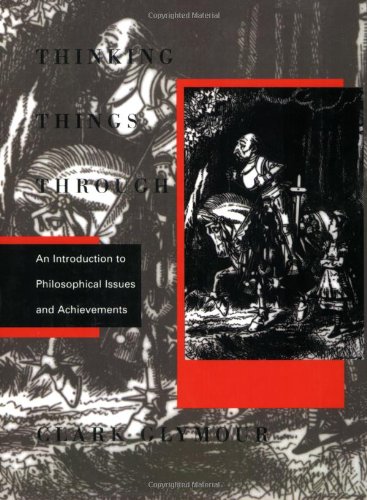
Thinking Things Through provides a broad, historical, and rigorous introduction to the logical tradition in philosophy and to its contemporary significance. The presentation is centered around three of the most fruitful issues in Western thought: What are proofs, and why do they provide knowledge? How can experience be used to gain knowledge or to alter beliefs in a rational way? What is the nature of mind and of mental events and mental states? In a clear and lively style, Glymour describes these key philosophical problems and traces attempts to solve them, from ancient Greece to the present.Thinking Things Through reveals the philosophical sources of modern work in logic, the theory of computation, Bayesian statistics, cognitive psychology, and artificial intelligence, and it connects these subjects with contemporary problems in epistemology and metaphysics. The text is full of examples and problems, and an instructor’s manual is available.Clark Glymour is Alumni Professor of Philosophy at Carnegie-Mellon University and Adjunct Professor of History and Philosophy of Science at the University of Pittsburgh.
User’s Reviews
Editorial Reviews: Amazon.com Review From the criticisms commonly leveled at philosophy, one would think it were a top–all that going around and around and never really getting anywhere. Clark Glymour introduces philosophical theories that actually lead somewhere. He begins with the Greeks and ends with cutting edge computational theory, demonstrating the contributions of philosophy in such areas of logic, decision theory, computation, scientific method, and the mind. A word of warning, however: although Glymour excels at organizing and presenting ideas, he pulls no punches when it comes to the inherent complexity of some theories. He is a mathematician’s philosopher. Designed as a textbook but worthy of a broader audience, each section of this book ends with an excellent bibliography so that curious readers can explore further. Review I have never encountered an introductory text like this one. As far as textbooks go, it is unique. It attempts to present a side of philosophy that has been hidden from the view of all but its practitioners…Glymour’s book should make a good many people proud to be philosophers in the twentieth century. (Douglas Stalker, University of Delaware) About the Author Clark Glymour is Alumni University Professor in the Department of Philosophy at Carnegie Mellon University and Senior Research Scientist at Florida Institute for Human and Machine Cognition. He is the author of The Mind’s Arrows: Bayes Nets and Graphical Causal Models in Psychology (MIT Press), Galileo in Pittsburgh, and other books. Read more
Reviews from Amazon users which were colected at the time this book was published on the website:
⭐Finished this one a few days ago, and just noticed that a second edition of this book — with 4 new chapters — came out a few years ago. Wish I’d known sooner. I’d have read that one instead. Greatly enjoyed this book, and found it quite challenging in places. Glymour is a fine guide to a many (and fascinating) ideas in logic and philosophy of mind. This book is an outstanding stepping stone to additional reading.
⭐
Keywords
Free Download Thinking Things Through: An Introduction to Philosophical Issues and Achievements in PDF format
Thinking Things Through: An Introduction to Philosophical Issues and Achievements PDF Free Download
Download Thinking Things Through: An Introduction to Philosophical Issues and Achievements 1997 PDF Free
Thinking Things Through: An Introduction to Philosophical Issues and Achievements 1997 PDF Free Download
Download Thinking Things Through: An Introduction to Philosophical Issues and Achievements PDF
Free Download Ebook Thinking Things Through: An Introduction to Philosophical Issues and Achievements