

Ebook Info
- Published: 2009
- Number of pages: 320 pages
- Format: PDF
- File Size: 1.78 MB
- Authors: Warren W. Smith Jr.
Description
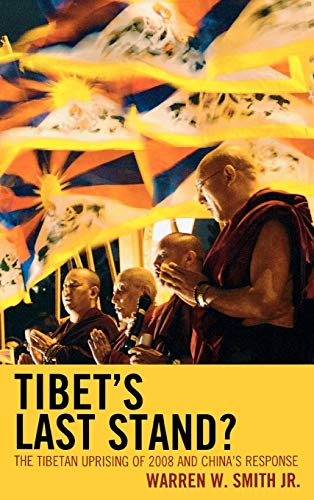
This book offers a definitive account of the origins and events of the 2008 Tibetan uprising, which began with peaceful demonstrations by monks of Lhasa’s great monasteries on the anniversary of the 1959 revolt. Noted expert Warren W. Smith Jr. argues that the uprising was a widespread response to the conditions of Chinese rule over Tibet, which revealed much about Tibetan nationalism and even more about Chinese nationalism. Interpreting the Tibetan uprising as an attempt to spoil the Beijing Olympics, China’s hard-line response was repression, “patriotic education,” and propaganda blaming the disturbances on the “Dalai clique” and “hostile Western forces.” Smith contends that China’s offensive is based upon a belief that China now has sufficient economic and political influence to make the world “thoroughly revise its mistaken knowledge” about the Tibet issue. He convincingly shows that far from becoming more lenient in response to Tibetan discontent, China has determined to eradicate Tibetan opposition internally and coerce the international community to conform to China’s version of Tibetan history and reality.
User’s Reviews
Editorial Reviews: Review The most informative and fair account available of China’s occupation of Tibet and its consequences. . . . Open-minded readers of whatever opinion about China and Tibet will find much to learn from Tibet’s Last Stand? and may even change their minds. . . . This is a revealing and honest book. . . . Tibetans are unlikely ever to achieve their independence, Dr. Smith concludes, ‘but they retain the right to write their own history.’ This he says—and he is a great champion—must be the role of Tibetans in exile and their friends. . . . I believe that will be the judgment of many attentive readers of this invaluable book. ― Hong Kong Economic JournalA useful, detailed account of the 2008 demonstrations, the official response, and surrounding events. . . . Readers will gain a clear idea of the Chinese position on Tibet and of Beijing’s strategy in the region: a combination of Han immigration, economic development, assimilation, repression, and waiting for the Dalai Lama to die. ― Foreign AffairsRecommended. ― ChoiceAn invaluable compendium of data on what Smith convincingly argues was a watershed moment not just for Sino-Tibetan relations, but also for China’s relationship with the rest of the world. . . . Smith provides readers with an admirably comprehensive review of the events, players, and discourses of the Tibetan unrest. ― Journal of Asian StudiesA lucid, comprehensive, and insightful account of the 2008 uprising in Tibet. Smith’s impressive analysis of the causes of the uprising is surpassed only by his detailed examination of the consequences of that eruption: the resurgence of Tibetan nationalism, the brutal Chinese crackdown and the collapse of the Dalai Lama’s negotiation attempts with Beijing. It is a must read for those concerned about the fate of Tibet. The book takes on special significance in the wake of the similar conflict in Xinjiang in 2009, providing useful insight into the future of China’s colonial empire. — Jamyang Norbu, author of The Mandala of Sherlock HolmesTibet’s Last Stand? is the first book-length discussion of the 150 or so protests that took place in Tibet in 2008. Using clear, accessible language, Warren Smith offers a detailed summary of the protests that took place and especially of the responses of the security forces and politicians to unrest, together with extensive ethical and political commentaries by the author. — Robert J. Barnett, Columbia UniversityWarren W. Smith Jr. has emerged as the preeminent writer on Tibetan history and Sino-Tibetan relations. His newest work solidifies that position by offering the most comprehensive account available of Tibet’s resistance during the buildup to the Beijing Olympics―an uprising that challenged China’s claim that it has a legitimate right to colonize and suppress the Tibetan people. Smith relates Beijing’s paranoid reaction to the uprising in fascinating detail. Anyone who is interested in the Tibetan issue or the nature of modern Chinese nationalism must read Tibet’s Last Stand?, a seminal and mesmerizing book. — Mikel Dunham, author of Buddha’s Warriors About the Author Warren W. Smith Jr. is a researcher and writer with the Tibetan Service of Radio Free Asia.
Reviews from Amazon users which were colected at the time this book was published on the website:
⭐I began writing this book at the time of the March 2008 uprising. The protests and demonstrations had an air of desperation about them (Tibetans waving flags, knowing the penalty for that). As the story went on it became more about China’s response. China managed to counter international threats to boycott the Olympic opening by pretending to dialogue with the Dalai Lama’s representatives (in late April and July). And they exploited the Sichuan earthquake for international sympathy. Once the Olympics were over they scornfully rejected the Memorandum on Tibetan Autonomy that the Tibetan side presented. Since then they have declared Tibet a core issue of China’s sovereignty about which China cannot legitimately be criticized by anyone who has recognized Chinese sovereignty over Tibet–and that’s everyone! They say that Tibet is not an issue of human rights, ethnicity or religion and they will not talk about those issues with anyone, whether foreign critics or the Dalai Lama’s reps. They have put unprecedented pressure on all countries to avoid meeting with the Dalai Lama. So, even though it seemed in March 2008 that the uprising would create leverage against China for Tibetans and their supporters, the Chinese managed to turn it into what they now think is their advantage. They have mounted a new diplomatic offensive in regard to Tibet. This new offensive, combined with the repression inside Tibet and the intolerance of any measure of autonomy, is what inspired the title, Tibet’s Last Stand? Notice the question mark. I don’t mean to say that China will finally be successful in repressing all Tibetan resistance, within Tibet or internationally, just that their response to the uprising was to become even more intolerant of Tibetan autonomy and international support for Tibet. They now seem to believe that they have to eradicate the Tibetan political issue and they think they have the means–repression, patriotic education, development, colonization and the diplomatic offensive–to do so. Warren Smith
⭐
Keywords
Free Download Tibet’s Last Stand?: The Tibetan Uprising of 2008 and China’s Response in PDF format
Tibet’s Last Stand?: The Tibetan Uprising of 2008 and China’s Response PDF Free Download
Download Tibet’s Last Stand?: The Tibetan Uprising of 2008 and China’s Response 2009 PDF Free
Tibet’s Last Stand?: The Tibetan Uprising of 2008 and China’s Response 2009 PDF Free Download
Download Tibet’s Last Stand?: The Tibetan Uprising of 2008 and China’s Response PDF
Free Download Ebook Tibet’s Last Stand?: The Tibetan Uprising of 2008 and China’s Response