

Ebook Info
- Published: 2019
- Number of pages: 169 pages
- Format: PDF
- File Size: 99.04 MB
- Authors: Douglas Porch
Description
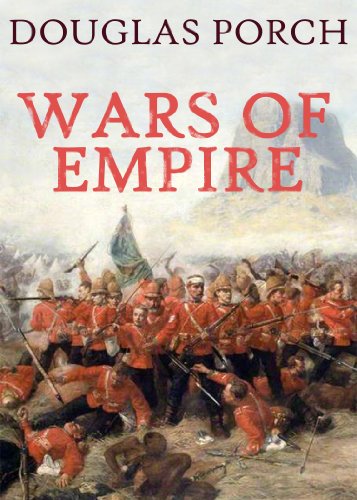
The nineteenth century marked the high point of Western Imperialism with much of the world falling under colonial rule. European powers expanded their empires to swallow almost every independent state in Africa and Asia. But were their armies really so superior to the native forces they eventually overcame? In this ground-breaking book, historian Douglas Porch overturns the idea that indigenous fighters were easily outclassed by European armies. In this violent clash of cultures, the margins of victory were often slim and the ‘civilized’ powers sometimes met bloody defeat. Native militias often defeated their European counterparts, and sometimes quite spectacularly. The British Army fell victim first to American rebels, then Afghans, Indian mutineers, and finally to the Boers. From the ‘scramble for Africa’ to the Russian march into the Caucasus, this fascinating story of the Age of Imperialism is about more than mere clashes of arms. It is about clashes between civilisations, wars fought between peoples of radically different mentalities, different levels of political organisation, and of contrasting technological capabilities. Praise for Douglas Porch:”This outstanding book will delight both scholars and well-informed general readers who appreciate a great story well told.” Jay Freeman, Booklist. Douglas Porch is a professor of national security affairs at the Naval Postgraduate School in Monterey, California.
User’s Reviews
Reviews from Amazon users which were colected at the time this book was published on the website:
⭐Porch is given a seemingly hopeless task: discuss a history that not only spans CENTURIES of warfare, but also an impossible variety of cultures and political contexts. Unlike other authors in this Smithsonian series, Porch approaches this seemingly impossible task with both energy and vision.Porch must have quickly recognized that a strictly chronological approach would not have been at all insightful. There were simply too many Western powers trying to colonize vastly unrelated parts of the globe at the same time… any chronological approach to this topic in such a small book was doomed to becoming a simple list of battles and dates with little comment.Instead, Porch chooses as his unifying structure the various strategies applied by Imperialists and their indigenous enemies. Porch identifies commonalities in both political and military strategies used in vastly different contexts, and organizes his discussion into these strategic lessons. The result is that battles in the 1700’s may be mentioned in the same sentence as battles in the 21th century, provided that they present antagonists with comparable dilemmas. The advantage to this approach is that Porch is free to add profound insight without exploding the book to re-teach the lesson each time. The disadvantage, of course, is that all these tongue twisting names and dates seem to pop out of nowhere in the context of a lesson and can become hopelessly confusing for a first time reader.Obviously, this approach makes it difficult to assemble any chronological narrative after just one reading, but Porch assumes that you will be reading this MORE than once. Porch ensures that there is sufficient information to allow a careful reader to go back and reconstruct a Colonial narrative from any viewpoint they choose. The maps and indicies in this book are absolutely vital, as they provide a very important launching point for a reader to go back and adopt a particular perspective from which to re-experience this book with a continent, imperial power, or century in mind.Finally, the emphasis on “lessons learned” shows uncomfortable relevance to the American experience in Iraq. There is no direct mention of this occupation, so it is possible that the book was written before the invasion, but it is abundantly clear that the lessons learned painfully by imperial powers of centuries past were utterly disregarded by the Americans.
⭐Wars of Empire by Douglas Porch is part of the Cassell History of Warfare series edited by John Keegan. The title actually is a bit of a misnomer. It refers to the usage prevalent in Eurpoe around 1700-1900. By Empire, it means an imperial colonial system, and so examines predominately the European experience, although the American experience in the Phillipines, and Japanese efforts are also discussed. The series has been notable in its flexible approach. Rather than restricting its authors to a specific struggle or time period, the series has allowed some topics to span larger ranges of time and space. (examples: Age of the Fighting Sail, War in the Air: 1914-1945) This method of looking at the common points along a continuum helps to formulate a better understanding of seemingly disparate topics.Major strengths: briefly summarizes the major imperial wars which created the vast colonial empires of the European powers between 1700-1900. It highlights their successes and failures. It traces the importance of technology (notably machine guns, naval power, telegraph) and how these actions were part of a greater political/economic plan. Of interest to current readers is the history of how areas were “pacified”, and why empires have failed. The last chapter “Imperial Twilight?” examines why the great colonial empires fell apart after WWII.Major weaknesses: it requires the reader to have some notion of the political climate of the different eras, and be able to sense the vast scales involved.So, in conclusion, a well done effort on a complex topic. Not just a history of little known colonial actions.
⭐A little too broad. I was hoping for something with more specific details. Lots of exciting battles referred to with no explanation. Just the broad strokes of imperialism. But considering the size of the book, I should have known. A lot of great info though. This whole series is great.
⭐Porch’ s previous books were much sharper in every way.This one is disorganized, pedestrian, dull-witted and dull. He returns to the chest-beating imperialist apology that their soldiers were better disciplined and tactically adept. While mentioning empires’ vastly superior logistics and reinforcements, he clings to the pompous, silly old saws. Worse, superficial scholarship and lack-luster prose abound. I hope that his next book returns to his high standard.Larry K
⭐But a well written survey for the generalist reader, but the specialist will find it a rehash of prior works.
⭐Porch takes a rambling journey through the headline conflicts of the 19th Century in no apparent particular order and with little or no background context or indeed insight. The writing is at best pedestrian, and at worst just confusing. If you don’t happen to know that Kitchener’s handling of the French expedition to Fashoda was a critical issue in Anglo-French relations and lead to the entente cordiale you are going to be very lost – a bit like the Italians in Abyssinia. – and the author, it would appear.
⭐Sum it up in one word…GREED, the sorry estate of all human traits.
⭐This Kindle edition is a total rip off inasmuch as it does not include any of the maps or illustrations which are so critical to this book’s quality. This edition is text only, and is therefore misleadingly marketed.
⭐Read Wars of Empire as student, but book will engage soldiers and military history buffs too. Book is excellent introduction to period and its major campaigns and battles. Author isn’t blind to criticisms of Empire, but he also rightly points out the heroism and achievements involved too. Wars of Empire is concisely written and can be dipped in and out of.
⭐Another good, short, history that provides a rapid overview, in this case Britain’s various expansionist wars.
⭐Comprehensive history bit difficult to stick with
⭐Well-informed, persuasive argument. Does succeed in adding to our knowledge of European armies, wars and the mechanisms of Empire. Some shortcomings in terms of structure and presentation. Can be too superficial at times. Well worth a read.
⭐Interesting but for the authors need to fatten his manuscript by excessive repetition of examples describing each theory. A real case of too much of a good thing. Sound reasoning with fewer cases would have made this a highly readable and convincing work.
Keywords
Free Download Wars of Empire in PDF format
Wars of Empire PDF Free Download
Download Wars of Empire 2019 PDF Free
Wars of Empire 2019 PDF Free Download
Download Wars of Empire PDF
Free Download Ebook Wars of Empire