

Ebook Info
- Published: 2016
- Number of pages: 112 pages
- Format: PDF
- File Size: 12.96 MB
- Authors: Jonathan Keates
Description
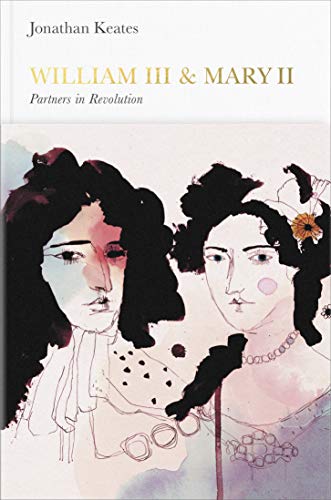
Britain’s only ever “joint monarchs”William III (1689-1702) & Mary II (1689-94) changed the course of the entire country’s history, coming to power through a coup (which involved Mary betraying her own father), reestablishing parliament on a new footing, and, through commiting Britain to fighting France, initiating an immensely long period of warfare and colonial expansion. Jonathan Keates’ wonderful book makes both monarchs vivid, the cold, shrewd “Dutch” William and the shortlived Mary, whose life and death inspired Purcell to write some of his greatest music.
User’s Reviews
Editorial Reviews: About the Author Jonathan Keates’ books include biographies of Handel and Purcell and The Siege of Venice.
Reviews from Amazon users which were colected at the time this book was published on the website:
⭐I’m a huge fan of the Penguin Monarchs series, which I first encountered in a bookstore on a trip to London and have been trying to assiduously cobble together a set off of Amazon as they come available. Each short book is done by a different author, which leads to some ups and downs depending on the content and structure chosen by the individual author for the particular monarch in question. Sometimes you’re getting a fine biography of a monarch you think you know well; other times you’re learning about a complete unknown.Here you’re getting a quick but compelling biography done by Keates on the pair of monarchs so often overlooked by their flashier and more tragic Stuart predecessors. Keates covers all of the high points – the intrigues that brought them across the channel to power, how they functioned as a couple, their private and public personae, and the geopolitical struggles they faced in European politics and Protestant-Catholic frictions. A great read for anyone filling in the gaps on their English history, strongly recommend!
⭐The book is only a synopsis but it describes a unique time in English History when the Age of Enlightenment was in full bore and the events that changed the lives for everyone in Western Civilization from thereon.
⭐This is the third joint biography of William III and Mary II I’ve read, the other two being William and Mary by Henri and Barbara Van der Zee published in 1973 and William and Mary: Heroes of the Glorious Revolution by John Van der Kiste published in 2003. At 77 pages William III and Mary II: Partners in Revolution doesn’t provide a detailed look at the lives of William III and Mary II but Jonathan Keates does an excellent job detailing the importance of these joint monarchs and their reign in the development of modern representative government.Keates does examine their personalities. For example, he points out how fortunate it was that even though William and Mary each had one Stuart parent neither of them inherited the worst Stuart traits: mulishness, arrogance and a refusal to face facts. He sees Mary as having a talent for making the best of a bleak situation. He agrees with most of William’s biographers that he had a public persona and a private persona and only his intimates ever saw his charm and affability. I particularly liked Keates’s comment on their marriage: “The tragic irony of his marriage to Mary was that she should have needed to die in order for him to reveal the genuine intensity of his love for her.”It is de rigueur to discuss William’s sexuality in any biography. He had a close friendship with Hans Willem Bentinck dating back to their adolescence and after Mary’s death he became very attached to Arnoud Joost van Keppel who was 20 years his junior. Some historians think Bentinck and Keppel were his lovers. Keates is among those who think William was heterosexual and one of the reasons for his belief is an idea that I hadn’t encountered before. Keates believes William’s relationships with Bentinck and Keppel were homosocial rather than homosexual. I was not familiar with the term homosocial but I learned it refers to same sex relationships that are not of a romantic or sexual nature.Finally, the book contains 13 color pictures and an excellent selection of books for further reading.
⭐This is a very engagingly-written book by an author with a nice sense of humor (William was “gloomy” and had “a glumly practical scissors-and-paste approach”). Keates praises the regime for leaving us with “the defeat of monarchical absolutism and the assertion of fundamental freedoms,” which are among “Britain’s positive contributions to the benefits of humankind.” Not bad.
⭐This is a beautifully written, witty and penetrating introduction to two of England’s most neglected monarchs.The author uses his long experience as a teacher to present the material in a way which engages his readers. I particularly appreciated two aspects of the book. First, the book shows a very good appreciation of the subtleties of the characters involved. It is all too easy to simply see him as withdrawn and boring, and her as pious. Keates presents us with two human beings in full colour with plenty of contradictions and inconsistencies. Secondly, as someone reading into this period for the first time, I really appreciated the analysis of how these two challenged the existing political framework, not just in William’s desire to limit Louis XIV, but in their changing the relationship between monarchy and state.
⭐Small, to the point and informative. I didn’t know much about William III & Mary II and this book has taught me a lot in such a small space. It was good to read about a king and queen who were generally scandle free and good for the nation, perhaps too good for the nation at the time. It was also interesting to discover that William actually supported religious freedom and Catholics in Ireland and shows how distortions and hijacking of history can change perspectives. I recommend for a quick analysis written by an expert. This is why the Penguin Monarch Series is excellent.
⭐William III was a committed Calvinist, so one might wonder how he’d view this hagiography. “William is the ultimate Aunt Sally for partisan historians, a king who could never get anything right” we are told without a hint of irony, despite this book presenting the polar opposite view.In this reading all criticisms of the king are swept aside and excused as not being his fault, from his boorish manners or losing battles. His critics are routinely insulted: “hysterical Jacobite denunciations”, “bleeding-heart Scots nationalists”. The mere suggestion of homosexuality, the subject of some historical debate, is viewed as such a slur that it is dismissed twice.And what of Queen Mary? History has apparently forgotten her because she was so boringly perfect, “a woman whose short life was so conspicuously virtuous”.I didn’t expect much from a book of this size, but perhaps a bit more than this doe-eyed devotion. Perhaps the short format did not permit space for the inclusion of any balance.
⭐This is the third joint biography of William III and Mary II I’ve read, the other two being William and Mary by Henri and Barbara Van der Zee published in 1973 and William and Mary: Heroes of the Glorious Revolution by John Van der Kiste published in 2003. At 77 pages William III and Mary II: Partners in Revolution doesn’t provide a detailed look at the lives of William III and Mary II but Jonathan Keates does an excellent job detailing the importance of these joint monarchs and their reign in the development of modern representative government.Keates does examine their personalities. For example, he points out how fortunate it was that even though William and Mary each had one Stuart parent neither of them inherited the worst Stuart traits: mulishness, arrogance and a refusal to face facts. He sees Mary as having a talent for making the best of a bleak situation. He agrees with most of William’s biographers that he had a public persona and a private persona and only his intimates ever saw his charm and affability. I particularly liked Keates’s comment on their marriage: “The tragic irony of his marriage to Mary was that she should have needed to die in order for him to reveal the genuine intensity of his love for her.”It is de rigueur to discuss William’s sexuality in any biography. He had a close friendship with Hans Willem Bentinck dating back to their adolescence and after Mary’s death he became very attached to Arnoud Joost van Keppel who was 20 years his junior. Some historians think Bentinck and Keppel were his lovers. Keates is among those who think William was heterosexual and one of the reasons for his belief is an idea that I hadn’t encountered before. Keates believes William’s relationships with Bentinck and Keppel were homosocial rather than homosexual. I was not familiar with the term homosocial but I learned it refers to same sex relationships that are not of a romantic or sexual nature.Finally, the book contains 13 color pictures and an excellent selection of books for further reading.
⭐This is the first volume in the Penguin Monarchs series to make me cry, with Jonathan Keates’ description of Mary’s death. A delightfully written concise biography, as you would expect from this author, if perhaps 20 pages short. I would have liked a little more on William after Mary’s death, and perhaps a tad more on his time in Ireland, but overall this is a good introduction to these two little known monarchs. Recommended.
Keywords
Free Download William III & Mary II: Partners in Revolution (Penguin Monarchs) in PDF format
William III & Mary II: Partners in Revolution (Penguin Monarchs) PDF Free Download
Download William III & Mary II: Partners in Revolution (Penguin Monarchs) 2016 PDF Free
William III & Mary II: Partners in Revolution (Penguin Monarchs) 2016 PDF Free Download
Download William III & Mary II: Partners in Revolution (Penguin Monarchs) PDF
Free Download Ebook William III & Mary II: Partners in Revolution (Penguin Monarchs)