Ebook Info
- Published: 1987
- Number of pages: 157 pages
- Format: PDF
- File Size: 1.09 MB
- Authors: Charles Hartshorne
Description
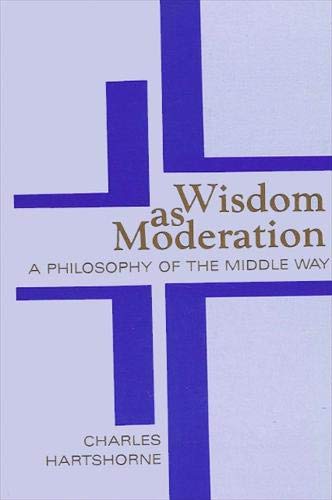
One of the great living philosophers sets forth his idea of philosophical wisdom as a mean between extremes in the philosophy of life and religion, with applications to ethics, aesthetics, metaphysics, philosophy of religion, and practical affairs. This work brings to a new focus the unity of Hartshorne’s thought as a whole, showing the relationship between good philosophical sense and good common sense.
User’s Reviews
Editorial Reviews: Review “In crystal clear, arresting, and often humorous prose, Hartshorne defends and elaborates the thesis that wisdom seeks the aesthetic mean between boredom and chaos. The best philosophy and the best way to live is an aesthetic mean between positions that are extreme by virtue of exaggeration or purification. His argument advances on two levels. On the theoretical level it explains a theory of aesthetic beauty as a kind of moderation and illustrates the workings of moderation in discussions of diet, lifestyle, religion, politics, economics, and the integration of humans with animal life and with the earth. Hartshorne charms us with the warmth, wit, and wisdom of his philosophic personality.” ― Robert Cummings Neville About the Author Charles Hartshorne is Ashbel Smith Professor Emeritus at the University of Texas at Austin. In a long and distinguished career, he has taught at Harvard, the University of Chicago, Emory University, the University of Texas, and the University of Washington; lectured at more than a hundred colleges and universities in the United States and abroad; written nearly 20 books and hundreds of essays; and has been president of five learned societies. His books Insights and Oversights of Great Thinkers: An Evaluation of Western Philosophy, Omnipotence and Other Theological Mistakes, and Creativity in American Philosophy are also published by SUNY Press.
Reviews from Amazon users which were colected at the time this book was published on the website:
⭐There is no gainsaying Charles Hartshorne’s (1897-2000) productivity or his importance to philosophy. Wisdom was published in the closing decades of his life that saw a flurry of activity with seven of his twenty-one books published (Wisdom was his eighteenth) and four books of essays responding to his thought which included his own detailed responses. The last of these was in the prestigious Library of Living Philosophers series (volume XX). Hartshorne’s twenty-first book, Creative Experiencing: A Philosophy of Freedom, was completed about the same time as Wisdom, but it was not published until eleven years after his death. Also of note is that the journal Process Studies, launched in 1971, is devoted in part to Hartshorne’s work. After the death of Whitehead in 1947, Hartshorne was the undisputed dean of process philosophy throughout the latter half of the twentieth century.Commenting on the fact that Hartshorne had known or studied with many of the great philosophers of the past fifty years (with the notable exceptions of Sartre and Wittgenstein), I once heard someone say that Hartshorne is a national treasure. Wisdom certainly displays a wealth of ideas, from rather abstract metaphysical theorizing to the relevance of such philosophizing for the living of life. The book was written during the Reagan presidency, but read in light of the Trump administration, Hartshorne’s thoughts on the values for which we should strive (as Americans, as a species, as denizens of this planet) are eerily prescient and relevant. Hartshorne philosophized in a grand style, ever conscious of our limitations in knowing the true, doing the good, and creating the beautiful, but ever hopeful that, with great effort and thoughtfulness, they can be approximated in human living. For those already familiar with Hartshorne’s works, Wisdom contains few surprises. Fully half the book (chapters 5-9) appeared in various periodicals between 1958 and 1979. The remaining chapters tell no new metaphysical tales. One is treated to the familiar Hartshornean smorgasbord of subtle hubris (if Hartshorne has not succeeded in being lucid and coherent, then perhaps these are only “an ideal,” p. x), ad hominem compliments (it took “great genius to be so fantastically partial, and yet so knowledgeable as Kant was,” p. 118), and pithiness (“Television flatters mediocrity of many kinds” p. 33). Nevertheless, one catches a more personal glimpse of the man that includes his long interest in ornithology (chapter 8), and his lifestyle (no coffee, tea, or tobacco and only a bicycle for transportation). Moreover, the book offers a different access to Hartshorne’s thought through the idea that wisdom, in both academic philosophy and practical affairs, is found as a mean between extremes and that Hartshorne’s philosophy is that mean. The regnant theme of Wisdom is that speculative philosophy, ethics, and aesthetics should avoid extremes and strive to preserve concepts that express a legitimate contrast. Very often the extremes between which Hartshorne wishes to navigate can be expressed as logical contraries and the mean as a conjunction of the corresponding affirmative and negative particular propositions. For example, Hartshorne follows Brand Blanshard in characterizing rationalism as the view, “To understand is to see to be necessary.” The opposite extreme is empiricism, “To understand is to see to be contingent,” although this is usually confined to existential assertions (pp. 15-16). Hartshorne’s mean between these extremes is that some existential assertions are necessary (e.g. “God exists”) and some are not (e.g. “Woodpeckers exist”). In this way, the contrast between necessity and contingency is preserved. A similar analysis of Hartshornean means and extremes applies to the issues of determinism and indeterminism, where the contrasts are order and disorder (pp. 8-10), genetic identity, with the contrasts of similarity and difference (pp. 18-19), and optimism and pessimism, with the contrasts of hope and despair (pp. 29-30). This simple analysis will not do for Hartshorne’s discussions of beauty and psychicalism (Hartshorne’s name for his brand of panpsychism). More than one set of contrasts is involved in defining these terms. Aristotle argued that virtue is a mean; Hartshorne argues that beauty is a mean between the double extremes of order and disorder and complexity and simplicity (p. 3, 52). Too much order and there is neatness; too little order, ugliness. Too much simplicity yields prettiness; too much complexity and there is sublimity. Hartshorne admits that there is a certain relativity in our aesthetic sensibilities—one must always ask, “Too much or too little for whom?” Nevertheless, every being’s sense of beauty will, he argues, preserve the basic contrasts (p. 4). As Aristotle advocated a kind of situation ethic that nevertheless preserves the objectivity of moral value, Hartshorne advocates a situation aesthetic that can preserve the objectivity of aesthetic value. The case of psychicalism is even more complex. Materialism and idealism, says Hartshorne, are only apparent contraries: all is material; nothing is material. Understood as contraries, the mean is a dualism of mind and matter. However, Hartshorne believes that dualism is a “false compromise” which fails to see what is wrong in the extremes. The contrast between sentient and insentient does not require a dualism of mind and matter. As Leibniz argued, an insufficiently unified collection of sentient singulars may itself be insentient (p. 11). Science complements this insight by reminding us of the extent to which our unaided senses are poor judges of the microworld. This leaves open the possibility—and this is Hartshorne’s view—of a multiplicity of sub-human levels of sentience which comprise the “material” world. Hartshorne also advocates an epistemology according to which the most immediate object of a mind’s awareness is other minds (Whitehead’s “feeling of feeling”). In this way, the contrasts of single-aggregate, high and low levels of sentience, and subject-objects, preserve the ordinary distinction between mind and matter. In this way, Hartshorne sees psychicalism as the true mean. The religious tenor of Hartshorne’s philosophy pervades Wisdom, but it is religion as filtered by his neoclassical lens and it corresponds to no single sectarian perspective. After all, the book’s subtitle calls to mind both Aristotle and the Buddha. Hartshorne’s religious ideas are especially apparent in his discussion of the aesthetic meaning of death (chapter 4) and religion as acceptance of our fragmentariness (chapter 6). Using the metaphor of artistic variations on a theme, Hartshorne argues that only the divine life admits of an infinity of variations without becoming monotonous. The immortality of any nondivine being would be an aesthetic cul-de-sac. Religion should help us accept the fact that none of us is God. Our true immortality is in God’s memory of us. “God’s possession of us is our final achievement, not our possession of God” (p. 90). Religious themes are also present in the discussions of metaphysics. In the most technically difficult discussion of the book (chapter 5), Hartshorne defends the possibility of metaphysics understood as the search for what is common to all conceivable occurrences. For Hartshorne, metaphysics goes hand in hand with natural theology. As he says, “Metaphysics without God outdoes Hamlet without Hamlet” (p. 66). Anyone interested in a brief and compelling statement on the foundations of Hartshornean theism should consult this chapter. For a statement directed more at a popular audience, Hartshorne’s book Omnipotence and Other Theological Mistakes (1984) is the best source. The importance that Hartshorne attaches to metaphysics is further clarified in chapters 7 and 10. There he claims that our hope of transcending our animality and our anthropomorphic limitations lies in the ability to grasp the highly abstract concepts of metaphysics. By the end of the book, it is clear that Hartshorne believes that there is more at stake than the defense of an academic discipline. The very future of our species, and perhaps every other species on the planet, turns on our capacity to transcend narrow identities with nation, race, sex, religion, or ideology and recognize “the divine love for the creatures. To fully accept this is the whole of my religion” (p. 135). Metaphysics and religion dovetail in Hartshorne’s insistence on the primacy of aesthetic values. For Hartshorne, life is fundamentally aesthetic creation (p. 51). He goes further: “Life, existence itself, is an art” (p. 116). Since Hartshorne is a psychicalist, he can see each existent as enjoying some degree of harmony or discord of experience. Being universal, aesthetic values are a topic for metaphysics. Furthermore, the value of any experience is finally a value for God. God, conceived as the supreme enjoyer of all values, sums in His-Her life, the achievements of all merely fragmentary creations. Hartshorne believed that the beauty of the universe, imperfectly appreciated by us, is perfectly embodied in the divine life. The majesty of Hartshorne’s vision of God is at once inspiring and disquieting. It inspires by prodding us beyond our anthropomorphisms—especially those which portray God as overly preoccupied with rigid moral standards. God is not a cosmic moralist, policing our every activity. “God surpasses us, not by the narrower but by the incomparably wider scope of the divine love or sympathy” (p. 118). On the other hand, Hartshorne’s vision is disquieting. He says, “Ultimately we are but contributory values . . . (p. 90). This seems to deprive fragmentary existents of any intrinsic worth. Hartshorne claims that “intrinsic value consists exclusively in what an existent does for God” (p. 119). However, this sounds like a restatement of the problem. How can intrinsic worth be tied to any ulterior purpose? (The former Governor of Kansas [Mike Hayden] once said, “there is intrinsic value in having a four-lane highway for economic development”).The tension between a thing having value in itself and having value for God can only be resolved by seeing that God is that without which there could be no value. Intrinsic value is value for God only because God is a necessary condition of any value, or any existence at all. If intrinsic value is the value one has merely by existing, and if to exist is to contribute to the divine life, then one’s intrinsic value is what one contributes to God. In a fit of irreverent humor, David F. Haight has called this the “God-fodder” view since we are, presumably, fodder for God’s experience (Review of Charles Hartshorne and the Existence of God, by Donald Wayne Viney, International Journal for the Philosophy of Religion, 20 [1986], p. 51). The witticism tends to obscure the fact that for Hartshorne, it is only in one’s contribution to the divine life that one’s immortality is secured. We are not mere fodder, to be consumed and forgotten. Each creaturely achievement, however humble, registers in the unblinking memory of God. By our contribution to the life of God, the deity makes us an offer we cannot refuse. All bantering aside, there remains a nagging sense that there is something amiss in Hartshorne’s axiology. Granting that aesthetic values are the most universal, what specific values, if any, are the privilege of humanity? In particular, what of the moral dimension of our lives? According to Hartshorne, moral criteria of value are either special aspects of the aesthetic, or they specify means indirectly favoring the creation of beauty (p. 124). It is at this point that many will part company with Hartshorne. On this planet, a full blown reflective moral sensitivity seems unique to our species (p. 124). Morality involves such notoriously difficult notions as rights, duties, obligations, and dignity. The program of reducing these concepts of aesthetic categories is challenging, to say the least. There certainly seems to be something more than aesthetic principles at work in the lives of a Martin Luther King Jr. or a Mother Teresa. This is not to suggest an incompatibility between moral and aesthetic value but rather to voice reluctance to reduce the former to the later. In the final analysis, it is the value of our own survival and that of the species with which we share the planet which lends urgency to Wisdom. “We belong to a species,” says Hartshorne, “that gives signs of having lost its way” (p. 35). He speaks of the “truly monstrous evils” in the world (p. 49) and affirms at least a functional equivalent of original sin (p. 103). While not pretending to offer detailed solutions to the world’s problems, Hartshorne believes that the key lies in moderating excessive demands on human labor and resources, and reducing demands on the environment (p. 49). In response to former President Ronald Reagan, Hartshorne says, “we may need to stand tall, but we should stand sober” (p. 137). Standing sober involves curtailing our appetite for luxuries and thinking less about money and more about what makes life “deeply satisfying” (p. 128). Hartshorne recognizes that global problems call for global solutions. He berates Americans for their smug provincialism and severely criticizes the idea that bigger is better (p. 34)—although he seems to forget this insight in the claim that size has spiritual significance! (p. 84). He asks his fellow citizens, “Have we sufficiently repented of our imperialism?” (p. 136). Nationalistic patriotism, he says, is an inadequate response to the challenges that face us (p. 35). If there is a single message here, it is that we should strive to take the larger, more inclusive, attitude to the world’s problems. In keeping with the larger perspective, and in ironic contrast with the title of the book, Hartshorne advocates an excess of love and wisdom—two things of which there cannot be too much (p. 49). Chapter 2 was presented on a taped radio program, the Cambridge Forum, on April 9, 1986. The taped lecture differs in various details from the published chapter. One difference, taken from the discussion after the lecture, is worth citing. Hartshorne said:The human animal is an extremely eccentric animal in a dangerous way. We have a dangerous degree of freedom from instinctive wisdom. We have to think out what we do . . . that’s a precarious thing. And our philosophers did not prepare us for the dangers of freedom because they didn’t even believe in our freedom. They thought maybe God settled everything or maybe the laws of nature settled everything.For Hartshorne, determinism, whether theological or otherwise, is a pernicious philosophy insofar as it blurs the lines of responsibility by deferring to God, nature, or nurture. Hartshorne is alert to all of the ways that we are dependent beings, but his equal emphasis on freedom provides a much-needed reminder of our responsibility, individually and collectively, for our behavior. Dorothy Cooper Hartshorne (1904-1995), who had always helped her husband in editing his work, was no longer able to help him by the time of the writing of this book. Her absence is sadly evident in the typos, garbled sentences, and missing footnotes that mar the book. As if to acknowledge this, Hartshorne dedicated the book to her, “To D.C.H., from whom I am still learning how to write better the language to which I was born.” Happily, at no point do the mistakes seriously affect the comprehension of the text. However, they are unfortunate in a work that puts such emphasis on aesthetic values. In any event, Wisdom is a clear example of Hartshorne’s intellectual vitality at the beginning of his ninth decade and it illustrates that maturity does “have something to do with value” (p. 33).
Keywords
Free Download Wisdom as Moderation: A Philosophy of the Middle Way (SUNY Series in Philosophy) in PDF format
Wisdom as Moderation: A Philosophy of the Middle Way (SUNY Series in Philosophy) PDF Free Download
Download Wisdom as Moderation: A Philosophy of the Middle Way (SUNY Series in Philosophy) 1987 PDF Free
Wisdom as Moderation: A Philosophy of the Middle Way (SUNY Series in Philosophy) 1987 PDF Free Download
Download Wisdom as Moderation: A Philosophy of the Middle Way (SUNY Series in Philosophy) PDF
Free Download Ebook Wisdom as Moderation: A Philosophy of the Middle Way (SUNY Series in Philosophy)