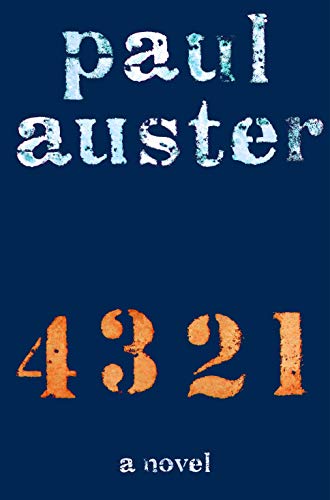
Ebook Info
- Published: 2017
- Number of pages: 880 pages
- Format: Epub
- File Size: 1.45 MB
- Authors: Paul Auster
Description
Paul Auster’s greatest, most heartbreaking and satisfying novel―a sweeping and surprising story of birthright and possibility, of love and of life itself.
Nearly two weeks early, on March 3, 1947, in the maternity ward of Beth Israel Hospital in Newark, New Jersey, Archibald Isaac Ferguson, the one and only child of Rose and Stanley Ferguson, is born. From that single beginning, Ferguson’s life will take four simultaneous and independent fictional paths. Four identical Fergusons made of the same DNA, four boys who are the same boy, go on to lead four parallel and entirely different lives. Family fortunes diverge. Athletic skills and sex lives and friendships and intellectual passions contrast. Each Ferguson falls under the spell of the magnificent Amy Schneiderman, yet each Amy and each Ferguson have a relationship like no other. Meanwhile, readers will take in each Ferguson’s pleasures and ache from each Ferguson’s pains, as the mortal plot of each Ferguson’s life rushes on.
As inventive and dexterously constructed as anything Paul Auster has ever written, yet with a passion for realism and a great tenderness and fierce attachment to history and to life itself that readers have never seen from Auster before. 4 3 2 1 is a marvelous and unforgettably affecting tour de force.
User’s Reviews
Amazon.com Review An Amazon Best Book of February 2017: Paul Auster’s 4321 is his first novel in seven years, and it feels extra personal. Details of a life spent growing up in Brooklyn—of loving the Brooklyn Dodgers, Laurel and Hardy, summer camp—are laid out with the earnest intensity of a writer looking back on his life. Plot points arise—for instance, a person is killed by lightning—which mimic more unique moments from Auster’s own life experience. At nearly 900 pages, it is also a long novel—but a reason for that is 4321 tells the story of its protagonist, Archie Ferguson, four different times. What remains consistent throughout Archie’s life (or lives) is that his father starts out with the same career, Archie falls in love with the same girl, and his personality seems more nature than nurture. But those are starting off points, and if our lives are the sum of our choices, they are the sum of other people’s choices as well. Circumstances matter, and what will keep you thinking about this book is the convergence of time and circumstance within each of Archie’s different lives. His past propels him, his circumstances form him, and regardless of which life we are reading, time will ultimately take him. –Chris Schluep, The Amazon Book Review Review “An epic bildungsroman . . . . Original and complex . . . . It’s impossible not to be impressed – and even a little awed – by what Auster has accomplished. . . . A work of outsize ambition and remarkable craft,a monumental assemblage of competing and complementary fictions, a novel that contains multitudes.”―Tom Perrotta, The New York Times Book Review“Ambitious and sprawling . . . . Immersive . . . . Auster has a startling ability to report the world in novel ways.”―USA Today“A stunningly ambitious novel, and a pleasure to read. Auster’s writing is joyful even in the book’s darkest moments, and never ponderous or showy. . . . An incredibly moving, true journey.”―NPR “Sharply observed . . . . Reads like a sprawling, 19th-century novel.”―The Wall Street Journal “Ingenious . . . . Structurally inventive and surprisingly moving. . . . 4 3 2 1 reads like [a] big social drama . . . while also offering the philosophical exploration of one man’s fate.”―Esquire “Mesmerizing . . . Continues to push the narrative envelope. . . . Four distinct characters whose lives diverge and intersect in devious, rollicking ways, reminiscent of Kate Atkinson’s Life After Life. . . . Prismatic and rich in period detail, 4 3 2 1 reflects the high spirits of postwar America as well as the despair coiled, asplike, in its shadows.”―O, the Oprah Magazine“The power of [Auster’s] best work is . . . his faithful pursuit of the mission proposed in The Invention of Solitude, to explore the ‘infinite possibilities of a limited space’ . . . . The effect [of 4 3 2 1] is almost cubist in its multidimensionality―that of a single, exceptionally variegated life displayed in the round. . . . [An] impressively ambitious novel.”―Harper’s Magazine“Auster’s magnificent new novel is reminiscent of Invisible in that it deals with the impossibility of containing a life in a single story . . . . Undeniably intriguing . . . . A mesmerizing chronicle of one character’s four lives . . . The finest―though one hopes, far from final―act in one of the mightiest writing careers of the last half century.”―Paste Magazine“Wonderfully clever . . . . 4 3 2 1 is much more than a piece of literary gamesmanship . . . . It is a heartfelt and engaging piece of storytelling that unflinchingly explores the 20thcentury American experience in all its honor and ignominy. This is, without doubt, Auster’s magnum opus. . . . A true revelation . . . One can’t help but admit they are in the presence of a genius.”―Toronto Star“A multitiered examination of the implications of fate . . . in which the structure of the book reminds us of its own conditionality. . . . A signifier of both possibility and its limitations.”―The Washington Post“At the heart of this novel is a provocative question: What would have happened if your life had taken a different turn at a critical moment? . . . Ingenious.”―Pittsburgh Post-Gazette“Auster presents four lovingly detailed portrayals of the intensity of youth – of awkwardness and frustration, but also of passion for books, films, sport, politics and sex. . . . [Trying] to think of comparisons [to the novel] . . . [nothing] is exactly right . . . . What he is driving at is not only the role of contingency and the unexpected, but the ‘what-ifs’ that haunt us, the imaginary lives we hold in our minds that run parallel to our actual existence.”―The Guardian“Draws the reader in from the very first sentence and does not let go until the very end. . . . An absorbing, detailed account – four accounts! – of growing up in the decades following World War II. . . . Auster’s prose is never less than arresting . . . ”―San Francisco Chronicle“Leaves readers feeling they know every minute detail of [Ferguson’s] inner life, as if they were lifelong companions and daily confidants. . . . It’s like an epic game of MASH: Will Ferguson grow up in Montclair or Manhattan? Excel in baseball or basketball? Date girls or love boys too? Live or die? . . . A detailed landscape . . . for readers who like taking the scenic route.”―TIME Magazine“Auster pays tribute to what Rose Ferguson thinks of as a ‘dear, dirty, devouring New York, the capital of human faces, the horizontal Babel of human tongues.’. . . Sprawling . . . occasionally splendid.”―The New Yorker “43 2 1 is that rarest of books – a masterpiece by a genius. . .. Auster’s first novel in seven years is nothing short of true literature. It is why we read.”―Newark Star Ledger?“Magnificently conceived . . . . Auster is a peerless storyteller . . . .4 3 2 1 is also a brilliant compendium of the tumultuous 1960s . . . . Impressively smooth . . . . The development and mingling of four versions of Archie Ferguson not only illuminate and enhance his character, it gives the storytelling the power of enchantment that sustains the reader through the length of the book.”―Seattle Times“A bona fide epic . . . both accessible and formally daring.”―Minneapolis Star Tribune“Inventive, engrossing.”―St. Louis Post-Dispatch“Arresting .. . . A hugely accomplished work, a novel unlike any other.”―The National (UAE)“Brilliantly rendered, intricately plotted . . . a magnum opus.”―Columbia Magazine “Auster’s first novel in seven years is . . . . an ingenious move . . . . Auster’s sense of possibility, his understanding of what all his Fergusons have in common, with us and one another, is a kind of quiet intensity, a striving to discover who they are. . . . [He] reminds us that not just life, but also narrative is always conditional, that it only appears inevitable after the fact.”―Kirkus (starred review)“Auster has been turning readers’ heads for three decades, bending the conventions of storytelling . . . . He now presents his most capacious, demanding, eventful, suspenseful, erotic, structurally audacious, funny, and soulful novel to date . . . [a] ravishing opus.”―Booklist (starred review)“Rich and detailed. It’s about accidents of fate, and the people and works of art and experiences that shape our lives even before our birth―what reader doesn’t vibrate at that frequency?”―Lydia Kiesling, Slate“Auster illuminates how the discrete moments in one’s life form the plot points of a sprawling narrative, rife with possibility.”―Library Journal (starred review)“Mesmerizing . . . . A wonderful work of realist fiction and well worth the time.”―Read it Forward“Frisky and sinuous . . . energetic. . . . A portrait of a cultural era coming into being . . . the era that is our own.”―Tablet magazine “Almost everything about Auster’s new novel is big. . . Satisfyingly rich in detail . . . . A significant and immersive entry to a genre that stretches back centuries and includes Augie March and Tristram Shandy.”―Publishers Weekly
Reviews from Amazon users, collected at the time the book is getting published on UniedVRG. It can be related to shiping or paper quality instead of the book content:
⭐ From literature point of view this is a magnificent book. It’s an art. I felt a total immersion, as if I was living there and then and inside the skin of the character. Auster is a master of the word.His literary, cinema and music recommendations given as part of character’s education can serve as an education for the reader as well.All this deserves the undisputed 5 stars.But there are negative aspects as well that cannot be overlooked in my subjective opinion.The father of the 4th Archie Ferguson casts a disjointed figure. He starts as a decent hard working person. Although he makes a distant and cold father, no one could blame Stanley for lack of integrity. Nevertheless, following a divorce with Archie’s mom, Stanley is suddenly shown a dishonorable person, a man who would hurt his son in order to make a point to his mother. This character is so at odds with otherwise harmonious description of other characters that it seems that it (the character) was too good for author’s taste and had to be corrected (in a bad way) to fit the narrative.And here we come to a second negative aspect.This book is too politicized. It’s a mirror reflection of today’s America. It’s too black and white and sorrowly lacking the gray. If you are suburban, you are a republican, a racist/bigot, a bad person. If you are a city dweller, you are a democrat, a liberal, a good person. A businessman is, by definition, a bad person, since he makes money in order to make even more money.I would expect more sophistication from such a talented author. Regardless of one’s leanings, left or right, life is a complex mess, it’s certainly not black and white.
⭐ This novel has many merits, I was very intrigued and engaged with it for the first 400 pages or so, without question Auster is a highly skilled writer and story teller, he’s got excellent communicative powers, no doubt. The problem is the book just won’t end! It’s a clever device here, he tells four (I think, it gets confusing) parallel life stories of the same character with small or not so small alterations in life circumstances, all of which are possible with a simple twist of fate, a death here, a fire there, so on. It’s pretty intriguing and philosophically represents the unknown “superposition” of our lives as they unfold, so this was all really strong stuff for a novel. He also presents the late 50’s early 60’s period well, and childhood, and human relationships, yes, all well done. But here I am on page 570, I’ve got like 250 pages more to go, and I’ve run out of gas. This is a bummer since I invested so much time to this book, but Archie, the main character, is still muddling through his first years of college, and I’m just loosing interest. Like I just want the mafia to come in a shoot everyone so we can end the story with a bang already. And so Archie and (some girl, or guy; yes, he’s bi) get married and…… Archie stays at home and does his pretty face, ob la ob la di life goes on hah, oh la la how life goes on, done. Paul. You forgot about the reader. You got swallowed up in your own writing. Almost a great book, but not.
⭐ I love this novel’s ambition: to tell four different versions of a boy’s coming of age story. In each version different decisions are made at key points, and the paths diverge from there. The characters are the same across all versions, so their personalities remain consistent (e.g. the protagonist’s love of reading and writing comes through in all four versions, an aspect of the novel I loved). But it’s remarkable how different the endpoints can be, just based on a few pivotal decisions. I had to do quite a lot of work as a reader to keep the four narratives separate in my mind as I was reading because of the way Auster structures the book. We get four versions of a 2-3 year period, and then we get four versions of the next 2-3 years, and so on. I had to take some notes and flip back and forth in the book a lot to keep my bearings straight. The effort was worthwhile, and I thoroughly enjoyed the experience. I also found the novel to be compelling for the more philosophical questions it raises—i.e. how important are our actions and decisions to the outcomes we experience. Do we really have free agency, or is there a kind of Fate (or God) working in the background, or is it a combination? I give this novel 5 stars for concept and ambition. I’m tempted to deduct a star because some passages in some of the versions became pretty tedious or repetitive, but it just doesn’t seem fair to deduct a star when this is one of the best books I’ve read this year, so I won’t. Highly recommended for those looking for a reading challenge.
⭐ Let’s establish right away that Paul Auster is one of my favorite authors. In fact, I’d consider myself something of a “fanboy.” I’ve read the vast majority of his published work after discovering him about ten years ago. He earned my trust back then, which means I will read anything he releases. Anything.4 3 2 1 is an ambitious work that absolutely experiments with style and execution. It is extremely well written, meticulously organized, and clearly a labor of love. This is an important novel due to its sheer moxie; it not only challenges well-established conventions in the field of literature, it summarily ignores them.But, even with all of that being said, it missed the mark for me. At 866 pages, 4 3 2 1 proved too much for this reader. As you know, Auster is an avid baseball fan, and I definitely felt like I needed a scorecard for this epic volume.Without spoiling too much, this novel imagines the four possible lives of a single man. We follow him from boyhood all the way to death. There are many touchstones that are obviously invariable from life to life, but there are also several deviations that alter one life drastically from another. It’s a fascinating premise, one that we’ve all thought about from time to time. What if my parents had separated? What if I’d chosen a different school? What if I had fallen into that pit and been paralyzed? So many “what ifs” in life … Auster delves deeply into this notion while leaving no detail unexplored.But, like Annie Proulx’s Barkskins, those nuanced details can overwhelm the reader to the point of provoking disengagement. At least, that’s what happened in my case.Furthermore, if I’m being honest, Ferguson (the main character) is not especially interesting. No matter which life we address, Ferguson is a bit aloof, a bit too precocious, a bit unlikable. Well, perhaps “unlikable” is too strong of a word. I would never describe him as “likable,” though. Keep in mind, I don’t believe a character has to be “good” in the moral sense to be “likable.” There have been plenty of “bad” characters that I thought were incredibly charismatic.On the subject of morality, be warned … there is a lot of sex in this book — more than any Paul Auster book I’ve ever read. There is straight sex, gay sex, committed sex, casual sex, oral sex, anal sex … you get the idea. The sex often seemed to me as forced. It never quite struck me as organic to the story.While I found this to be a relevant addition to the author’s library because it broke new ground for an already inventive artist, it did not hold my attention. While the writing is masterful, it failed to capture my imagination. And while the characters are pounding with life, none of them seemed to take hold in my own.
⭐ I normally don’t spend time reviewing the books I read on a weekly, monthly or yearly-basis but I felt that this very unusual book – probably the strangest and most eccentric tome I have ever encountered – warrants more than a few sentences of commentary.I have read several of Paul Auster’s novels and he ranks as one of my favorite contemporary writers. My husband’s psychiatrist raved about this 870 page book by Auster and I thought it would be a good “first read” as I embarked on a new life as a retiree in Mexico.The book is essentially divided into seven chapters of four different iterations of lives of one main character, Archie Ferguson. Archie’s personality remains constant throughout the four iterations – as do the basic personalities and values of his mother, father, aunts, uncles, cousins, etc. – but the details and circumstances of life change with the four different “stories”. Essentially, each of the four “Archie” stories (1.1, 2.1, 3.1, 4.1, etc combined.)could conceivably constitute a novel in and of themselves. I could have used an explanation of this fact before I started reading this weighty book; I might have been less confused if I was provided with a roadmap of the structure of the book before I embarked on this lengthy reading project.I have rated this book with 4.5 stars, given the author’s endeavor and creativity. I also really enjoyed (as I do for all of Auster’s reads) the gift of gab that is infused in the novel as well as the twists and turns that Archie’s lives’ take.The following are some of the other things I both did and did not appreciate about the book:* The structure of the overall novel was extremely confusing and I had difficulty remembering the details of Archie’s Life #1 Chapter #1.1 Before after reading Lives #2, #3, and #4. It was the discontinuity between iterations, the new life chapter introduced after reading three other iterations of the previous life chapters, that caused that confusion. At one point I even stopped reading the novel for a few weeks to take a rest. As I mentioned before, a roadmap might have helped! Move over, Dostoyevsky- keeping track of these characters and life situations was a real challenge!* The writing itself, although prolific and filled with creative and exciting language, consists of series of run-on sentences which, at first, was very hard for me to attend to. As I continued to read, I did get used to the structure of the prose.* Being a child of the 60s and 70s myself, approximately the same age as Archie as he went through high school and college, I relished the correct and obviously well-researched historical context that was shared in the novel: the Kennedy assassination, War in Vietnam, campus riots, etc.All this being said, I would recommend the book. I would have a notebook by my side to try to keep track of what happens in each of the Archie iterations at each juncture of his life. Perhaps an introduction by the author to explain the structure of the book would be helpful.
⭐ This is an incredible work of resistance to the superficiality that today comes from social media and newsfeeds on the Internet, the lack of focus and depth that results from our perception of reality permeated by gadgets rather than physical, genuine human interactions. Philip Roth once said that the book was losing the battle to the screen and that people would not bother read them anymore. Paul Auster at that time disagreed. He said people would always be interested in good stories and would always read them in books. Maybe 4321 is Auster’s attempt to prove Roth wrong, by writing a very very VERY long story (actually, four stories) that only those who love stories could read all through. And it is no smal irony that the plot takes place in Roth’s Newark (however, it is Auster’s Newark as well).l, as if Auster was trying to challenge Roth on Roth’s own backyard (one could even think of 4321 as the counterpoint to Roth’s Counterlife). This is book that also tries to show us that it is only by actually seeing a person in a multiverse, going through different situations under different circumstances, that we can really understand how this person really is. And that is why this book is so formidable today: in times when our lives are beginning to be governed by AI embedded in apps everywhere (Waze, Whatsapp, Facebook, Instagram, Tinder!), Auster declares out loud that randomness is so important for our own making. Let’s stop following apps and let randomness to take us to places and situations we would never think about, because that will shape us and makes us who we are.With 4321, Auster makes his declaration of love to literature and to the artist as a young man, and to the craftsmanship of writing, and because of that it sounds almost as a biography. It is also a declaration in favor of tolerance over all (in times of “us against them,” it is not a bad thing to remember what the world has already gone through to become less savage.) It is quite curious that, by looking at the past (the 1950s and 1960s), Auster managed to write a book that speaks so much about the things we are living today, and with that, bring some light to look forward…Many have already commented about a hiddeous cliche on the final pages of this enormous saga, but I really didn’t feel annoyed with it at all. The ending is a common place and not original, ni doubt about it, but I don’t think 4321 was written to be a book where form and style should prevail over content, maybe quite the contrary. This is a book of immersion that aims at making us live and feel a different persona completely, and in order to accomplish that, style and form should not cause any noise in the experience. You should not be concerned with uncoding hidden meanings and structures in the book, like in Joyce or Pynchon, just move on with the story (or stories). And, indeed, when the four different Fergusons finally blended into one in my mind, that was one of the most rewarding experiences I’ve had in recent times. I will certainly miss Ferguson as I would miss a friend, and to me that is what this book is really about: to have the patience and generosity to be in someone else’s shoes, to understand and tolerate this other, to live this other, to love this other, and maybe by doing that escape another cliche ending our civilization seems to be moving into…
⭐ I LOVED this book!It is the story of a boy, Ferguson, told in four different setting. While this family characters remain the same situations change and each version of Ferguson takes a different route. I wondered how Auster could bring this to a successful finale but he did.I would strongly suggest that anyone reading this tome take notes from the start of 1.1, 1.2, 1.3, and 1.4 in order to keep the different stages of the different Fergusons straight.It is a long book and Auster’s discriptions can go on and on but, as someone who lived in NYC at the time of the novel, it brought back so many memories. Remember lunch at Horn and Hardarts?I started another book after 4 3 2 1, one shortlisted for the National Book Award, and found myself missing Auster’s hypnotic writing.My favorite book of 2017 so far.
⭐ I wish i could say i came across Paul Auster through some sort of literary network but that is not correct. I saw the movie Smoke on vhs in 2017 and after being moved to tears by the brilliant ending as well as Forest Whitaker’s performance i had to know who was behind it. I also around the same time while looking for rare vhs tape (yes i still buy them) found a movie from Harvey Keitels peak 90’s era called Lulu Under The Bridge.I found out after looking into Smoke that Lulu was Auster’s one and only film written and directed.I then purchased 4321 wanting to start off with his longest novel which happens to be his latest.I am not going to go into detail about thew story line. I will talk about the structure of the book and how it can be used as a mental tool for people who appreciate art.I will also talk about what a twist ending is and the context in which it is present ed here and in this knock down any critisism i have seen about the ending.The end result is thoroughly satisfying experience that takes the reader on an experience i can only compare to Nabokov,due to the multilevel way in which the art can be utilized in life.This novel, if read and understood can be a permanent tool, especially for artistic people or people who can think in an abstract way.This book is experimental but is actually written in his most straight forward way. Basically it is written traditionally but veers off course at times to a drastic extent and in a good way, as this veering is the experimental aspect.To begin this book hands down is a big deal. I will focus for a moment of a negative review which being paraphrased went something like calling this book a bad joke. That comment is amazing to me but i can see how the last part of the book could be confusing to someone who does not know how to process an experimental novel that is heavily philosophical and is meant to be pondered on after the book is finished. The reviewer who called it a bad joke seemed to focus on the story without any understanding of how to process a narrative that breaches of into segments that shift in reality.This book reminded me of Ada or Adore by Nabokov in that it has what i call a fail safe mechanism that delivers a multi educational experience that works on multiple levels. What i mean by this is even if you dislike the characters and what they go through there is a. the historical aspects and b.the unconventional structure. b.the inner love letter to literature, film and music that is spot on.I have read many historical fiction books and this one really felt like it was 50% historical fiction. Auster showcases the socioeconomic climate as being crazy never failing to bypass stereotypical timelines such as 67’s summer of love–that was not what was going on in Newark-(Newark is a key setting). There is so much spot on information about the 50’s and especially 60’s i really felt like is was living in the chaos of those times. By making the main characters come of age in the mid to late 60’s- it makes for a realistic and convincing way to show how insane the climate was with the main themes being 1. draft dodging 2. civil rights 3. authority/students. That is just one lever of this fail safe mechanism i am in the process of defining. The other element of the story other than tons of historical information is the heavy emphasis on art in general mainly concentrating on literature and film with a good amount of music mentioned. There are tons of books and films mentioned that i am happy to say i recongnized a lot of them making me feel somewhat cultured.–One element that may throw some people off is yes this novel is very autobiographical in certain ways to Austeres life and it is about an overly brilliant kid. Ferguson is the main character who is depicted in 4 different story but with different inner family changes. In one version of the 4 he is in a privileged family –in another he is in a struggling family–I will not go on to much about the intricacies of the plot line and go back to the multi meaning theme–I want to clear up something- i noticed a lot of the amazon reviewers keep saying it is too long. This is disgustingly subjective and is irrelevant. I personally like a long story any day over a short one–then again i love Victorian novels so maybe i am not a good judge of attention in relation to reading. I feel the length complains are just a commercial reaction in our times. I feel complaints about book length is like complaining about literature in general and showing to the world that you admit tingly have a short attention span.I will now break down the main criticism of the book being a “bad joke”. I feel this remark is unacceptable and it is simply wrong. Iwill also break down the complaint about the constant and descriptive sex scenes. These 2 themes go hand in hand and will contain a major spoiler. I do not like to spoil books but i feel this one is so multi layered it will not really matter. The ending that will be related to the “bad joke” is not a twist ending. To say the book is a bad joke is to only completely misunderstand the ending which only makes the whole story that much stronger. The constant sex in all of the Ferguson stories is 100% related to the ending and 100% necessary. It was hard for me to read the gay sex scenes and this was the point. Pay attention to the scenes– they are bluntly described rather than being trashy or for erotic effect.SPOILER– The end of the book deals with the reader finding out that all of the stories were written by Ferguson the father commenting on his2 dead sons as well as a death of a childhood friend.The graphic sex was Ferguson the writer getting to know his estranged and dead sons by living through the hardest aspects of their differences.The gay scenes were the father trying to understand his son by making him a character.The end result of this novel is the love of literature as a way of life. This book is about artists for artists and the end shows the reader a technique –or the best technique for getting through the hardest moments of life. Ferguson who was writing the book 4321 takes himself on a self reflecting journey as well as a journey to discover his lost family.I am proud of Paul Auster who apparently wrote the 2nd story line to be related to a death he experienced at camp when he was young.To make this work of art even more wild–the Ferguson-dad- who mirrored his sons, the dead friend, the 60’s etc–was then mirrored by Auster the actual author.The end result ends up being a totally aesthetically fulfilling experience.I am so surprised any professional reviewer could of completely missed not only say 5 of the meaning of the book but finished it thinking it was a joke or charade of some sort.
⭐ A beautifully written, complex story of the might-have-beens of the childhood and young adulthood of Archie Ferguson, born in the fifties and coming of age in the 60’s and 70’s. In two versions, Archie himself dies. In different versions, other friends and relatives die or don’t die, divorce or don’t divorce, fall in love or don’t fall in love and so on. Sometimes it’s hard to remember which of Archie’s lives you’re in — is this the one where he and Amy become lovers or is the one where they’re just friends? Is this the one where his father dies or the one where he divorces Archie’s mother? Sometimes so much background history is included you might forget you’re reading a novel. A good editing could have reduced the book’s length, but it’s a fascinating idea — who hasn’t wondered what would have happened if you’d married someone else or hadn’t gotten married at all or gone to a different college? I confess I skipped a few pages now and then and caught myself checking to see how close I was to the end — what, I’ve only read 28 percent? And I sometimes wondered if teenagers were really as smart and sophisticated and profound as Archie and his friends. Why did my friends and I wait until college to discuss things Archie thinks about in grade school? When i read the last sentence, I closed my iPod with a sense of accomplishing something — and mostly enjoying it. In fact, I kind of miss Archie.
⭐ 4 3 2 1 is Auster’s most remarkable novel yet. I have loved his work for a decade, have read over a dozen of his books, and have especially loved City of Glass and Invisible. I could not imagined that his best work was yet to come, but 4 3 2 1 is remarkable. Without wanting to give away too much, I will say that as he often does, Auster plays with the form of the novel and while you think he is doing one thing he is actually doing quite another. That said, despite the cleverness of the structure of this book, the I was taken so deeply inside the experience of the main characters that they will stay with me for years. The trickery of the book could be removed and it would still be in my top 10. A piece of practical advice for those without photographic memory – take a few notes as you go. Your slightly future self will thank you.
Keywords
Free Download 4 3 2 1: A Novel in Epub format
4 3 2 1: A Novel Epub Free Download
Download 4 3 2 1: A Novel 2017 Epub Free
4 3 2 1: A Novel 2017 Epub Free Download
Download 4 3 2 1: A Novel Epub
Free Download Ebook 4 3 2 1: A Novel