Ebook Info
- Published: 2011
- Number of pages: 224 pages
- Format: Epub
- File Size: 0.20 MB
- Authors: Osho
Description
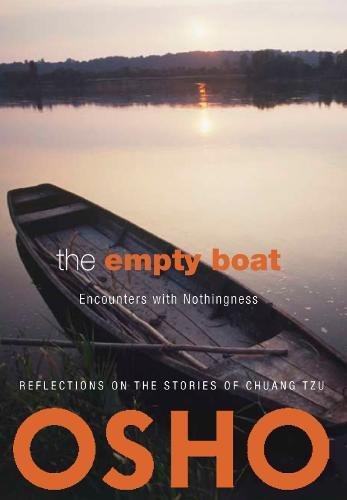
In this highly accessible introduction to Zen and its spiritual origins, Osho talks on the stories of Chinese mystic Chuang Tzu, revitalizing the 300-year-old Taoist message of self-realization. He speaks about the state of egolessness, or “the empty boat,” spontaneity, dreams and wholeness, living life choicelessly, and meeting death with the same equanimity. This a beautiful new edition overflows with the wisdom of one who has realized the state of egolessness himself.
User’s Reviews
Editorial Reviews: Excerpt. © Reprinted by permission. All rights reserved. Excerpt from Chapter 1You have come to me. You have taken a dangerous step. It is a risk because near me you can be lost forever. To come closer will mean death and cannot mean anything else. I am just like an abyss. Come closer to me and you will fall into me. And for this, the invitation has been given to you. You have heard it and you have come. Be aware that through me you are not going to gain anything. Through me you can only lose all – because unless you are lost, the divine cannot happen; unless you disap¬pear totally, the real cannot arise. You are the barrier. And you are so much, so stubbornly much, you are so filled with yourself that nothing can penetrate you. Your doors are closed. When you disappear, when you are not, the doors open. Then you become just like the vast, infinite sky. That is your nature. That is Tao. Before I enter into Chuang Tzu’s beautiful parable of The Empty Boat, I would like to tell you one other story, because that will set the trend for this meditation camp which you are entering. I have heard … It happened once, in some ancient time, in some unknown country, that a prince suddenly went mad. The king was desperate – the prince was the only son, the only heir to the kingdom. All the magicians were called, miracle makers, medical men were summoned, every effort was made, but in vain. Nobody could help the young prince, he remained mad. The day he went crazy he threw off his clothes, became naked, and started to live under a big table. He thought that he had become a rooster. Ultimately the king had to accept the fact that the prince could not be reclaimed. He had gone insane permanently; all the experts had failed. But one day, again hope dawned. One sage, a Sufi, a mystic, knocked on the palace door and said, “Give me an opportunity to cure the prince.” But the king felt suspicious, because this man looked crazy himself, more crazy than the prince. But the mystic said, “Only I can cure him. To cure a madman, a greater madman is needed. And your miracle makers, your medical experts, all have failed because they don’t know the ABC of madness. They have never traveled that path.” It looked logical, and then the king thought, “There is no harm in it, why not try?” So the opportunity was given to him. The moment the king said, “Okay, you try,” this mystic threw off his clothes, jumped under the table and crowed like a rooster. The prince became suspicious, and he said, “Who are you? And what do you think you are doing?” The old man said, “I am a rooster, more experienced than you. You are nothing, you are just a newcomer, at the most an apprentice.” The prince said, “Then it is okay if you are also a rooster, but you look like a human being.” The old man said, “Don’t go by appearances, look at my spirit, at my soul. I am a rooster like you.” They became friends. They promised each other that they would always live together – and the whole world was against them. A few days passed. One day the old man suddenly started dressing. He put on his shirt. The prince said, “What are you doing, have you gone crazy, a rooster trying to put on human dress?” The old man said, “I am just trying to deceive these fools, these human beings. And remember, even if I am dressed, nothing is changed. My roosterness remains, nobody can change it. Just by dressing like a human being do you think I am changed?” The prince had to concede. A few days afterwards the old man persuaded the prince to dress because winter was coming, and it was becoming so cold. Then one day suddenly, he ordered food from the palace. The prince became very alert and said, “Wretch, what do you mean? Are you going to eat like those human beings, like them? We are roosters and we have to eat like roosters.” The old man said, “Nothing makes any difference as far as this rooster is concerned. You can eat anything and you can enjoy everything. You can live like a human being and remain true to your roosterness.” By and by the old man persuaded the prince to come back to the world of humanity. He became absolutely normal.
Reviews from Amazon users which were colected at the time this book was published on the website:
⭐I love this man!! His essence speaks to your soul. If your ready to listen, these words can bring great enlightenment, or in Osho’s way, not bring you enlightenment. I’ve been a Buddhist for years, but identify with the Tao first and foremost. This book was a welcome read. The words just fell off the page like water and absorbed into me like the sunshine on a clear summer day. Just wonderful! I would recommend this to all who want to expand their understanding of reality. He writes as if speaking directly to you one on one, promising nothing, but everything. Beautiful.
⭐If your reading this your going to read the book. Nobody gets this far in the game and is able to turn back. Be sure to read everything over and over. If this stuff doesent help change to another book or teacher until you get this information. All religion and real teachers or sages say the sane thing. But you my only be able to hear it from a certian person. Everyone in life will get this stuff in one way or another. Osho is for you if you can feel the truth in what he says. Stop pretending. Watch yourself. Stop and hear the quiet moment your in and read this stuff. Also, you can pick any page in his books and the message is the same. Be here now.
⭐I really, really love this book. It goes against all conventional wisdom for how to live one’s life, but is directly in line with the teachings of Taoism, as well as the feelings that have forever dwelled within my own heart. In a world that constantly pounds into our heads the need to be somebody, Osho teaches us of the importance of being nobody. In a world that constantly tells us we need to accomplish things, Osho teaches us that accomplishing things is worthless. In a world that encourages us to be proud of our achievements, Osho teaches that our achievements don’t mean anything.Instead, Osho informs us that it is our essence that matters. Who we are at core is what matters, not what we do. When doing comes out of being, there is no conflict. There is no need to seek reward because the reward is in the action itself. Instead of moving toward goals and planning out our lives in such a way that can lead to “success,” Osho says that the real joy of living comes through being spontaneous, and through having no expectations. “All that is great, all that is beautiful, all that is true and real,” he says, “is always spontaneous. You cannot plan it…. Do the trees plan how to grow, how to mature, how to come to flower? They simply grow without even being conscious of the growth” (80-81).To be an empty boat means to be free of ego, free of the need to prove oneself, free of the need to be somebody, free of the fear of being nobody, free of the need to win, free of the fear of losing. It means being free to put everything you are into what you do without any attachment to results.What I like about Osho is that he is uncompromising. He doesn’t let you feel good about yourself. He gives you no choice but to look within yourself and to be honest about what you see. Reading this book, you’ll realize that all problems in the external world are rooted in the internal world of each one of us, and that we cannot effectively address any injustices in society without being introspective. “A seeker of truth,” he says, “carries no theories with him. He is always open, vulnerable. He can listen” (144).This quality of listening is what opens us up to the reality that lies beneath the surface of our chattering minds. When we listen to others, instead of competing with them to prove we are right, rigidly holding onto our opinions, conversations have a musical quality, a rhythm, a flow, and friendships are formed where rivalries once reigned. This quality of listening is also what enables us to see that this moment, right here right now, is a joyous moment, even if it doesn’t lead to anything tangible, even if nothing is happening. Osho teaches us to view each moment as a celebration, so that we don’t wish our lives away, waiting for someday to come, or wishing that the good old days would come back. “A man of wisdom is always concerned with the being,” he says, whereas “a man of ignorance is always concerned with questions of doing” ( 223).So, the “Nothingness” in the title is the Tao, the emptiness within, the pure, virgin Self, prior to the intrusion of the thinking, logical mind. Osho urges us to return to that pure state, so that we are awake to what every moment brings us.
⭐Very good book. I learned to think what means let the life to eat you. But yeah, becoming the empty boat, put your ego side. There’s no me. Osho’s words penetrated in your brain.. Maybe one of the best book what I have been read so far. Also I would say it was the most important also. It’s the eye opener. Your should be here and now. We have this life. Be middle, be here. Those words become instinctually. Lots of wisdom. You should read it immediately and you will understand..
⭐We are reading this book for yoga club and it is a very interesting read! To be an empty boat means to be free of ego, free of the need to prove oneself, free of the need to be somebody, free of the fear of being nobody, free of the need to win, free of the fear of losing. It means being free to put everything you are into what you do without any attachment to results. Very challenging to do, but the books walks us through the obstacles.
⭐very good , thank you
⭐Good preview in the working of the mind….. a bit difficult to put in practice.Given the controversial life Osho, there are things with resonated and some of them which felt completely out of whack.interpretations of the verses are elaborate. Communication style is pretty direct, sometimes feels a bit narcissistic.
⭐I’ve been a Daoist for forty years and have read most of what is available on the topic. This is the finest book on Chang Tzu’s parables and on Daoism ever. For anyone interested in deeper understanding of Dao, don’t hesitate to order this book. Osho’s clarity of interpretation excels. His conversational style is very readable.
⭐Love books of Osho. After reading this book, i feel i have learnt something about life which is helping me with my day to day experiences. Good read !
⭐Good book . Really enjoying it. Ordered it late one evening and it arrived the next day with standard delivery ! Great service
⭐great book
⭐This book is a transcript of Osho’s talks on Chuang Tzu stories, an ancient Chinese collection of anecdotes and fables; one of the fundamental text of Taoism. (Taoism is a religious tradition of Chinese origin which means living in harmony) Chuang Tzu says that if a man is crossing a river and an empty boat collides with his skiff, he will not become angry. . But if he sees a man in the boat he will become very angry and shout at him. Osho says that your boat is too heavy with your ego. Your boat is not empty. If you are too much in your boat , then everywhere there will be collision, anger, depression, aggression and violence . An empty boat is not going anywhere. Even if it is moving it is not going anywhere.‘If you can empty your own boatcrossing the river of the world,no one will oppose you,and no one will seek to harm you’.According to Osho, a man of Tao is an empty boat. He is gentle, innocent, not knowing, not worried and wise. Only a man of Tao can just sit in a chair and go on sitting and sitting and sitting. The whole of Chuang Tzu’s philosophy is that when everything is happening, why are you worried? Allow it to happen. If rivers and trees can reach, man will reach. When the whole existence is moving , you are part of it. Chuang Tzu says: ‘ Everything is amply taken care of.’Chuang Tzu’s whole teaching consists of being spontaneous. What he says is that don’t choose religion against the world, don’t choose goodness against badness, don’t choose grace against sin, don’t try to be a good man against the bad man and don’t make any distinction between the Devil and God. A few of Osho’s observations taken from this book are quoted below:When you have become so rich you are not aware of it. When you are so rich, there is no need to exhibit it.Hell is a bondage, heaven is also a bondage. Heaven may be a beautiful prison, hell may be an ugly prison – but both are prisons.We live together without knowing what togetherness is.When Bibles and Gitas and Korans are too much on your mind, you miss the divine – because the whole space in you is filled with too much furniture.You never need to remember a real thing that has happened to you. If it happens to you, it is there – what is the need to remember.There are altogether 11 chapters in this book spreading over 226 pages. Each chapter begins with a Chuang tzu story followed by Osho’s reflections on it. Osho uses parables, anecdotes and jokes to give emphasis to his points as well as to make his audience active and live. Here is one joke:A man was caught, and the magistrate asked, “Tell me, when you were caught, what did the policeman say to you?”The man said, “Can I use the vulgar language that he used, here in court? Will you not feel offended?”The magistrate said, “Leave out the vulgar language and say what he said.”The man thought and said, “Then …he said nothing.”How much power wine can give when one is drunk is pictured in the following Mulla story.Mulla Nasruddin was walking with his wife, absolutely drunk. She had found him lying in the street and was bringing him home. She was arguing, and winning all the arguments, because Mulla Nasaruddin was not there, he was simply coming along with her.Then suddenly she saw a mad bull approaching. There was no time to alert Nasruddin, so she jumped into a bush. The bull came up and spun Nasruddin almost fifty feet in the air. He fell into a ditch, and as he crawled out of it he looked at his wife and said, “If you do this to me again, I shall really lose my temper. This is too much.”Osho asks, If ordinary wine gives so much power, what about Tao, the absolute drunkenness?.
⭐Beautiful perspective to lead a choice less life.The author has such a grip on flow of thoughts that you swim with the book effortlessly.Couldn’t stop reading…it was the fastest reading ever for me.Intend to read it again as one tends to grow with it.
Keywords
Free Download The Empty Boat: Encounters with Nothingness (OSHO Classics) in Epub format
The Empty Boat: Encounters with Nothingness (OSHO Classics) Epub Free Download
Download The Empty Boat: Encounters with Nothingness (OSHO Classics) 2011 Epub Free
The Empty Boat: Encounters with Nothingness (OSHO Classics) 2011 Epub Free Download
Download The Empty Boat: Encounters with Nothingness (OSHO Classics) Epub
Free Download Ebook The Empty Boat: Encounters with Nothingness (OSHO Classics)