Ebook Info
- Published: 2004
- Number of pages: 165 pages
- Format: PDF
- File Size: 4.48 MB
- Authors: Simon Blackburn
Description
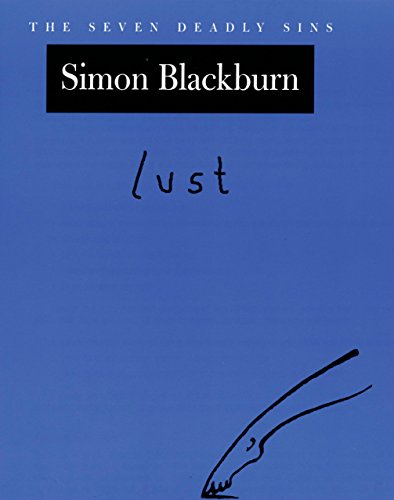
Lust, says Simon Blackburn, is furtive, headlong, always sizing up opportunities. It is a trail of clothing in the hallway, the trashy cousin of love. But be that as it may, the aim of this delightful book is to rescue lust “from the denunciations of old men of the deserts, to deliver it from the pallid and envious confessor and the stocks and pillories of the Puritans, to drag it from the category of sin to that of virtue.”Blackburn, author of such popular philosophy books as Think and Being Good, here offers a sharp-edged probe into the heart of lust, blending together insight from some of the world’s greatest thinkers on sex, human nature, and our common cultural foibles. Blackburn takes a wide ranging, historical approach, discussing lust as viewed by Aristophanes and Plato, lust in the light of the Stoic mistrust of emotion, and the Christian fear of the flesh that catapulted lust to the level of deadly sin. He describes how philosophical pessimists like Schopenhauer and Sartre contributed to our thinking about lust and explores the false starts in understanding lust represented by Freud, Kinsey, and modern “evolutionary psychology.” But most important, Blackburn reminds us that lust is also life-affirming, invigorating, fun. He points to the work of David Hume (Blackburn’s favorite philosopher) who saw lust not only as a sensual delight but also “a joy of the mind.”Written by one of the most eminent living philosophers, attractively illustrated and colorfully packaged, Lust is a book that anyone would lust over.
User’s Reviews
Reviews from Amazon users which were colected at the time this book was published on the website:
⭐The author does a great job of telling the story of why lust is a ‘sin’ and how it has been used across centuries to drive acquiescence from groups of people.Often humorous as well, this is a great read that shouldn’t take more than a sitting or two.
⭐In the uneven 7 Deadly sins series, copublished by Oxford University press and the New York Public Library, three of the volumes are stinkers, one is above average, and three are quite good. The best of the lot is Robert Thurman’s treatment of anger; third best is Francine Prose on gluttony. Second place goes to philosopher Simon Blackburn’s witty, urbane, and analytically precise treatment of lust.In Blackburn’s hands (pardon the bad pun) lust loses the automatically pessimistic sheen of sin that the Christian tradition has bestowed on it. As Blackburn says (p. 27), “we [should] no more criticize lust because it can get out of hand, than we [should][ criticize hunger because it can lead to gluttony or thirst because it can lead to drunkenness.” Looked at in itself, lust–desire for sexual pleasure–is neutral. Context and disposition are the dividing lines in separating moral from immoral lust.Lust that fully recognizes the partner as a fellow human being and desires his or her sexual fulfillment in the encounter is, says Blackburn, the optimal situation. There’s a kind of feedback look that occurs when sexual partners mutually recognize one another: I desire your pleasure, and seeing it enhances my pleasure, which enhances yours… Blackburn refers to this as Hobbesian unity (from a passage from Hobbes in which he writes of the relationship between imagination and mutual pleasuring in sex). This doesn’t mean that all lust which falls short of Hobbesian unity is tarnished. One of the healthier aspects of Blackburn’s approach is his recognition of degrees. As he says (p. 133), “if Hobbesian unity cannot be achieved, it can at least be aimed at, and even if it cannot be aimed at, it can be imagined and dreamed.”Blackburn’s book achieves what all good philosophical treatments do: it simply has the ring of familiar common sense.
⭐Hoping for detail, but it’s good starter on the subject. Overall the series had three good ones (Anger, Greed, Envy) the other four were kinda a waste of time.
⭐Well, it’s good to see at least one philosopher who understands lust better than most historical figures.I had more fun reading this book than I have reading any book on such a serious moral topic. Simon Blackburn lives in the real world and he writes as if he intends to help everyone else who lives there as well.Absolutely must reading for the serious and not-so-serious minded as well. The press that printed this book is to be commended for having selected Simon Blackburn for this task (writing clearly about the meaning and importance of “lust”.
⭐Good treatment if doing research in the 7 Deadly Sins
⭐I used this essay for research on a class I was teaching. I did not find it as helpful as some of the others in this series.
⭐An interesting reading. Changed my views of Lust as a concept.
⭐Simon Blackburn has given us one of the top two of the 7 Deadly Sins series – hugely enjoyable, highly informative and one of those rare things: an intelligent book that neither patronises nor bores the reader to death. (For the record, I think the other one is Envy)Most philosophy books fall into two deadly and sinful categories. They tend to be either simplistic, so that anyone with a serious interest beyond degree level becomes frustrated and dissatisfied; or they’re way too ‘academic’ and technical, forcing the reader to tear his (or her) hair out by the roots and retreat to the sports channels on television. Blackburn avoids both hellish places here, giving an intelligent overview of his allocated sin while keeping the reader pinned to the pages as though reading a novel.His amusing and often almost poetic writing style not only grips, but leads you down alleyways of the history of ideas that both entertain and get you thinking. But that’s his chief problem, because once you think a little about what you’re reading, you realise the flaw in his method of argument. He’s simply enjoying himself too much.This shouldn’t hurt, and really it doesn’t; on the other hand it leaves you with the feeling that he’s missed something along the way. Sin is, after all, quite deadly, and rather than condemning as prudes or psychologically scarred misfits those people who have historically told us that it’s bad, it would have been helpful to have been taken along the darker streets of lust for a change.Hell, it’s fashionable these days to defend things like lust. John Portman’s In Defense of Sin is a shining example of reader-friendly ‘diet academia’ which gets the blood flowing and the mind racing, but it’s ultimately little more than an excuse to be naughty and dress it up as a “serious examination of why we believe x y or z”. For anybody who has experienced lust and got their fingers (or anything else for that matter) burnt, Blackburn just doesn’t go far enough.Every one of the Deadly Sins has its friendly brother whom we mistake for the real thing. Envying somebody else’s car while we drive down the street in our Skoda may technically be called envy, but it’s a barmy thought process that would lead anybody to think that because it only scratches us and doesn’t cut us, envy isn’t necessarily that bad after all. The same goes for lust. While a ‘Hobbesian unity’ sounds fantastic, it doesn’t account for the darker or more destructive sides of the thing.We don’t need to mention the agonies of rape or other forms of sexual abuse to see this. Imagine simply lusting after other women while your wife waits at home with the dinner, or think of the discomfort you might feel upon seeing a boyfriend looking hungrily at another girl’s legs…Lust can hurt love. Lust can cause us to turn away from more giving feelings. Lust can draw us away from, not always ‘Hobbesianly towards’, our partners. Why didn’t Blackburn discuss this? Why did he do no more than nod once in its direction?Why didn’t Blackburn discuss the husband whose lust is tethered and never actually acted upon, but fairly indiscriminate nonetheless, and whose wife is consequently devalued even when never technically cheated upon? Why didn’t he mention the wife who has no indiscriminate lust but forms a lustful attachment to one of her work colleagues, and while never acting upon her basic urges knows full well that her husband would be devastated to find out (and rightly so – this isn’t some childish jealousy that he’d be feeling)? Why doesn’t he mention the girlfriend who has neither indiscriminate lust nor lust for a colleague, but who suddenly finds herself chomping at the bit on just one occasion? I’m no prude, I feel and will hopefully continue to feel powerful lustful urges, but I recognise that they’re not always fun and happy. Lust can damage people beyond recognition. Having lustful dreams about a friend is bad enough, but waking up and being disappointed to find my girlfriend lying next to me was injury to insult; finding my commitment (but happily not my fidelity) to another girlfriend tested and found wanting by an urge I may never lose reminds me, over and over again, that there’s more to lust than fun, the fulfilment of love, or pointing a disapproving (although in Blackburn’s case eridute) finger at Mediaeval philosophers and theologers.It’s a great book. I don’t want to knock it. But it seems to think that lust is a great sin, rather than just a great big dirty one. I just can’t help thinking that while Blackburn intelligently defends, explains and even to some extent promotes lust in his book, all those occasions that I’ve been torn apart by it and all those times where otherwise beautiful relationships have been damaged, sometimes irreperably, by it have been done just a little disrespect by the notion that, well, you’d have to be a puritan or a prude not to see its advantages.I also don’t believe that Blackburn has deliberately led the reader to challenge him and think about the other side of the coin; he spends so much time examining so many of the minutiae of lust that his feels like a book that sets out to inform rather than lay down a gauntlet. Yet I still, after all this, urge you to buy it.Why? I don’t know. Perhaps it’s just because while I didn’t always agree with him, I don’t think that disagreeing with someone means that his book can’t be enjoyed and recommended. It IS intelligent; it IS readable; it IS informative. It even prompted me to buy more of his work.If we could choose when to lust, if we could choose whom we lusted after, if we could choose how much we lust and if we could choose who lusted for us, the world would be a better place, and perhaps more accurately reflected by Blackburn’s otherwise excellent little book.
⭐Really interesting based on seminars from profesionnals. If interested by the subject, deeply recommended to read the series!
⭐The cover of the book was not that of the contents.
⭐good
⭐Interesting read. Bought for a class.Author presents very thought-provoking arguments, but sometimes rambles and changes subjects rather quickly even within the same chapter. It can be a little confusing. Otherwise, it was a good commentary of lust and why one should perhaps consider to redeem it from its place as shameful.
Keywords
Free Download Lust: The Seven Deadly Sins (New York Public Library Lectures in Humanities) 1st Edition in PDF format
Lust: The Seven Deadly Sins (New York Public Library Lectures in Humanities) 1st Edition PDF Free Download
Download Lust: The Seven Deadly Sins (New York Public Library Lectures in Humanities) 1st Edition 2004 PDF Free
Lust: The Seven Deadly Sins (New York Public Library Lectures in Humanities) 1st Edition 2004 PDF Free Download
Download Lust: The Seven Deadly Sins (New York Public Library Lectures in Humanities) 1st Edition PDF
Free Download Ebook Lust: The Seven Deadly Sins (New York Public Library Lectures in Humanities) 1st Edition