Ebook Info
- Published: 2019
- Number of pages: 239 pages
- Format: PDF
- File Size: 1.05 MB
- Authors: Seneca
Description
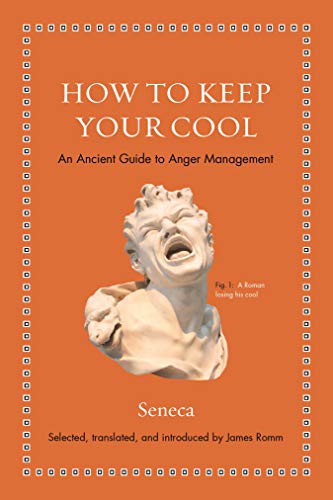
Timeless wisdom on controlling anger in personal life and politics from the Roman Stoic philosopher and statesman SenecaIn his essay “On Anger” (De Ira), the Roman Stoic thinker Seneca (c. 4 BC–65 AD) argues that anger is the most destructive passion: “No plague has cost the human race more dear.” This was proved by his own life, which he barely preserved under one wrathful emperor, Caligula, and lost under a second, Nero. This splendid new translation of essential selections from “On Anger,” presented with an enlightening introduction and the original Latin on facing pages, offers readers a timeless guide to avoiding and managing anger. It vividly illustrates why the emotion is so dangerous and why controlling it would bring vast benefits to individuals and society.Drawing on his great arsenal of rhetoric, including historical examples (especially from Caligula’s horrific reign), anecdotes, quips, and soaring flights of eloquence, Seneca builds his case against anger with mounting intensity. Like a fire-and-brimstone preacher, he paints a grim picture of the moral perils to which anger exposes us, tracing nearly all the world’s evils to this one toxic source. But he then uplifts us with a beatific vision of the alternate path, a path of forgiveness and compassion that resonates with Christian and Buddhist ethics.Seneca’s thoughts on anger have never been more relevant than today, when uncivil discourse has increasingly infected public debate. Whether seeking personal growth or political renewal, readers will find, in Seneca’s wisdom, a valuable antidote to the ills of an angry age.
User’s Reviews
Reviews from Amazon users which were colected at the time this book was published on the website:
⭐This was my first reading of 2021, and given the way things in my life have been going lately, I thought it was time to learn how to deal with anger. I vastly enjoyed this book, while not agreeing with everything in it.–I loved that Seneca thought people had an important thing–forgivability–in common.–I liked the history bought into the book (he refers to several historical figures by name).–I liked the reference to the warning signs of anger.I wondered at one point if Spock from Star Trek was a product of Seneca. Seneca says on p21, “My father is being killed; I’ll defend him,” or “he has been killed; I’ll avenge him–but because it’s right, not because I’m grieved.” In other words, it’s okay to take vengeance, as long as you’re unemotional about it.I loved this quote–“Nothing is great unless it’s also at peace.” Also, “Your greatest fear lies in the same place as your greatest joy.” And this brilliant reasoning: “Surely no one would choose to hit a foe so hard as to have his hand get stuck in the wound and be unable to withdraw from the blow. But anger is a weapon of just this type–it’s hard to draw it back.”But I didn’t necessarily agree with everything in it. Seneca insists it’s unnatural and animalistic. But surely animals are the very picture of nature–they don’t know how to fake it. So anything that’s animalistic is natural. Even the Bible says anger is natural. God commands us to be angry “and sin not.” Not that Seneca was big into the same God I hang out with–he makes several references to the gods, one of which is amusing (“You waste your effort just as much by getting angry at a god as by praying for a god to be angry at someone else.”)I don’t imagine anyone everyone agrees 100% with anyone else about everything, so that’s not why I’m subtracting a star. At a couple of places, Seneca makes conflicting judgments. And at another, he says “I’ll come back to this point” but he doesn’t. According to the translator’s notes, the omissions were Seneca’s. So despite the fact that it’s about 2000 years too late to be bummed at this, I am.But I’m not angry! 🙂
⭐Seneca was a first-century Stoic philosopher exiled under Caligula and murdered by Nero. How to Keep Your Cool consists of lengthy selections from his essay De Ira (On Anger). Like other volumes in this series, the book is bilingual, in this case consisting of Latin (on the left) and English (on the right). It is a powerful and thought-provoking read.According to Seneca, anger is a desire to punish wrong, whether real or perceived (p. 15; 1.6). Perhaps this seems familiar, and even praiseworthy (for anger sounds righteous), but his approach to the matter will likely strike many as odd. Unlike the contemporary belief that anger can be rightly channeled, Seneca believes that anger is simply dangerous. It is ‘the ugliest and most savage of all emotions’, ‘hardly human’, and ‘a brief madness’ (p. 5; 1.1). When angry, we are ‘transported beyond mortal thinking by an insane mind’ (pp. 25-27; 1.20). His remedy is to first avoid situations where we are likely to become angry, and second to make sure that if we are angry, we do no harm. He doubts that anger can be useful, because ‘it’s easier to shut out harmful things than to govern them, easier to deny them entry than to moderate them once they have entered’ (p. 17; 1.7). As I look around (and at myself), I think he is right.All of this indicates that the danger is not just true of the individual but of society as a whole, and Seneca applies his views on anger to larger social contexts as well. When angry, we should not trust the belief that we have, in fact, been wronged (p. 47; 2.22); ‘we grow angry before we use our judgment’ and are thus quick to believe the worst about another’s motives (p. 49; 2.23). Groups are the same, and ‘often a whole crowd has lined up to march into anger’ (p. 115; 3.2), such that ‘a monstrous frenzy carries away the citizens’ and social norms are abrogated (pp. 117-19; 3.2). Anger affects not just individuals, but societies.Seneca has given me much to ponder. There is much here worthy of reflection – and, above all, application to our own lives.
⭐In his essay “On Anger,” Seneca describes in three books how to recognize and control anger and what happens if you don’t. This wisdom is timeless and applies to Seneca’s time as well as today. He describes what anger is and the harm is causes and how to manage your anger.
⭐I enjoyed Romm’s translations and I always enjoy Seneca. This is a short book. I don’t really like the original Latin section. It feels like it is included to make a short book seem longer. At least the Kindle version adds it at the end of the book. The hardcover actually has the pages facing each other.
⭐I could not believe what I read. Here one of the footnotes, verbatim:”The Latin sentence that follows, omitted from this set of excerpts, contains an unusually strong gender bias: Seneca states that the sort of mental collapse he describes here is often seen in women. Excising this sentence runs the risk of whitewashing Seneca’s sexism, or that of other Roman writers generally, who were overwhelmingly males and addressing themselves to other males. In the context of the “How to” series, this editor felt that a stress on the universality of the Stoic principals was appropriate, and that Seneca deserved to have his own advice put into practice: ‘It is not to your benefit to see and hear everything.’ “My jaw dropped when I read that. This is book burning. Actually, it is worse, because at least book burning is forthright.He says Seneca accuses women of a particular mental weakness. But in doing this, the editor, James Romm, accuses us all of mental weakness. He has to decide what we can and cannot read because, apparently, he knows better.
⭐There is much to be absorbed from Seneca’s perspective on how to avoid anger. Several eye opening examples were provided that drove the point home on the various aspects of how anger affects ones life. I highly recommend this book to anyone who is interested in Roman literature and self help books.
⭐While Seneca’s sage advice didn’t cure my anger, it certainly gave me many resources to ameliorate it. There have been times recently when I have automatically took his advice and aborted my anger, avoiding it’s harm. I am healing, though not cured, of anger and rage.
⭐This is a critical & timeless philosophy that provides insight & guidance into eradicating negative thoughts that drain us of life’s Joy & purpose . Life is short , let’s not waste our precious time & energy on unhealthy thoughts & attitudes .
⭐I bought it on Kindle and half of the book is french. Did it just happen to me?
Keywords
Free Download How to Keep Your Cool: An Ancient Guide to Anger Management (Ancient Wisdom for Modern Readers) in PDF format
How to Keep Your Cool: An Ancient Guide to Anger Management (Ancient Wisdom for Modern Readers) PDF Free Download
Download How to Keep Your Cool: An Ancient Guide to Anger Management (Ancient Wisdom for Modern Readers) 2019 PDF Free
How to Keep Your Cool: An Ancient Guide to Anger Management (Ancient Wisdom for Modern Readers) 2019 PDF Free Download
Download How to Keep Your Cool: An Ancient Guide to Anger Management (Ancient Wisdom for Modern Readers) PDF
Free Download Ebook How to Keep Your Cool: An Ancient Guide to Anger Management (Ancient Wisdom for Modern Readers)