Ebook Info
- Published: 2011
- Number of pages: 300 pages
- Format: PDF
- File Size: 1.37 MB
- Authors: Steven Nadler
Description
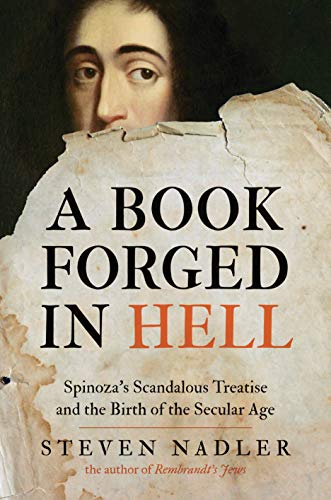
The story of one of the most important—and incendiary—books in Western historyWhen it appeared in 1670, Baruch Spinoza’s Theological-Political Treatise was denounced as the most dangerous book ever published—”godless,” “full of abominations,” “a book forged in hell . . . by the devil himself.” Religious and secular authorities saw it as a threat to faith, social and political harmony, and everyday morality, and its author was almost universally regarded as a religious subversive and political radical who sought to spread atheism throughout Europe. Yet Spinoza’s book has contributed as much as the Declaration of Independence or Thomas Paine’s Common Sense to modern liberal, secular, and democratic thinking. In A Book Forged in Hell, Steven Nadler tells the fascinating story of this extraordinary book: its radical claims and their background in the philosophical, religious, and political tensions of the Dutch Golden Age, as well as the vitriolic reaction these ideas inspired.It is not hard to see why Spinoza’s Treatise was so important or so controversial, or why the uproar it caused is one of the most significant events in European intellectual history. In the book, Spinoza became the first to argue that the Bible is not literally the word of God but rather a work of human literature; that true religion has nothing to do with theology, liturgical ceremonies, or sectarian dogma; and that religious authorities should have no role in governing a modern state. He also denied the reality of miracles and divine providence, reinterpreted the nature of prophecy, and made an eloquent plea for toleration and democracy.A vivid story of incendiary ideas and vicious backlash, A Book Forged in Hell will interest anyone who is curious about the origin of some of our most cherished modern beliefs.
User’s Reviews
Reviews from Amazon users which were colected at the time this book was published on the website:
⭐Spinoza has become an obsession in these quarters lately. Years ago an effort was made to read Ethics and it did not work. His design to make a philosophical point using geometry to help us understand Descartes while pushing his description of theology and ethics was far over this reader’s head. Yet references and articles about Spinoza kept me rapt. It was clear that the dribbles of comprehension accumulated about his philosophy spoke to my way of thinking very well. In the days that have passed since a feeble attempt to comprehend Ethics, many books have been read and there is a current grip to actually plunder The Theological and Political Treatise. Yet it necessitated further encouragement from Nadler.The history of that book was well represented by Nadler and this review won’t detail what was written but rather discuss some of its curiosities. As a member of the Sephardic diaspora from Iberia to the liberal Netherlands, Spinoza bore a unique history. In Portugal his family publicly renounced Judaism in favor of Christianity came a return to their faith in a nation that was more accepting of them. That acceptance was marginal but did not include internment or worse for being Jewish. So it was into a deeply rooted tradition and faith that Baruch as he was known in the Jewish community, was raised. While living in social segregation at least the family was able to ply their trade and with a relative comfort. That ended when Baruch was still in yeshiva as his father died and he and his brother had to take over the family business. He was seventeen at the time, business did not suit him so well and there were all sorts of family issues that are irrelevant here but he struck out on his own.Six years later he underwent a cherem which is an expulsion from the Jewish synagogue and faith. It was a harshly worded diatribe condemning him for his thoughts alone as there is no evidence that he had published any heretical writing by this time. As a twenty three year old he was thrown out of the house he grew up in as it were. Apparently this meant little to him as there is no indication that he sought redemption. Rather he continued his relationships with offbeat Christian sect members and possible non-believers all together. At this early age he continued to pursue a metaphysical understanding of theology and god. He did it by surrounding himself with people with unique beliefs.Nadler chose Theological-Political Treatise (now referred to as TPT) for his case. In that book Spinoza essentially re-defined the notion god (as essentially the natural world) and discounted such biblical premises as miracles and prophets. The writers of the bible may have been virtuous but they wrote with passion rather than knowledge they were fallible. This was blasphemy even in the rather liberalized Netherlands. More on this subject will appear in a later review of that book itself. This is about Spinoza and his time.Many writers of Spinoza’s history and life have claimed him to be a very religious man and Nadler does not exactly dispel that notion but he does suggest that Spinoza wrote cryptically. He knew that TPT would raise the ire of the Dutch Reformed church that was current at the time and desired a power seat in the government. Despite a law enacted in the late 1500s declaring a separation of church and state there were regular waiving of specifics by politicians and clergy aligned in subterfuge. Spinoza recognized the necessity of discretion. After all his good friend and religious radical Koerbagh died in an Amsterdam prison for heretical writing. This in the most religiously liberal land in Europe.We learn in Nadler’s prose that what Spinoza like Descartes a generation prior, had to do was be very circumspect in their message and use words and concepts that I learned growing up in a religious family. It was called “ACE”s. These were “Acceptable Church Equivalencies”. That is to reference ideas in terms that could be acceptable to ecclesiastics and tailor ones verbiage to the cognoscenti in order to make a point. In this case the book went through several disguised publications in order to evade authorities and the church. The problem was obvious though. Redefining the deity would be a damning offense. The book was vilified by clergy, government and many of Spinoza’s own backers.Despite Spinoza’s decrying the assault from clergy and others that labeled him an atheist, he attempted to redefine god and how a person could come to his terms in an enlightened way. That never really worked so well. Nadler implies that Spinoza protected himself from any sort of inquisition by stressing his devotion to god and the bible which he had clearly examined in fine detail. He did that by once again re-defining the concept of god and having the reader of scripture use a different methodology for understanding what was written. Now it was time to look at the book and all one has been taught about theology and examine it in an objective way. He used a hermeneutic style to probe the bible. He questioned the validity of the writers of it. From whence their prophecies and their stature as prophets he asked?He demanded a rigor of those seeking the truth. Do we accept the word of questionable divine authority? No, we examine the details ourselves and come not to a subjective and determined result from authority. We attempt to discern through the laws of nature and objectivity how this all works. We eliminate authority and determine for ourselves what the bible means and what our role in the world is. This was pretty radical stuff in the mid-17th century.Spinoza is commonly referred to as a pantheist or one who finds that nature is god. Nadler takes issue with that conception. For Spinoza god is actually a philosophical construct. Pantheists in the pure form equate god to nature and worship nature in the same manner they would a deity. Spinoza doesn’t worship god; he understands god. There are no passion or humanness to god. There is no man with a flowing beard that directs the lives of humans while looking down from a cloudy ether. Spinoza’s god is one who may have set the world in motion, and is hands off by necessity. There is no heavenly guidance directly or indirectly. What we know of god is how we appreciate that concept.Nadler points out some contradictions in Spinoza’s writing. Had he led a longer life than the 44 years he spent here, Spinoza may have elaborated and clarified these. In real life he did not. One had to do with the separation of church and state. Since any church is a public forum and the state must govern all public conditions, the government must be involved with religion. However Spinoza maintained that if any religion preaches and practices virtuosity it should be allowed to exist. He saw religions as providing humans with moral guidance as humans would devolve otherwise. Since humans primarily respond with emotion and passion more than with reason, some guidance is needed. A plethora of studies during the last 400 years backs Spinoza up on the heart versus mind situation.He also felt that it is impossible to rid oneself of all passionate responses. They can be tempered through. Knowledge and understanding can limit our passions thus allowing cooler heads and rationality to guide us. In fact the more we train ourselves to think, study and learn the less we need governing. It is passion that is the problem. Reading the Federalist Papers shows that the founders of this nation thought exactly the same way. Jefferson for instance left in his library, well-thumbed copies of Spinoza’s works.Despite his liberal understanding of how governments should rule, and his determination that free speech was essential, he felt that governments should not allow any talk of sedition. This is scary stuff and it is here that I hope a future Spinoza would have refined his thinking. How do we define sedition in a nation favoring free speech? Who defines it? This is a break from the otherwise enlightened and liberal Spinoza.Nadler is a preeminent Spinoza scholar. Perhaps the best in the United States. The book was very readable and the reader does not need to be scholarly in philosophy though some interest in the subject is required. He paints a picture of the man and his times and like Spinoza suggested, delving into the subject matter more deeply is the only way to actually come to understand it. Recently amongst my daughter’s books up in the attic I found a copy of TPT and with the help Nadler provided in A Book Forged in Hell I will dive into that. It is what Spinoza would have wanted. Stay tuned.
⭐About 25 years ago, I was engaged in serious graduate study in philosophy and preparing to write a dissertation on Spinoza’s Theological-Political Treatise (1670). I have had a lifelong interest in Spinoza and was interested in the Treatise because of the questions of how to interpret texts it raises in terms of its treatment of the Bible. Also, at the time, the Treatise was receiving far less attention than Spinoza’s most famous work, the Ethics. I never completed the dissertation but retained my interest in Spinoza and the Treatise.The Treatise has received substantial attention since the time I was closely engaged with it. Historian Jonathan Israel has writtent a trilogy of lengthy, difficult books showing the great influence of Spinoza and the Treatise on Enlightenment thought and on the French and American Revolutions.
⭐,
⭐,
⭐. Steven Nadler’s new study, “A Book Forged in Hell: Spinoza’s Scandalous Treatise and the Birth of the Secular Age” (2011) is much more accessible than Israel’s study and has a different focus. Nadler’s aim is to offer a study of the Treatise to a general readership rather than simply to an academic audience in order to explain the book, its teachings, and its significance. Nadler is the William H. Hay II Professor of Philosophy at the University of Wisconsin — Madison. He is the author of many books on Spinoza including a biography,
⭐, a study of Spinoza’s excommunication,
⭐, and a study of Spinoza’s Ethics,
⭐.Nadler quite properly emphasizes the radical revolutionary charater of Spinoza’s Treatise. The title of Nadler’s book derives from one of the many criticisms levelled at the Treatise shorly after its publication. One Willem van Blijenburgh, who had been a correspondent of Spinoza’s, wrote a lengthy book refuting the Treatise in which he said: “This atheistic book is full of studious abominations and an accumulation of opinions which have been forged in hell, which every reasonable person, indeed every Christian, should find abhorrent.” (p. 232) Nadler documents many similar comments about the book as well as the events which led to the ban on the book two years after its publication. More importantly, Nadler explains what it was in Spinoza’s Treatise that so disturbed its contemporary readers.The Treatise concerns the relationship between religion and government and between religion and philosophy, broadly contstrued to include all forms of intellectual inquiry. Spinoza was concerned with religious wars, limitations on thought, and clerics influence on civil government. In a way that manages to be both cautious and bold, the Treatise takes a naturalistic view of God and prophecy, denies the existence of miracles, and takes a historical approach to the composition and interpretation of Scripture. Spinoza finds the Bible the work of human beings writing at particular times. Religion’s goals are ethical in that it teaches people to be kind to one another, but it does not have further cognitive or doctrinal teachings. In a free society, for Spinoza, people should be free to believe as they wish. As Nadler quotes the basic teaching of the Treatise: “The state can pursue no safer course than to regard piety and religion as consisting solely in the exercise of charity and just dealing, and that the right of the sovereign, both in religious and secular spheres, should be restricted to men’s actions, with everyone being allowed to think what he will and to say what he thinks.” (p.214)Nadler’s book begins with some brief biographical information about Spinoza and about his famous excommunication from the Amsterdam Jewish community. He also gives some important historical information about the Netherlands in Spinoza’s day. Although there was in fact a larger degree of religious toleration in the Netherlands than in any other European community at the time, it was precarious and threatened by conflicts between monarchists and ecclesiastics on one hand and dissenting sects on the other hand. Spinoza wrote against a backdrop which thus contained both elements of liberty and the threat of repression. His aim was to increase the former. While there are universal lessons to be drawn from the Treatise, Nadler emphasizes that the book is also the product of a particular time and place. (For example, he writes: Moreover, while the Treatise remains of great relevance today, it is also a response to very particular and very complex historical exigencies, and we do not do it justice by trying to make it fit some transhistorical category of theories.” p.207)Most of the book consists of Nadler’s close reading and exposition of Spinoza’s text on the nature of god and prophecy, miracles, Scriptural interpretation and authorship, and political philosophy. Nadler ties the teachings of the Treatise to the teachings of Spinoza’s much more obscure Ethics. Nadler also draws important parallels between Spinoza and other thinkers. Thomas Hobbes receives attention throughout, both in the way Spinoza followed and the way he differed from him. Nadler also pays attention to the great medieval Jewish thinker Maimonides and offers his views on what Spinoza learned from Maimonides and where he disagreed. Nadler compares Spinoza’s treatment of miracles in the Treatise with the famous work on the subject by a subsequent philosopher, David Hume, as well as with medieval Jewish and Christian understandings of miracles. Spinoza’s views on tolerance and free speech are compared and contrasted with the views of John Locke, John Milton, and of the First Amendment to the United States constitution. The book considers Spinoza’s alleged role as the first “secular Jew” (which Nadler rejects) and Spinoza’s role as the founder of a philosophy of secularism and of secular government (which Nadler accepts.)Although long relegated to obscurity, the Treatise has been a book of pervasive and lasting influence. As Nadler concludes (p. 240):”Without a doubt, the Theological-Political Treatise is one of the most important and influential books in the history of philosophy, in religious and political thought, and even in Bible studies. More than any other work, it laid the foundation for modern critical and historical approaches to the Bible. And while often overlooked in books on the history of political thought, the Treatise also has a proud and well-deserved place in the rise of democratic theory, civil liberties, and political liberalism. The ideas of the Treatise inspired republican revolutionaries in England, America, and France, and it encouraged early modern anticlerical and antisectarian movements.”I enjoyed revisiting the Treatise and thinking about it again through reading Nadler’s study. Readers with a broad interest in philosophy and in ideas will benefit from Nadler’s book and perhaps receive encouragement to read Spinoza’s own book for themselves.Robin Friedman
⭐If you are looking for an introduction to the great philosopher,this very readable book will do. For, although the theme is the”Theological-political treatise”, the philosophical framework given (re: Spinozamasterpiece, “Ethics” in particular), in addition to the historical one,is very clearly spelled out.
⭐Very good, clear and informative. Very good read while studying the Tractatus.
⭐pity that the type is very small
⭐excellent introduction to Spinoza’s Treatise theological and politic. The author gives the context of Spinoza’s affirmations about the Bible, Prophecy, Miracles, … and makes us understand the boldness of Spinoza’s thought, even for Biblical studies today. Steven Nadler is an excellent writer. His book is difficult to put aside! when you begin reading.Highly recommended for people interested in the root of the freedom of speech from the 17th century tp our days.
⭐This book is of great value for those wanting to learn something of Spinoza’s life, philosophies and theories. It is a scholastic treatise and seems well researched .It is not recommended for the light-hearted or for those looking for an easy and entertaining read. For those serious readers I found that the book needs time to fully understand the theories Spinoza enunciated; It also allows one to appreciate why he was regarded as one of the greatest, but controversial philosophers in Europe.In summary it is well worth the read and leaves the reader with a better understanding of religious life in Holland during the 17th century..I found that it left me with the feeling that I will explore further into Spinoza’s life and times.
Keywords
Free Download A Book Forged in Hell: Spinoza’s Scandalous Treatise and the Birth of the Secular Age in PDF format
A Book Forged in Hell: Spinoza’s Scandalous Treatise and the Birth of the Secular Age PDF Free Download
Download A Book Forged in Hell: Spinoza’s Scandalous Treatise and the Birth of the Secular Age 2011 PDF Free
A Book Forged in Hell: Spinoza’s Scandalous Treatise and the Birth of the Secular Age 2011 PDF Free Download
Download A Book Forged in Hell: Spinoza’s Scandalous Treatise and the Birth of the Secular Age PDF
Free Download Ebook A Book Forged in Hell: Spinoza’s Scandalous Treatise and the Birth of the Secular Age