Ebook Info
- Published: 2002
- Number of pages: 417 pages
- Format: PDF
- File Size: 4.45 MB
- Authors: Pamela Kyle Crossley
Description
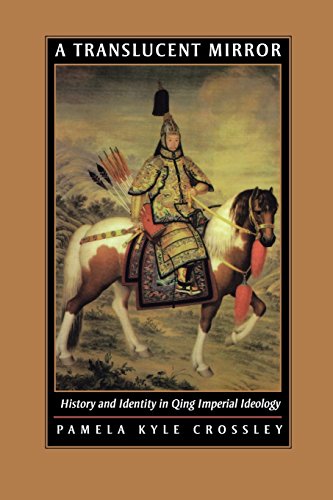
In this landmark exploration of the origins of nationalism and cultural identity in China, Pamela Kyle Crossley traces the ways in which a large, early modern empire of Eurasia, the Qing (1636-1912), incorporated neighboring, but disparate, political traditions into a new style of emperorship. Drawing on a wide variety of primary sources, including Manchu, Korean, and Chinese archival materials, Crossley argues that distortions introduced in seventeenth- and eighteenth-century historical records have blinded scholars to the actual course of events in the early years of the dynasty. This groundbreaking study examines the relationship between the increasingly abstract ideology of the centralizing emperorship of the Qing and the establishment of concepts of identity in the seventeenth and eighteenth centuries, before the advent of nationalism in China.Concluding with a broad-ranging postscript on the implications of her research for studies of nationalism and nation-building throughout modern Chinese history, A Translucent Mirror combines a readable narrative with a sophisticated, revisionary look at China’s history. Crossley’s book will alter current understandings of the Qing emperorship, the evolution of concepts of ethnicity, and the legacy of Qing rule for modern Chinese nationalism.
User’s Reviews
Editorial Reviews: Review “Crossley [is] the leading historian of the Manchu rulers of the Qing. This engaging work is deeply nuanced and stimulating, and will shape the way scholars define ‘China’ and ‘Chinese.'”–R. E. Entenmann, “Choice” From the Back Cover IN THIS LANDMARK EXPLORATION of the origins of nationalism and concepts of racial identity in China, Pamela Kyle Crossley traces the shifting ideologies of a large, early modern land-based empire, the Qing (1636-1912). Drawing on a wide variety of primary sources, Crossley argues that motifs introduced under the Qing in the eighteenth century — part of the crystallizing categories of identity that the Qing themselves promoted — continue to distort the modern understanding of Qing origins. What has often been repudiated by nationalist foes of empire, it turns out, is frequently itself a creation of empire.As the empire was formed, Crossley suggests, the complex or simultaneous rulership needed to address itself to increasingly discrete, abstract, genealogically constructed, and historicized audiences. She finds that these identities, some of which were adopted wholesale by nationalist spokesmen of the nineteenth and twentieth centuries, bore at best a loose resemblance to the factual contours of the Qing period.Concluding with a broad-ranging postscript on the implications of her research on studies of nationalism and nation-building in modern Chinese history, A Translucent Mirror will be indispensable for scholars and students. About the Author Pamela Kyle Crossley is Rosenwald Research Professor of History, Dartmouth College; author of Orphan Warriors: Three Manchu Generations and the End of the Qing World (1990) and The Manchus (1997); and coauthor (with Richard Bulliet and Dan Headrick) of The Earth and Its Peoples (1997). Read more
Reviews from Amazon users which were colected at the time this book was published on the website:
⭐Good
⭐Though this book won the Levenson prize, the book is poorly organized, the writing style is too convoluted, and information is too repetitive (the story of Nurhaci seeking revenge for his daughter is repeated at least four times throughout the book). The various points of the chapters are buried in great amounts of detail, in addition to the various tangents that divert the readers’ attention. There is also a lack of references to what sources the author is using, though the reader can assume that she is using both Chinese and Manchu sources. The book’s inconsistent chronology may also confuse many readers who are unfamiliar with Qing history.It would also be better to skip the introduction, and return to it after reading the body chapters.The book is probably better read in juxtaposition with Mark Elliott’s Manchu Way.
⭐I am no expert in Chinese history, so I admit I may not be Crossley’s intended audience. The point of each chapter is difficult to find, lost in the mire of names and places. The thought process is difficult to follow, and I found myself reading and rereading convoluted sentences that exceeded ten lines in length.No doubt this work contributes to scholarly understanding of Qing ruling style. It just does so in a way that is difficult to follow.
⭐Wonderful book, very important.
⭐I am serious reader about Chinese history, so take my comments with that in mind. This book is not recommended for those who want a quick read or a review of the usual clichés about China. But if you think you know a lot about China in the past four hundred years, this book will blow your mind. Get ready for a major renovation of your attitudes. If you care about China –or just about History– this book will stay on your mind for a very long time. In fact I got sort of obsessed about it –don’t let that happen to you!
Keywords
Free Download A Translucent Mirror: History and Identity in Qing Imperial Ideology in PDF format
A Translucent Mirror: History and Identity in Qing Imperial Ideology PDF Free Download
Download A Translucent Mirror: History and Identity in Qing Imperial Ideology 2002 PDF Free
A Translucent Mirror: History and Identity in Qing Imperial Ideology 2002 PDF Free Download
Download A Translucent Mirror: History and Identity in Qing Imperial Ideology PDF
Free Download Ebook A Translucent Mirror: History and Identity in Qing Imperial Ideology