Ebook Info
- Published: 2010
- Number of pages: 336 pages
- Format: PDF
- File Size: 2.64 MB
- Authors: Pamela Kyle Crossley
Description
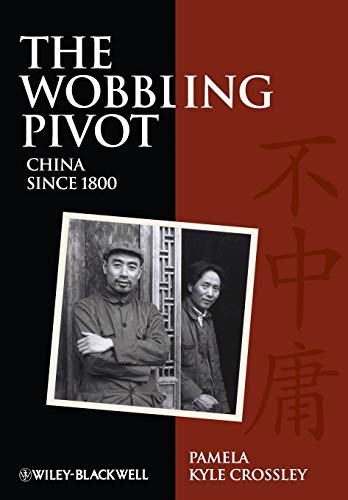
This comprehensive but concise narrative of China since the eighteenth century builds its story around the delicate relationship between central government and local communities. Rejects the traditional view of China as a wholly harmonious society based on principles of stability – the Unwobbling Pivot of Ezra Pound’s translation of the Chinese classic ZhongyongProvides an original interpretation, arguing that developments can be explained through an understanding of China’s surprising swings between centralization and decentralization, between local initiative and central authoritarianismServes as an introduction to the subject, while readers with a background in Chinese history will find the book offers a personal perspective and addresses long-standing interpretive issuesSupported by a variety of timelines, maps, illustrations, and extensive notes for further readingPlaces China’s history within the context of global change
User’s Reviews
Editorial Reviews: Review “The book is organized around a singular perception of modern Chinese history, but it offers a thorough and engaging narrative that provides the detail necessary for teaching and learning. It is accessible, complete and readable,. As a synthesis of twentieth century Chinese history it is both original and provocative, and a valuable introduction to the perennial issues that China poses in the undergraduate classroom.” R. Kent Guy in The China Quarterly”Crossley has produced a lively and innovative introduction to the most recent centuries of Chinese history, one that promises to serve as a stimulant rather than a soporific to beginning students and which, through the bold interpretations that it ventures, should also spark the interest of advanced students and scholars. If I were still teaching, I would look forward to using this book.” Paul Cohen in The China Journal”…an excellent and illuminating introduction to the history of the period.” Peter Wood in Asian Review of Books “…[a milestone] on the path toward new ways of constructing a history of China that doesn’t rely upon the assumption of an increasingly homogenous ‘modern’ world compelled by the overwhelming power of economic and political forces capable of rendering every state in the world in the image of the celebrated West.” Maura Dykstra at The China Beat Review “Pamela Crossley, a leading historian of the Qing Empire, has hit upon a genuinely novel and stylish way of telling the story of China’s modern transformations. She strikes a good balance between offering up big arguments and supporting them with revealing details, and she excels at limning connections between collective actions and state responses to unrest two centuries ago and patterns of protest and repression in the current era of Internet petitions and text message mobilization. The result is truly impressive, a high-level work of synthesis that is informed by deep knowledge of the past yet speaks with immediacy to the concerns of the present.” —Jeffrey N. Wasserstrom, University of California-Irvine, author of China in the 21st Century: What Everyone Needs to Know”Pamela Crossley’s book gives readers a new and original perspective on modern Chinese history by moving its focus away from the politics of the centre to give us a greater understanding of how China’s regions and minorities have shaped this multi-voiced society in its transition from empire to nation-state.” —Rana Mitter, University of Oxford”Original, conceptually bold, and unusually engaging. Crossley offers her readers a broader and deeper meditation on the shape and significance of China’s historical trajectory, one that may indeed make Chinese history more meaningful in the context of teaching undergraduates.” —Bryna Goodman, University of Oregon”The Wobbling Pivot is refreshingly ambitious in its interpretation of the whole scope of Chinese history since 1800. Its analysis of the often disastrous extremes of state authoritarianism and local implosion is told with a telling eye for detail that will grip general readers and specialists alike.” —Frank Dikotter, School of Oriental and African Studies, University of London, and the University of Hong Kong From the Inside Flap This comprehensive but concise narrative of China since the eighteenth century builds its story around the delicate relationship between central government and local communities. With a nod to Ezra Pound’s translation of the Chinese classic Zhongyong – The Unwobbling Pivot, Pamela Kyle Crossley argues that China’s modern history has not wholly adhered to the ideal of the ‘unwobbling pivot’, with China as a harmonious society based on principles of stability. Instead she argues that developments can be explained through China’s surprising swings between centralization and decentralization, between local initiative and central authoritarianism. The author’s approach is broad enough to provide a full introduction to modern Chinese history. Students new to the subject will be supported with timelines, maps, illustrations, and extensive notes to further readings, while those with a background in Chinese history will find an underlying theme in the narrative addressing long-standing interpretive issues. As a personal perspective from a leading authority in the field, The Wobbling Pivot provides a stimulating and original interpretation of the course of modern Chinese history. From the Back Cover This comprehensive but concise narrative of China since the eighteenth century builds its story around the delicate relationship between central government and local communities. With a nod to Ezra Pound’s translation of the Chinese classic Zhongyong – The Unwobbling Pivot, Pamela Kyle Crossley argues that China’s modern history has not wholly adhered to the ideal of the ‘unwobbling pivot’, with China as a harmonious society based on principles of stability. Instead she argues that developments can be explained through China’s surprising swings between centralization and decentralization, between local initiative and central authoritarianism. The author’s approach is broad enough to provide a full introduction to modern Chinese history. Students new to the subject will be supported with timelines, maps, illustrations, and extensive notes to further readings, while those with a background in Chinese history will find an underlying theme in the narrative addressing long-standing interpretive issues. As a personal perspective from a leading authority in the field, The Wobbling Pivot provides a stimulating and original interpretation of the course of modern Chinese history. About the Author Pamela Kyle Crossley is Professor of Inner Asian, East Asian Intellectual and Chinese History at Dartmouth College, New Hampshire. Her publications include The Manchus (Blackwell, 1997); A Translucent Mirror: History and Identity in Qing Ideology (1999); and What is Global History? (2008). She is a past Guggenheim Fellow and was awarded the Levenson Prize from the Association for Asian Studies in 2001. Read more
Reviews from Amazon users which were colected at the time this book was published on the website:
⭐There is certainly a lot of interesting material in this slim history of modern China from the Qing dynasty through contemporary times, but it falls short of what most professors would want to assign as the primary textbook in a course on modern Chinese civilization or history. Though Crossley identifies a couple of valid shortcomings of describing the Qing dynasty’s model of international relations as the “tributary system,” her suggested alternative of foreign “embassies” to China is even less satisfying, in that these foreign missions of acknowledging Qing overlordship reflect an imbalance of status that is outside the realm of what is ordinarily meant by an ambassadorial or consular relations with another sovereign state. Some of the statistics used in the work are also questionable, such as the claim that there are only a total of about 40 million Chinese who are either in the central or local government or perform government-like work in some official capacity, when the actual number is at least 50% higher than that. The “stability maintenance” budget alone has already exceeded the rapidly increasing military budget. Crossley is correct to note, however, that the government of the CCP Party-state is several hundred times larger than that of the Qing government, which depended greatly on informal local governance by the local elite or “gentry.” Crossley’s thesis that since there have not been institutions in China in which the government rules with the consent of the populace there cannot be any development of such institutions is not only an unduly pessimistic stance to take, but it also ignores the counterexample of Taiwan, which has developed a multi-party democratic system in spite of having undergone a lengthy period of one-party authoritarian rule.
⭐I hesitated to read this because a) I have read a lot of general books about China and b) I heard from some graduate student friends that the author is “legendary,” read “difficult.” But I have to say this was an astonishing read. It changed my mind in some big ways about China and Chinese history. The author has some deep ideas, but she can really tell a story, too!The publishers did not do a wonderful job with the production, IMHO. Just ignore that and enjoy an incredibly informative and very refreshing book.
⭐The main argument of the book about the meaning of decentralization in Imperial China, is very convincing.Sometimes, I was lost among all the people who are quoted in the volume. But the general thesis is very clear.
Keywords
Free Download The Wobbling Pivot, China since 1800: An Interpretive History 1st Edition in PDF format
The Wobbling Pivot, China since 1800: An Interpretive History 1st Edition PDF Free Download
Download The Wobbling Pivot, China since 1800: An Interpretive History 1st Edition 2010 PDF Free
The Wobbling Pivot, China since 1800: An Interpretive History 1st Edition 2010 PDF Free Download
Download The Wobbling Pivot, China since 1800: An Interpretive History 1st Edition PDF
Free Download Ebook The Wobbling Pivot, China since 1800: An Interpretive History 1st Edition