

Ebook Info
- Published:
- Number of pages:
- Format: PDF
- File Size: 4.83 MB
- Authors: Robin Skynner
Description
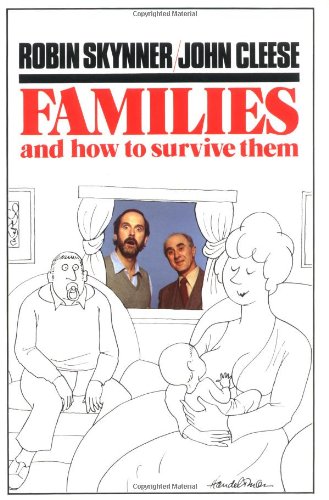
A psychiatrist and layman discuss the problems that can arise in marriage, parenthood, and personal relations, and look at jealousy, sexual problems, aggression, and role playing
User’s Reviews
Reviews from Amazon users which were colected at the time this book was published on the website:
⭐This isn’t a stereotypical self-help type of book and that makes it THE book that could save your marriage and/or the way you relate to your children. One warning – much of this book goes against the common wisdom of the day and the authors don’t propose that parents mollycoddle their children. The focus is on teaching people to live in the real (NOT ideal) world and to learn to deal with it, to develop some backbone and realistic expectations. In short, this is a book which will keep you from seeing yourself as a victim and teach you to accept the inevitable unfairness in life – and to help your children develop similar strengths.
⭐This is a useful, humorous, non-pompous book for people seeking insight into the workings of (please note) Western, nuclear-style, fairly conventional families. Skynner is a genial, compassionate man who has obviously enjoyed his career in family therapy and doesn’t have much of an ax to grind, while Cleese’s wry interjections help give perspective. Particularly praiseworthy are vignettes from Skynner’s practice in which he shows how a malfunctioning family system can be nudged toward better health by precipitating very small changes in behavioral styles, without excess angst or struggles with dragons. I also appreciate his focus, common also to Eric Berne and Michele Weiner-Davis (see their books), on finding and embracing what works rather than dwelling on what does not. For people trying to enjoy the best about their families and especially younger children, this book could solve a number of frustrating mysteries. Likewise, it’s useful for grasping the ways that certain behaviors and types of people feel attractive and comfortable, and why some situations “push the buttons” of an individual or within a relationship.I do have some caveats. While not Freudian in any strict sense, Skynner occasionally seems to share the reductionist attitudes of “the Master,” leaving you with the feeling that every human interaction and achievement is no more than the search for fulfilment of a parlayed (and frustrated) infant or toddler. True as this can be in everyday situations, I feel that it is not the whole picture and should be balanced by writers examining the human urge to evolve to a more aware, creative and functional state. Thwarting of this urge seems to me a source of a significant number of human conflicts, in or out of the family context, not to be resolved solely through reflecting on one’s (non)progress through various developmental stages. Maslow, James Hillman and Robert Anton Wilson come to mind.Especially, my jaw drops when Skynner sets forth his views on the development of homosexuality. I can’t remember the last time I heard any otherwise credible and humane writer ascribe homosexual orientation to problems in bonding or detaching with a parent of whichever gender. The more gay people I know, and the longer that gay people are free to live openly in various pockets of American society without fear of crippling social sanctions, the more apparent it seems to me that a few gay people within a straight majority are just part of nature’s plan. Studies of animal behavior, brain structures and potential genetic links support this view. So I’m dead amazed to see Skynner, otherwise not terribly doctrinaire, still discussing homosexual orientation, certainly not with any kind of punitive moralizing, but as if it were a kind of arrested development that could/should be “treated” for maximum happiness.But then, no book on human behavior is the perfect answer to all your dreams of insight. Nothing is drearier than the person who has read one book looking beneath the surface of human conflicts and believes he/she has found the guru with all the answers, so take this book for what it’s worth–kind, commonsensical and applicable to many families you probably know–and don’t stop investigating.
⭐This is a wonderful work about how families work and don’t work. I’d call it indispensable for the amount of information presented compactly and with great wit and good humor. Anyone interested in family dynamics can benefit from the wisdom presented in totally accessible manner. Brilliant, as one would expect from John Cleese, and the family psychiatry expert Robin Skynner.
⭐Some of the material in here is a bit dated, with cultural references that don’t make sense to someone who didn’t live in England in the Eighties, as well as psychological theories that have fallen quite out of vogue (and some, I believe, quite justifiably so). But there is a lot of great insight here into how we become the people we are, and I’ve found it quite useful in my own self-examination. Plus, John Cleese is the frickin’ MAN.
⭐One of the best family therapy books on the street. A bit dated in language, but insightful and funny. The dialog between Sinner and Cheese is wonderful.
⭐This book has been on my shelf and read countless time for over 2 decades. It has helped me grow as a person, in my relationships, and now as a mother.
⭐Very pleased with purchase! Book as described. Fast delivery!
⭐Not the easiest read! I was hoping it would be more humorous. Choppy writing.
⭐An eye opener. Be warned though, this book could go deeper than you may be able to cope with. As the book itself explains, change takes time to cope with and too much change can be dangerously stressful. Trust me, it’s a good book but if you are not a well socialised person this might not be for you. If you are quite brave, getting on with your life, mixing quite well with different types of people, learning about life, going through the pain of life very naturally, this book will only add to the depth of your understanding. If you are very awkward, shy, not fully engaged with an active social life, this book could cause you to get more withdrawn and confused. I don’t recommend it for people who are looking for stability. Go out there and try to find people who are willing to listen to you. If anyone let’s you down, go out again and find some more people. When you have been doing this for a few years, then read this type of book. The biggest lesson in the book is this anyway – try to find people who understand you well enough to make you feel secure but also who can get you thinking and perhaps who will say things that upset you from time to time to bring you down to earth. The book gives psychological ideas about why this works but these ideas don’t actually help you in themselves. Life is what you are actually doing in the social and family sense. Keep meeting different people from time to time and just see where it gets you. Don’t stick with any relationships that only bring you stress. Good relationships bring lots of different feelings but mainly positive ones that lift your heart or at least stabilise you so you feel strong inside and able to deal with pain.
⭐Good book,,Excellent reading; took it with me on a long journey
⭐This book started me on a journey that saved my sanity. Simple, straightforward, and conversational. An easy read book. I cannot express enough how much I learned from reading this book. I now give all my students a copy of this book.
⭐Well researched and very well intentioned, but too long winded and not as amusing as it should be from the author of Faulty Towers etc.
⭐Bought for a friend who hasn’t criticised it. I’ve read it and always find it a good read. The section about what causes autism is no longer relevant but it’s a good read if you want to begin a little bit of searching.
Keywords
Free Download Families and How To Survive Them in PDF format
Families and How To Survive Them PDF Free Download
Download Families and How To Survive Them PDF Free
Families and How To Survive Them PDF Free Download
Download Families and How To Survive Them PDF
Free Download Ebook Families and How To Survive Them