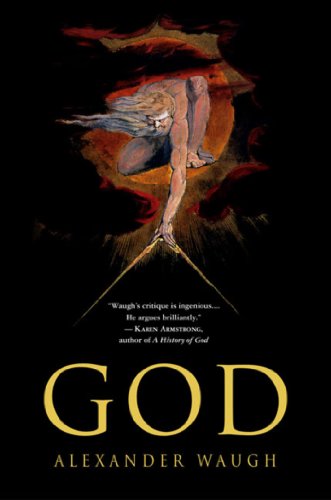
Ebook Info
- Published: 2014
- Number of pages: 334 pages
- Format: PDF
- File Size: 1.54 MB
- Authors: Alexander Waugh
Description
This is a book about God.Not just any god, but the god that created Adam and Eve; the god of Abraham, the god of the Jews; the god of the Christians; and the god of Islam—without a doubt, the most influential figure in the history of human civilization. But what do we really know about him? Who is he? Where did he come from? What does he look like? What sort of character does he have? What, if anything, does he eat? Does he have a family? In what ways can he be said to even exist at all?Alexander Waugh has been asking questions like these for as long as he can remember. Now, having drawn from an enormous range of sources, from the sacred books of the Torah, the Christian New Testament, and the Islamic Qur’an, from the Greek Apocrypha and the ancient texts of Nag Hammadi to the Dead Sea Scrolls, he has sought out the answers. Using material gleaned from the diverse writings of saints, rabbis, historians, prophets, atheists, poets, and mystics, he has molded his findings into a singular, striking biographical portrait of God.Erudite, perceptive, and entertaining, God reveals many startling and unexpected characteristics of the divine being. From the simple stories of Genesis and Job, explored from God’s own viewpoint, to the prophecies of Muhammad and Sybil and the intricate philosophies of Newton and Nietzsche, Alexander Waugh has left no stone unturned in his compulsive mission to create a fascinating and complex portrait of God, as humans have claimed to understand him.
User’s Reviews
Reviews from Amazon users which were colected at the time this book was published on the website:
⭐The author insisting on a literal understanding of various scriptures sets up a series of straw men to decimate in this smackdown of the God of Israel, Christendom, Islam with the LDS thrown in for equal measure. Literalism in biblical studies is a relatively recent phenomena. Traditionally the Bible was seen as but one pillar of the Roman Church, the others being Christian tradition and the Magesterium of the Church. And so it goes. A fun read for Atheists and angry agnostics.
⭐Great read! There is info here from someone who has read the Bible very closely and seen stuff that no-one else has. What do we really know about god? The Bible provides lots of answers but most of them are contradictory. This book could start a million conversations.There are also comments about other religions and their beliefs about the nature of god.
⭐WOW!! get it? really a terrific book for the believer and nonbeliever alike. waugh is NOT blasphemous repeat NOT blasphemous except to those of you with little faith
⭐Alexander Waugh takes on the question of who (or what) is God by going to the source, what God himself has said about himself or done in sacred texts. From the God of Adam and Eve to the present, he looks at how God acts and describes Himself to his faithful. Knowing that humans are fallible but that God must by His very nature be infallible, Waugh hopes to find the truth in this manner. He finds that the Old Testament God and Jesus are irreconcilable and different beyond justification. This leaves the reader to decide if the question of the nature of God is unanswerable, or if the author is, as his high school teacher said, suffering from “presumptuous arrogance.”
⭐I idly started scanning this book because of the provocative title, and ended by reading it with absorption. It makes the Bible interesting in a way that no other book I’ve encountered does. I suppose that’s because it treats it like a mythology, which it is, instead of sacred writ.Of course, no omniscient, all-good deity could have written the thing, or had anything to do with most of its bloody-minded shenanigans. It’s also one of the funniest books I’ve read recently (“God,” that is, not the Bible– it takes an extraordinary sense of humor like this author’s to see much fun in the Good Book.)
⭐Terrific. If Monty Python penned a course to reveal who or what God is… This is it. By chapter and verse, from his beginnings and our end, this worthy read is indeed, something different and should be made into a series entitled, “The Meaning of God.” (rather than that llama filled ‘Life’ version). Great stuff Alexander…!
⭐Alexander seems to spend the entire book pulling clips of information out and stuffing them under your nose, accompanied with the challenging ‘and what about this anomaly, huh, huh?’ He had really made his point by chapter two, after which it just became tiring.
⭐Discussions about God were not encouraged in the Waugh household (Alexander Waugh is the son of Auberon and the grandson of Evelyn Waugh), and the school’s chaplain thought him perverse for asking too many awkward questions about the Divine Being. What is dismissed as “presumptuous arrogance” by anxious believers is to be welcomed by the rest of us who are interested in the biography (as distinct from the hagiography) of one of the most peculiar characters ever to have existed (in fiction, if you’re an atheist, in fact, if a theist). When it comes to God, there’s never been any shortage of people telling us precisely what we should – and shouldn’t – believe about him. So, thank goodness for the author’s scholarly diligence and determination to think for himself as he picks his way through a minefield of mythical proportions. What’s more, Waugh has produced a genuinely refreshing and entertaining book, a real page-turner. After reading about God sending hornets to sting the Hittite and putting haemorrhoids up the Philistines’ backsides, after learning how God helped wipe the Jebusites off the face of the earth, and the Moabites and the Amalekites too, I couldn’t wait to find out what he was going to do next, and somewhat relieved this particular tyrant appears to have lost his edge, and is probably entirely fictional.The book is organized into bite-size sections, some as short as a paragraph, grouped within seven major parts, the first “Mewling and Puking” and the last “Sans Everything” (from the famous “All the world’s a stage” speech). Early on, Waugh asks: “Has anyone actually seen God?” It’s the kind of question that might have earned the young Waugh a clip round the ear from the chaplain. It ought to be easy enough to answer but the scriptures offer “a bewildering swarm of contradictions.” Jesus, for example, is supposed to have said that “no man has seen God at any time” but Micaiah hotly denies this: “I saw the Lord standing upon the throne.” One might wonder why God wasn’t sitting on the throne. (The many contradictions in the Bible have been collected for the embarrassment of believers and the amazement of non-believers by Burr in
⭐Self-Contradictions of the Bible
⭐.)One of Waugh’s strengths is to invigorate the familiar with startling insights. For example, “Adam and Eve were dull dogs” and not the pinnacle of creation. “To all but the most wilful theologian, however, God cannot come out of the Eden story smelling of roses.” Waugh lists twelve “major theological hiccups” in this story (not a good start for the Bible), including the following question. “If Adam was ignorant of the difference between right and wrong before he ate the apple, why should he be punished for disobedience?” Another service to the reader is the series of eye-popping details trawled from the more recondite corners of the Bible, such as the naked ecstasy in the huts at Ramah involving Saul, David and Samuel.A fact that will come as a surprise to anyone who has bought into the concept of monotheism is that God was not alone, but originally part of “the heavenly assembly of the sons and daughters of El which, at one time, ruled over the ancient Canaanite and Israelite religions.” The word “Elohim” – a plural meaning “gods” – has caused “no end of embarrassment in Jewish and Christian circles” since the Bible is the most sacred manifesto of both Jewish and Christian monotheism. Only one god is supposed to exist, so “Elohim” has been mistranslated as God (with a capital G).For anyone tempted to admire the current pope, or even listen to his pronouncements, it is worth reading about perhaps “the most famous upshot of Vatican I” – the vote on papal infallibility. One of the first fruits of this infallibility was the wonderful news “that we can all know for certain that God exists just by applying a bit of reason” – except, unfortunately, “Pius IX was not concentrating properly when he issued the decree.” The pope and his council of bishops had “failed to grasp the first rudiments of elementary philosophy.” If infallible popes were not worth listening to in 1869, why should we pay them any attention in the 21st century?In one sense, this is the strangest of biographies, given the subject’s dubious ontological status and the complicating fact that God is a composite mixture of aspects of other gods and goddesses (like El, Ba’al and Asherah) that once had separate identities. Alexander Waugh guides us through these complexities with great facility and a literary flourish. Given also the lack of laughs in the Bible, we have no right to expect to be so entertained, but again Waugh’s impious approach is not shackled by fawning respect for the sacred. Perhaps the oddest thing of all about this biography – it probably helps not to believe that the subject ever existed.
⭐I really loved this book. Waugh’s colourful and irreverent romp through the huge swathes of material (mostly biblical, but going much wider overall in terms of sources, albeit concentrating on the Judaeo-Christian deity), much of which is either arcane, pure gibberish, or frequently a mixture of both, is both educational and highly enjoyable.Not a book likely to be admired by the devout (I was in fact made aware of it by a believing friend who themselves refuses to read it, for fear it will undermine their faith: exactly why they should read it in my view), Waugh is a little disingenuous in his intro; by the end of the book (well, long before then, in truth) one gets a strong sense that Waugh finds the highly irrational, deeply contradictory, and frequently plain nasty image of the almighty that one can glimpse through his multifarious sources, a very ill-defined (through over-description rather than any want), nebulous, and on the whole repugnant creation of the human mind.It is nonetheless remarkable how many of us non-believers feel so drawn to examining what a believer might choose to call our ‘apostasy’, but I think it just goes to show how deeply enmeshed in our lives and cultures religion is. I might share the desire of many naturalists and free-thinkers in wishing to see humanity’s consciousness collectively evolve beyond the religious phase, but unlike Dawkins and some others who at one point seemed to believe such a state was imminent, I think we’re a massively long way from such a state of rationality. But that’s why books like Waugh’s God are so important.He is at times flippant, and frequently very funny, but underlying all this (and despite the occasional lapse into cheap shots at straw-gods) is the very serious desire to see, both for oneself and as a society, just who on earth this damnable god is exactly. Personally I loved this book and, having gone as far as buying copies for friends, would obviously recommend it to anyone interested in such things.
Keywords
Free Download God in PDF format
God PDF Free Download
Download God 2014 PDF Free
God 2014 PDF Free Download
Download God PDF
Free Download Ebook God