

Ebook Info
- Published: 2012
- Number of pages: 238 pages
- Format: PDF
- File Size: 5.60 MB
- Authors: Raghavan Jayakumar
Description
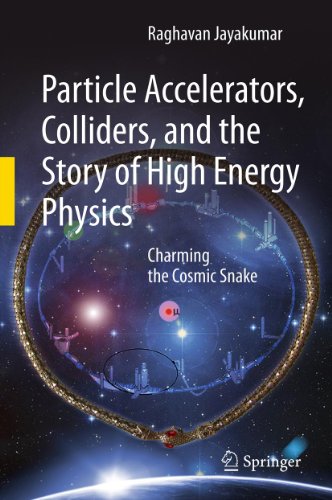
This book takes the readers through the science behind particle accelerators, colliders and detectors: the physics principles that each stage of the development of particle accelerators helped to reveal, and the particles they helped to discover. The book culminates with a description of the Large Hadron Collider, one of the world’s largest and most complex machines operating in a 27-km circumference tunnel near Geneva. The book provides the material honestly without misrepresenting the science for the sake of excitement or glossing over difficult notions. The principles behind each type of accelerator is made accessible to the undergraduate student and even to a lay reader with cartoons, illustrations and metaphors. Simultaneously, the book also caters to different levels of reader’s background and provides additional materials for the more interested or diligent reader.
User’s Reviews
Reviews from Amazon users which were colected at the time this book was published on the website:
⭐I read this book as a cognitive scientist rather than a physicist after reading and enjoying the author’s Science for Living. Here too he writes for a general as well as specialized audience, utilizing interesting stories, illustrations, and cartoons, putting his points in concrete and easily experienced terms. His occasional references to Eastern religious sources like the Bhagavad Gita and the “spiral path to Nirvana”, for example, enrich the understanding of what he is describing. He strikes an excellent compromise between (1) strict scientific descriptions and (2) what are far too often misleading “popular science” versions of subjects like Accelerator and High Energy Science.He describes the misdeeds of the US Congress in cancelling the Texas Supercollider with a heavy heart. . The targeting of the Laboratory by Congress in a budget cutting spree, despite its terrific progress, broke the hearts of thousands of scientists and engineers. The glory of the Higgs Boson and a lot more would belong to th US, if it were not for this blunder. Eventually what he calls The Snake Charmer: The Large Hadron Collider unfolds in Europe, but he helps to soften the effects of the US blunder by helping readers to sleep at night without fearing catastrophes anticipated by fearmongers concerning such things as the Higgs Boson, Mini-Black Holes, and Strangelet Quark products.He manages to do all this without losing scientific content. His unique book is well suited for engineers, scientists, students in the field, and even cognitive scientists, who are not trained in enough math background to understand all the details and yet, thanks to this book grasp the gist of such esoteric subjects as Superconducting Magnets. The book may not reflect all the details of the current status of the field he is describing, but it is a carefully developed introduction to his subjects for readers who may have felt overwhelmed by them before reading this book.
⭐Springer used to be a blue-chip name in scientific publishing. Unfortunately, this book is another example of how it has lost its way in recent years, even as the company is gobbling up more and more of the natural (and social) scientific publishing field. Aside from their Yellow Series in mathematics and maybe a handful of other series, the quality of their books seems to have devolved into a randomized hit or miss. Too many of their offerings, especially in physics, seem like vanity projects that would have benefitted from a professional’s guiding hand. This book often feels like one of those. Although the author (RJ) thanks the publisher’s editorial team in his preface, it’s hard to imagine what their contributions were. I mean no disrespect to RJ in the comments below: the point of my criticisms is that he has been badly served by his publishers – who haven’t even provided the reader with any biographical information about him.The substance of the book is devoted mainly to describing several generations of accelerator and collider design. For most readers this will be the most useful aspect. Perhaps the author can be forgiven for his hyperbole when he says that the Large Hadron Collider caused as much public excitement as the race to put a man on the moon (@213). However some design concepts, such as scalloping, are mentioned only in passing without adequate explanation, so the uninitiated reader may be mystified. Also, devices are treated as if they are frozen in their initial implementation. E.g., when describing the Stanford Linear Collider, RJ tells us only about the device as originally built in the 1960s. SLAC was more than 40 years old when the book was published, but we don’t learn anything about how it has evolved.In addition to descriptions of some of the relevant physical principles and experiments, there are many anecdotes and photos concerning the people involved, some of which are quite interesting. I was particularly struck by how Chien-Shiung Wu, who discovered the violation of CP-parity, was overlooked for the Nobel Prize (@153-154), even though she lived for 40 years after her discovery. Sadly, she suffers the further ignominy of being missing from the book’s index. And the topic of CP is further embellished by a cartoon of two sleepy fellows in sombreros and serapes, who call each other “amigo” and who choose to sleep rather than to honor instructions from “the boss” to check for the two-pion decay of kaons (@155). Amazing that no one explained to RJ that such a cartoon might be offensive. While not all of the book’s crudely drawn and anonymous cartoons are in such poor taste, none of them help to make the physics concepts more intelligible. Nor are they particularly entertaining.Of course, the author is responsible for some of these issues. But there are some other areas where editors do more traditionally offer their expertise, and where they’ve fallen down on the job in this case. The first is helping the author to focus on an audience. The author seemed to want to make it accessible to general readers with undergraduate math. The result is a bit bipolar: mostly prose, with vague word-portraits of mathematical ideas like Noether’s theorem (which receives no mathematical expression at all), occasionally punctuated by partial differential equations. I think most physics students will wish for more math, and most everyone else for at least simpler math.Another problem is the lack of copy-editing. Typos abound, e.g. James “Clarke” Maxwell, “Wulfgang” Panofsky, etc. In lieu of footnotes or other conventional citation forms, long-form references are inserted directly into the exposition — sometimes even between an adjective and the noun it modifies. Apparently no one ran their eyeballs over some of those, either: the title of one book is given as “The-infancy-of-particle-accelerators-life-and-work-of-rolf-wideroe, Pedro Waloschek“, @41. As for more extended prose, here’s an example from Chap. 4 (@32), which is set in the year 1932:”[George Gamow] proposed that if a particle can escape the potential from inside, a particle can cross it from the outside. Quantum mechanics was this new found quizzical field (see Chap. 3) in which physicists found that the reality at the microscopic level was much more fuzzy than the well-determined and well-calculable classical mechanics expounded by Newton. While motorcycles and skateboards need the calculated approach speeds to climb a slope, at atomic and nuclear sizes, particles can ‘tunnel’ (symbolically) through this hill and find themselves on the other side, without really climbing the top (Fig. 4.1).” [The figure is an anonymous cartoon of, ostensibly, George Gamow, sitting on a bench with a boy who is covering his ears with his hands, and something like a wall nearby.]Some issues that a copy editor might have caught: “Field” is ambiguous in context — is QM a field like the electromagnetic field, or a field of study? If QM is described in Chap. 3, need it be re-explained in Chap. 4? What justifies the contrast between microscopic and Newtonian mechanics? — as a matter of style and substance, it would be helpful to remind readers the latter applies to the macroscopic world. How does one parse “need the calculated approach speeds to climb a slope”? (It took me four readings to come up with a plausible attempt, but then I wondered: why “the”?) Were there even skateboards in 1932? What is tunneling “symbolically”? In fact, I doubt anyone who isn’t already familiar with the notion of QM tunneling could understand the first sentence of this passage – this too took me several readings, and I’ve studied QM. I leave aside that even before the advent of QM, Henri Poincaré pointed out that CM is not so “well-determined and well-calculable.”As mentioned obliquely above, the book lacks footnotes/endnotes and a list of references, and the index is inadequate. I bought the book because I wanted to get up to speed quickly about colliders, having read almost nothing about particle physics since some Scientific American articles back in the 1970s. Sad to say, it’s just too much effort to try to separate the wheat from the chaff in this work. For the high price Springer charges, they should have done more to help the author get his message across more effectively.
⭐
Keywords
Free Download Particle Accelerators, Colliders, and the Story of High Energy Physics: Charming the Cosmic Snake 2012th Edition in PDF format
Particle Accelerators, Colliders, and the Story of High Energy Physics: Charming the Cosmic Snake 2012th Edition PDF Free Download
Download Particle Accelerators, Colliders, and the Story of High Energy Physics: Charming the Cosmic Snake 2012th Edition 2012 PDF Free
Particle Accelerators, Colliders, and the Story of High Energy Physics: Charming the Cosmic Snake 2012th Edition 2012 PDF Free Download
Download Particle Accelerators, Colliders, and the Story of High Energy Physics: Charming the Cosmic Snake 2012th Edition PDF
Free Download Ebook Particle Accelerators, Colliders, and the Story of High Energy Physics: Charming the Cosmic Snake 2012th Edition