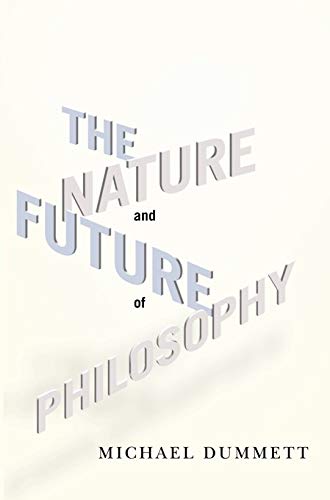
Ebook Info
- Published: 2010
- Number of pages: 162 pages
- Format: PDF
- File Size: 1.78 MB
- Authors: Michael Dummett
Description
Philosophy is a discipline that makes no observations, conducts no experiments, and needs no input from experience. It is an armchair subject, requiring only thought. Yet that thought can advance knowledge in unexpected directions, not only through the discovery of new facts but also through the enhancement of what we already know. Philosophy can clarify our vision of the world and provide exciting ways to interpret it.Of course, philosophy’s unified purpose hasn’t kept the discipline from splintering into warring camps. Departments all over the world are divided among analytical and continental schools, Heidegger, Hegel, and other major thinkers, challenging the growth of the discipline and obscuring its relevance and intent. Having spent decades teaching in American, Asian, African, and European universities, Michael Dummett has felt firsthand the fractured state of contemporary practice and the urgent need for reconciliation. Setting forth a proposal for renewal and reengagement, Dummett begins with the nature of philosophical inquiry as it has developed for centuries, especially its exceptional openness and perspective-which has, ironically, led to our present crisis. He discusses philosophy in relation to science, religion, morality, language, and meaning and recommends avenues for healing around a renewed investigation of mind, language, and thought. Employing his trademark frankness and accessibility, Dummett asks philosophers to resolve theoretical difference and reclaim the vital work of their practice.
User’s Reviews
Reviews from Amazon users which were colected at the time this book was published on the website:
⭐There are a vast number of books catering to “amateur philosophers”, usually containing very watered-down accounts of a few famous (and fashionable) intellectual landmarks. When one is reviewing an introductory book written by the august Michael Dummett at the end of his life, one can rest easy that no such con job will be perpetrated. *The Nature and Future of Philosophy* is a marvelous book that takes Dummett’s seemingly esoteric expertise with the philosophy of Gottlob Frege or Brouwer’s intuitionistic logic and rather seamlessly blends it with a synoptic account of philosophical problems as they developed in the 19th and 20th centuries. This is a book which could successfully “cure” those who think there are no legitimate philosophical problems not already addressed by scientists, and Dummett strikes an evenhanded tone in appealing to his fellow theists (perhaps only a minority in philosophy departments) and those believing themselves more interested in “Continental” thinkers – without dispensing with the traditional rigor of analytic philosophy.The “high points” of the history of philosophical analysis, handled more didactically by Scott Soames, are deftly inserted in the narrative: if you ever wondered how much information about the views of Donald Davidson could possibly be included in 500 words or so, you’ll find out here, and other “all-stars” like Russell, Wittgenstein, Kripke and Quine get good (if critical) “capsule reviews”. However, this is not only a book for the beginner: Dummett explains himself as well as others, and perhaps better than in the famously cryptic 70s writing on “a theory of meaning” – everyone who rates him as a thinker, or finds his “technical” works impossibly forbidding, will want to take a look. As Dummett was well along in years when this was composed and not the “state of the art”, this is not an introduction to the very most contemporary analytic doctrines. It is as good a statement of the fundamental principles of analytic philosophy as we have, and probably as good a one as we are likely to get.Every philosophy major, and every seriously besotted “lover of wisdom”, should own this.
⭐I bought this book without reading the above reader’s review. I read about 75% of the book. I quit reading after concluding that reading futher would be a waste of my time. I definitely agree with the above reader’s review.
⭐My initial delight upon finding this book at our public library was short. New students of philosophyshould avoid this title. It isn’t just that Columbia University Press should be ashamedto publish a title with typos, a broken Table of Contents, a shockingly amateur cover,no index, footnotes or suggested reading list, but rather, the juxataposition ofDummett’s intent to kill Plato’s universals via his linguistic analysis techniquewhile at the same time adhering to his traditional Roman Catholic belief system.My hair is on fire.Chapter 1 begins with a chirlish tone. Why do universities have philosophy departmentsanyway? This seems ironic since Dummett allegedly is “amongst our foremost livingphilosophers” as the plug on the back informs. Why would someone at the pinnacle ofacademic philosphy begin a book about philosophy on such a sour note? Why not beginwith a normal discussion about philosophy having to do with being about the love of wisdom as one might expect? Still, he does pick his hero: Frge. Later in the book (page 62) that he says “all philosophy students at such universities are required to study him. Required? Why only Frege?Chapter 2 “What is a Philosophy Question” bypasses the entire history of Western philosophyand the wonderful contributions from Heraclitus, Socrates, Plato, Aristotle, Augustine,Spinoza, Descartes, and Kant to name just a few, and frames philosophy as the unworthy,misguided servant of science or as he says “For Quine and some other contemporary philosophersphilosophy is simply the most abstract part of science.” Simply?Chapter 3 “Philosophy as the Grammar of Thought” prepares the injection. Gadimer is set up as thestraw man for Frege to bash. This book is all about advancing Dummett’s analytic philosophy views,it neglects its history and rich traditions of different viewpoints.But Frege is complex, Dummett doesn’t play fair, he later dismisses Frege’sentire third realm of universals as “plainly a piece of philosophical mythology” page 83.The rest of the chapters are easy on the Roman Catholic Christian religion, and tough on philosophic themes that can’t be reduced to “the cat is on the mat” true or false statements. There is no clue as to how continentaland analytic philosophy could be resolved as the plug on the back claimed would occur. The final ironyis that the “Future of Philosophy chapter (only 7 pages long and almost half of that is a long quote fromanother author) ends with Dummett claiming that the existence of Christian God will be proven “in the lifetimesof our great grandchildren.” page 151. Did he ever read Kant?My anger grew as the pages turned. His book reminded me of a documentary I saw about the rise of South African private hunting clubs that feature exotic animals to hunt. As you watched, it wasn’t clear if the hunters really cared about the animals at all, or whether their primary interest was the pleasure of killing them. In the same way, I see Dummett as a hunter of philosophic ideas, not interested in their intrinsic worth to the human experience but quite interested in eliminating them.
⭐Relatively easy to follow even the subjects are difficult and concentration demanding.It is an intellectual plasure. A good reading for Sunday afternoons.
⭐This brief, succinct work is wonderful. Dummett is a phioosopher of formidable erudition whose mighty tomes on Frege, and his lectures on semantic and mathematical philosophy are often above the heads of university audiences. It is a welcome relief for this reader (five qualifications in philosophy,PhD in logic, publications in philosophy of logic) to find the great man readily intelligible yet still profound.
⭐Just to provide some context: unlike many other people who come to appreciate Dummett after reading his important works on Frege’s philosophy of language published in the seventies, my first encounter with his writings was reading his papers on intuitionism. Later I read
⭐The Logical Basis of Metaphysics
⭐where Dummett further developed his insights into the central importance of the law of excluded middle for semantics and realism/anti-realism debate in ontology and then
⭐Thought and Reality
⭐which is a revised account of his Gifford lectures (major difference between the lectures and T&R: past and future are treated symmetrically in the latter).The present book is a slim collection of articles first published in 2001 in Italian — that is 5 years before T&R and about 10 years after LBM. Most of the topics are “second order” in that Dummett does not discuss much philosophical issues themselves but the future of philosophy, its nature and relationships with science, psychology and religion. Each such subject is treated in a separate short and lucid article.Speaking of significant shifts in philosophical matters, one of the main changes in Dummett’s position in comparison to LBM is that here he is completely certain that “the proof or disproof of God’s existence would rest on some premises that could be disputed, intelligibly even if not reasonably” (p.152). So the debates of theists and atheists are a waste of time. (A side note with reference to current affairs: if Dummett is right, even if Craig and Dawkins won’t ever meet to debate, we are not missing anything substantial besides some entertainment.)I recommend this book for admirers of Dummett’s thought and writing style and to those interested in the “meta” subject matters. But if you buy it, be aware that the book does not have neither subject nor name index. This is worth of star reduction in the mind of the present reviewer.
Keywords
Free Download The Nature and Future of Philosophy (Columbia Themes in Philosophy) in PDF format
The Nature and Future of Philosophy (Columbia Themes in Philosophy) PDF Free Download
Download The Nature and Future of Philosophy (Columbia Themes in Philosophy) 2010 PDF Free
The Nature and Future of Philosophy (Columbia Themes in Philosophy) 2010 PDF Free Download
Download The Nature and Future of Philosophy (Columbia Themes in Philosophy) PDF
Free Download Ebook The Nature and Future of Philosophy (Columbia Themes in Philosophy)