Ebook Info
- Published: 2011
- Number of pages: 364 pages
- Format: PDF
- File Size: 2.07 MB
- Authors: Philip Jenkins
Description
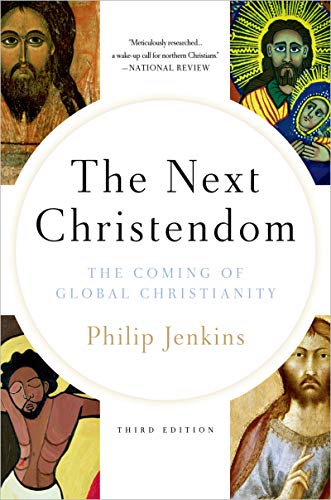
In this new and substantially expanded Third Edition, Philip Jenkins continues to illuminate the remarkable expansion of Christianity in the global South–in Africa, Asia, and Latin America. Drawing upon the extensive new scholarship that has appeared on this topic in recent years, he asks how the new Christianity is likely to affect the poor, among whom it finds its most devoted adherents. How should we interpret the enormous success of prosperity churches across the Global South? Politically, what will be the impact of new Christian movements? Will Christianity contribute to liberating the poor, to give voices to the previously silent, or does it threaten only to bring new kinds of division and conflict? Does Christianity liberate women, or introduce new scriptural bases for subjection?Acclaim for previous editions of The Next Christendom:Named one of the Top Religion Books of 2002 by USA TodayNamed One of the Top Ten Religion Books of the Year by Booklist (2002)Winner of the Christianity Today Book Award in the category of “Christianity and Culture” (2002)”Jenkins is to be commended for reminding us, throughout the often gripping pages of this lively work…that the history of Christianity is the history of innovative–and unpredictable–adaptations.”–The New York Times Book Review”This is a landmark book. Jenkin’s thesis is comprehensively researched; his analysis is full of insight; and his projection of the future may indeed prove to be prophetic.”–Baptist Times”A valuable and provocative look at the phenomenon widely ignored in the affluent North but likely to be of enormous importance in the century ahead…. The Next Christendom is chillingly realistic about the relationship between Christianity and Islam.”–Russell Shaw, Crisis”If the times demand nothing less than a major rethinking of contemporary global history from a Christian perspective, The Next Christendom will be one of the significant landmarks pointing the way.”–Mark Noll, Books & Culture
User’s Reviews
Reviews from Amazon users which were colected at the time this book was published on the website:
⭐I like to listen to the book being read as I follow on my kindle or hard copy. Was so glad to see this available in audio but feel cheated in that audible purports (in my view) to be 3rd edition when in fact the book has been practically rewritten in the 18 years since it came out making it impossible to follow along if you have the latest edition which anyone who wanted to know about growth in numbers and world impact of Christianity would probably want to know. Just wanted it to be clear this audible reading is VERY outdated.
⭐This book advances a fascinating thesis, that even whilst the Western world heads towards post-Christendom, Christianity is actually growing and expanding as a worldwide phenomenon. This next Christendom is moving southwards, flourishing in the non-Western regions of Latin America, Africa and Asia. It is also evolving into a different kind of Christendom, less culturally Eurocentric and more charismatic and evangelical. The book devotes much attention to these new and vibrant expressions of the faith, showing especially the steady process of indigenisation of faith practices once imported from the West. Consequently, Jenkins posits a growing divergence in the brand of Christianity practised in the West vs. the “majority world”. Altogether, the book serves as a tremendous eye-opener on the trajectory of Christian growth in the coming decades and raises uncomfortable questions over the future of Western Christianity.
⭐The Next Christendom is a much-needed antidote to the pessimism of so many American Christians about the future of Christianity in the world. Jenkins paints a compelling picture of a vibrant and growing Christian faith in Africa and Asia – a faith with many weaknesses, to be sure, but one that is in many ways on the right track and growing in the right direction.Christians have confessional reasons to be optimistic about the future of the church – Daniel 2 says the kingdom will grow, and Jesus made it clear that the gates of hell will not prevail against the church he is building. He ascended to heaven as one who has received all authority in heaven and on earth. The church’s victory is along the path of suffering and death – but it is victory nonetheless. Jenkins argues that we can see this growth happening around the world. Whatever weaknesses – and even decline – we may think is present in the West, Western Christians need to fight their myopic tendencies and broaden their sense of the kingdom. We should be able to be excited about what God is doing around the world.
⭐Although I do agree with some of Mr. Jenkin’s statements do to the stats provided I can’t get on board with the notion of redefining the meaning of Christianity for the sake of the South.
⭐A MUST READ for every evangelical Christian, especially Americans. American Christians really need to see and open minds to see what’s going on in the Christian world outside of this country and culture.Words cannot describe how much I appreciate Philip Jenkins for writing this book. He nailed the issue. I bought this book firstly in this English version, then later bought its Chinese version.
⭐This is a response to the reviewers who gave the book between 1 and three stars. My primary observation is that there is no way that a book aimed at a popular audience can touch all bases, personalities, issues, and prognostications. Let us be thankful that Jenkins has made known to us something about “Christianity South” and “Christianity East.”I was quite surprised, for example, at the relative growth of Christianity versus Islam in sub-Saharan Africa (by the way, that is everything in Africa south of the Sahara, down to the Cape of Good Hope.) But like some of the complaints from the one and two star reviewers, there is not much said about the explanation for this fact, except to suggest that African Christianity has found its own source of inspiration, and grows on that. It is no longer driven by European and American missionaries. But there is no citation for “Liberation Theology” in the index, which I found odd. This is a sign that the author’s primary interest is demographic and social, not theological.If you order a used copy, you want to be sure you are getting the third edition. I compared the table of contents for the first and third editions, and there is much added, especially on “The Rise of the New Christianity”. On a contemporary topic, you will be missing something if you don’t have the latest edition.If you are interested in world Christianity, you can hardly find anything as illuminating as this 3rd Edition popular book.
⭐We used this as a text book for our Kaleo class. Jenkins shows that Christianity is growing but it’s growing South and East. The Next Christendom is upon us and the church is and will continue be the Body of Christ.
⭐Having defined Christendom in fairly broad strokes, Jenkins writes a hopeful account of Christianity’s survival through it’s shift to the “global south.” Well-argued and written, I must say that this book answered most every question my mind could come up with during the reading within a chapter of where I was. Looking forward to reading more of Jenkins’ work.
⭐An extremely interesting account of the rapid growth of Christianity in the developing world, this book covers developments in all the different strands of Christianity. Written sympathetically, but with an eye to the weaknesses as well as strengths of the various movements, I would thoroughly recommend this book to anyone who thinks that Christianity is in decline, or who wants to put the liberal/conservative conflict in European and North American churches into a world context. The only reason for 4 stars rather than five is that I found the style of the book is a little frustrating – falling somewhere between an academic and a popular approach, so that in places you feel you would like more in depth analysis, while in others that you’d like the author to get on with the story.
⭐Im gesamten Buch wurden lange Textpassagen mit gelbem und pinkfarbenem Permanentmarker markiert. Ich habe bisher schon öfter gebrauchte Bücher bestellt, jedoch noch nie ein Buch in solch einem Zustand erhalten. Ich werde wohl in Zukunft wieder auf neue Bücher zurückgreifen.
⭐
⭐J’écris ces lignes au surlendemain de la renonciation de Benoît XVI à son pontificat alors que l’on parle de l’élection d’un Pape latino-américain ou africain. La thèse de Jenkins exposée dans ce livre paru pour la première fois aux États-Unis en 2002 n’a cessé d’être confirmée depuis par les faits (la troisième édition date de 2010). Le Christianisme (toutes dénominations confondues y compris les “suspectes” comme les Mormons et les cultes syncrétiques) est aujourd’hui la première religion du monde regroupant un tiers de l’humanité. Au fur et à mesure qu’elle croît en dehors de l’Europe, elle redevient ce qu’elle était au premier millénaire de notre ère : une religion non-européenne. D’ores et déjà l’Afrique apporte une vitalité nouvelle à des confessions qui ne sont plus en Europe que des curiosités de musées. Les peuples d’Amérique latine, d’Afrique et d’Asie redéfinissent le Christianisme selon leurs cultures et surtout leurs priorités. Aussi choquant que cela soit pour des Européens habitués à une culture rationaliste, consumériste et se vantant de leur liberté sexuelle, ce Christianisme ne nie pas l’existence du surnaturel, partage sans discuter le pessimisme sur le monde du Nouveau Testament et adhère à une morale traditionnelle qui nous parait pourtant rétrograde. Mais il possède aussi un aspect égalitaire qui permet aux membres des castes et des tribus défavorisées, et même aussi étonnant que cela puisse paraître aux femmes, de trouver leur place ou encore de devenir leader. Le livre est rempli de statistiques. Mes préférées sont celles sur la croissance des églises évangéliques et pentecôtistes qui amènent l’auteur à faire remarquer que les Occidentaux se trompent probablement en considérant le fascisme ou le communisme comme l’idéologie ayant marqué le XXème siècle : il ne reste plus beaucoup de fascistes ou de communistes aujourd’hui alors que les pentecôtistes qui n’existaient pas il y 100 ans sont plusieurs centaines de millions. Philip Jenkins propose plusieurs scénarios pour l’avenir : un renouveau spirituel mené par l’immigration, une redéfinition de l’Occident contre le Christianisme désormais considéré comme “une chose de la jungle”, une croisade du Sud contre le Nord, des affrontements entre théocraties chrétiennes et musulmanes en Afrique (“Imaginez le monde du XIIIème siècle avec des armes nucléaires et l’anthrax”) ou un christianisme militant meilleur allié de la démocratie. Quoi qu’il arrive, une chose est certaine : ce livre est indispensable pour comprendre ce qui va se passer.
⭐
⭐The short answer is…a must read! If you don’r have time to read the entire trilogy, at least MAKE time to read this volume. Chris Verscheure, M.A.
Keywords
Free Download The Next Christendom: The Coming of Global Christianity (Future of Christianity Trilogy) 3rd Edition in PDF format
The Next Christendom: The Coming of Global Christianity (Future of Christianity Trilogy) 3rd Edition PDF Free Download
Download The Next Christendom: The Coming of Global Christianity (Future of Christianity Trilogy) 3rd Edition 2011 PDF Free
The Next Christendom: The Coming of Global Christianity (Future of Christianity Trilogy) 3rd Edition 2011 PDF Free Download
Download The Next Christendom: The Coming of Global Christianity (Future of Christianity Trilogy) 3rd Edition PDF
Free Download Ebook The Next Christendom: The Coming of Global Christianity (Future of Christianity Trilogy) 3rd Edition