Ebook Info
- Published: 1958
- Number of pages: 109 pages
- Format: PDF
- File Size: 3.26 MB
- Authors: Martin Heidegger
Description
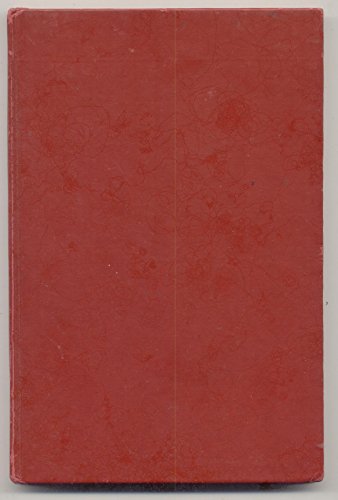
Rubbed dust jacket has chipped edges, page edges tanned. Shipped from the U.K. All orders received before 3pm sent that weekday.
User’s Reviews
Reviews from Amazon users which were colected at the time this book was published on the website:
⭐This is very possibly Heidegger’s most difficult writing. It certainly directly confronts all the accusals that he never writes about ethics by analyzing the very bedrock of whether ethics meaningfully exists systematically or philosophically otherwise than merely as a temporary cultural custom.This specific book is necessary to have along McNeil’s translation in the CaMbridge edition of PATHMARKS.
⭐In the midst (really, the maelstrom!) of Heidegger’s Silence(s), I fear that one can hear whatever one pleases. Politically, the Right and Left each find themselves. (Heidegger, I have no doubt, would have, in however qualified a manner, found himself nearer the Right than the Left.) I have read and reread this text several times over the years, with notes and underlining everywhere. (Impressively, my 1957 hardcover translation by Kluback and Wilde is still in one piece.) Usually, when I review a text of this importance, I try to walk through the argument, sometimes paragraph by paragraph. I am as yet unprepared to do that. I have a mountain of notes …but no conclusion. Below, I would like to talk briefly about why.But first, a little about the text. This is a brief essay that I believe has been included in more than one collection in English. This essay first appeared in a festschrift honoring Ernst Jünger on his 60th birthday. The essay by Heidegger, ‘Uber ‘Die Linie’,’ is a response to an essay by Jünger, ‘Uber die Linie.’ Heidegger actively engages Jünger more than once in his collected works. Thus it is remarkable how few of Jünger’s non-fiction works have been translated into English. What makes this edition remarkable is that it is a translation with the German on the facing page. This is very rare with Heidegger; indeed it is rare with all translations of philosophical texts. I wish it would become the norm… I also believe this is the first time Heidegger uses the strikeout (an elongated ‘X’ through the term) of the word ‘Being’ in his published works. Derrida will later pick this up and expand on it as ‘Sous Rature’.I want to begin by mentioning how pivotal this small book, really an essay (1956, first translated 1958), was for me. When I first saw it (bought used in the early seventies) the world was in a war between irreconcilable ‘truths’. (Communism / Capitalism.) This book showed that one could intelligently speak of the world without knowing what would, or even should, happen next. Beyond our present world-picture, for Heidegger a technological nihilism, we could not be certain of anything. Indeed. we could not even know if we would remain the ‘we’ we are now!The known, every Known, is surrounded by the Unknown. There are terrible consequences for that. Once Being is seen to be entwined with Time stability, all stability, is put in question. Heidegger arrives at this through his fundamental (philosophical) anthropology cum fundamental ontology. But he isn’t the only one to do so. Lukács (in his late Ontology), for instance, from a militantly opposed direction that starts by willfully ignoring philosophical anthropology cum existentialism, and proceeding through the scholastics, Hegel, Marx, and then surprisingly (for me) ignoring the phenomenology of Husserl and Heidegger, while he makes much use of the now forgotten ontology of Nikolai Hartmann, ends by asserting that the categories of Being Itself change. But Lukács too ends with anthropology: Labor.It seems that for as long as we remain human, everything is (and can only be) about Man. But Heidegger wishes to get beyond all that.Many of us (or at least we used to) situate ourselves somewhere in the wake of Kant and German Idealism. But whether as phenomenology, transcendental philosophy, or western marxism, that wake (once called continental philosophy) broke on the shoals of post-Heideggerean philosophy. I consider this a fact. Heidegger’s importance has only grown over the years. And the number of Heidegger interpretations continue to grow. Why? Part of the reason, I believe, is that his earlier work and his later work do not seem to sync up. How, for instance, does the old resolution and the new releasement belong in the ‘same’ philosophy? I don’t believe they do. The trauma of the war years fully convinced Heidegger that it is not Man Who Does. (-Even the most existentially Authentic Man.) Indeed, in this text before us Heidegger will imply that Jünger (a proto-fascist) too is a humanist! It is this turn from an active humanity (however conceived) to a humanity that receives the gifts that Being bestows that, in my opinion, pulls the rug out from under all existential / da-sein interpretations of Heidegger.I don’t mean to say, btw, that Heidegger discovered that Being changes. Indeed, in this book, Heidegger says that “‘Being’ (the reality of the real), is thought of as by Hegel and Nietzsche, as pure growth and absolute movement.” (I believe the difference between Hegel and Nietzsche is that for Hegel Being still has a Logos, while for Nietzsche, Being is Chaos.) Many, if not most, people interested in the early Heidegger are interested in his relation to Aristotle. I think that those interested in the postwar Heidegger are more interested in the relation between Heidegger and Hegel.Now, Heidegger’s all-too-brief (but tantalizing) remarks regarding Hegel in this text lead me to the following thoughts. Although the dialectic is the road of despair for Hegel, there is also triumph. Reason can fully grasp this dialectical process as System. (Though, of course, not each and every particular moment can be fully grasped.) With Heidegger this is gone. Working through the Seinsfrage leads the perceptive reader (I believe) to one conclusion: there doesn’t seem to be any understanding of ourselves that (certainly) endures when we cross over the line beyond our current nihilism. Not the prewar völkisch fantasies (whether centered on Race or, as with Junger, Worker, is immaterial) of the German right. Not the sovereign ego of Cartesian Philosophy or Sartrean Existentialism. Not even the petty well-crafted ironies of post-Derridean academic philosophy. (Thank God!) Even Thought Itself, according to Heidegger, must radically change. The entwinement of Being & Time fundamentally means that there isn’t anything (any being) that always remains itself.That is enough, but there is (for me at least) more. Dialectics (both Hegelian and Marxist) claims that however much nonsense and games there are in History we will never be at a point where we find that everything we have believed to be important is irrelevant. But that is precisely what Heidegger’s postwar understanding of Unconcealment and Epochal Change means! Any Epoch (each ultimately given by Being) is eventually Withdrawn. – With no promise that any past obsessions (yes, that is the precise word) that occur in said Epoch survive over the line that leads past our current nihilism; that is, beyond our currently withdrawing Epoch. That our past, with all its myriad ideologies and religions, could add up to Nothing… – Well, there are no words.It is really beyond me how any of this can meaningfully be called ‘conservative’.If we can’t theorize the late Heidegger politically, – what then? All Theodicy claims that at the most fundamental level there are no mistakes. Heidegger says the same thing. Even the Nihilism of our Time is the Geschick (destining) of Being. Like Hegel again, but in a very different manner, Heidegger also maintains that at the most fundamental level there have been no mistakes. We were always going to eventually end up here in late modernity / postmodernity. Beings concealment belongs to the beginning of Western Philosophy. Philosophy did nothing ‘wrong’; – Concealment (and nihilism) was always its Fate.It is this total loss of ‘significance’ (i.e., decisive moments, turning points where things could have been Otherwise) for the History of Philosophy that makes Heidegger’s later thought (at its deepest) so profound. There are days I think that no interpretation of his final position could ever be radical enough.But what of Heidegger’s myriad interpreters? Nietzsche said that books are mirrors. What he means is that people only discover themselves – their own predispositions, their own ‘deep-down’, the ways things have settled within them, their particular ‘stupidity’ – in books. (I would argue that Nietzsche does not mean to say that this is true of philosophy. In order to see that ‘books are mirrors’ the philosopher Nietzsche had to break the mirror. To be a Philosopher one must no longer be obsessed with oneself. [See BGE, – section 26.]) The ‘Unknown’ is the first, last and greatest ‘mirror’. “Over the Line” (our fated leap into some given realm of the Unknown beyond our present nihilism), Heidegger warns in this book that ‘we’ may no longer even be ourselves. But regarding this Epochal change, which is both Unwilled and Unknown, the Heideggerian Left somehow discovers Freedom, while the Heideggerian Right uncovers Order. …All this means is that neither Left nor Right has broken the mirror.Everybody who reads Heidegger, without simply rejecting him, imagines that Heidegger is somehow ‘with’ them. The later Heidegger isn’t with anyone or any position; each must change (that is, each will be unpredictably changed when we cross the ‘Line of Nihilism’) into something else. But the later Heidegger, unfaithful to all politics and religions, was always faithful to Being. And yes, ‘faith’ is (presently) the only possible word. Until, that is, we are enfolded in the Thinking beyond philosophy that (possibly) awaits us Over the Line. And it is this ‘waiting’ that makes the final Heidegger so difficult come to terms with. Until the ‘other beginning’ beyond out technological nihilism arrives, what Heidegger says must remain unclear. And I fear any explication of the final Heidegger suffers this fate.So you see, in the end phenomenology, politics and philosophical anthropology (all of them!) and so forth are but reified moments of the History of Being, temporary arrangements striving not to be temporary. So then is Man but a plaything of mindless Being? No, for Heidegger, Humanity is the only adequate (and destined) witness to Being; we must all strive to be equal to this terrible unsurpassable burden.A somewhat embarrassing five stars for a book that none of us can fully understand.
⭐Martin Heidegger (1889-1976) was an influential and controversial German philosopher, primarily concerned with Being, and phenomenology—who was widely (perhaps incorrectly) also perceived as an Existentialist. His relationship with the Nazi party in Germany has been the subject of widespread controversy and debate [e.g.,
⭐,
⭐,
⭐,
⭐, etc.] He wrote many other books, such as
⭐,
⭐,
⭐,
⭐,
⭐,
⭐, etc.[NOTE: page numbers below refer to the 109-page paperback edition.]The Foreword to this 1956 book explains, “This article repeats, unchanged and expanded by a few lines… the text of a contribution to the publication issued in honor of Ernst Jünger. The title has been changed… The new title is meant to indicate that the consideration of the essence of nihilism stems from a discussion of Being as Being. According to tradition, the question of being is understood by philosophy to be of being as being. It is THE question of metaphysics. The answering of this question is always related to an interpretation of Being which remains as yet unquestioned and prepares the ground and basis for metaphysics. Metaphysics does not go back to its ground. This return is explained in the Introduction to ‘What is Metaphysics’…” (Pg. 33)The book contains three introductions, as well as the German original of Heidegger’s article facing the English translation—so the book contains only about 40 pages of Heidegger’s writing.Heidegger states, “Transcendence is firstly the relationship between being and Being starting from the former and going towards the latter. Transcendence is, however, at the same time the relationship leading from the changeable being to a being in repost. Transcendence, finally, corresponding to the use of the title ‘Excellency,’ is that HIGHEST BEING ITSELF which can then also be called ‘Being,’ from which results a strange mixture with the first mentioned meaning.” (Pg. 57)He notes, “Therefore, we now ask more properly whether ‘Being’ is something for itself and whether it also and at times turns in the direction of man. Presumably the turning itself … is that which we embarrassedly enough, and vaguely call ‘Being.’ But does such turning-toward not also take place and, in a strange manner, under the dominance of nihilism, namely in such a way that ‘Being’ turns away and withdraws into the state of absence? Turning away and withdrawal … prevail perhaps even more urgently for man so that they pull him along … and, finally, suck them into the withdrawing wake in such a way that man can believe that he is only encountering himself. In truth, however, his self is no longer anything more than the using of his human reality into the dominance of what you characterize as the total character of work.” (Pg. 75)He asks, “Does nothingness vanish with the completion, or at least with the overcoming of nihilism? Presumably, overcoming is only attained when, instead of the appearance of negative nothingness, the essence of nothingness which was once related to ‘Being’ can arrive and be accepted by us mortals.” (Pg. 79)He observes, “The conception of the sciences is everywhere aimed at being and, indeed, at separated areas of being. It was necessary to start from this conception of being and, following it, to conform to an opinion close to the heart of the sciences… This opinion of the sciences is tentatively taken up with the question about the essence of metaphysics and apparently shared with them. However, every thoughtful person must already know that a questioning about the essence of metaphysics can only have in view what distinguishes metaphysics, and that is the transcendence: the BEING OF being.” (Pg. 95)He says, “The apparently empty word ‘Being’ I always thought of in the amplitude of the essence of those determinations which, beginning with the THUSUS and the LOGIS, point the way one after the other up to the ‘will to power’ and everywhere show a basic characteristic which the word ‘being present’ … has attempted to designate. Only because the question, ‘What is metaphysics?’ thinks from the beginning of the climbing above, the transcendence, the BEING OF being, can it think of the negative of being, of THAT nothingness which just as originally is identical with Being.” (Pg. 101)This short book will be of keen interest to students of Heidegger’s thought.
Keywords
Free Download The Question of Being in PDF format
The Question of Being PDF Free Download
Download The Question of Being 1958 PDF Free
The Question of Being 1958 PDF Free Download
Download The Question of Being PDF
Free Download Ebook The Question of Being