Ebook Info
- Published: 2012
- Number of pages: 168 pages
- Format: PDF
- File Size: 0.88 MB
- Authors: Donald S. Lopez Jr.
Description
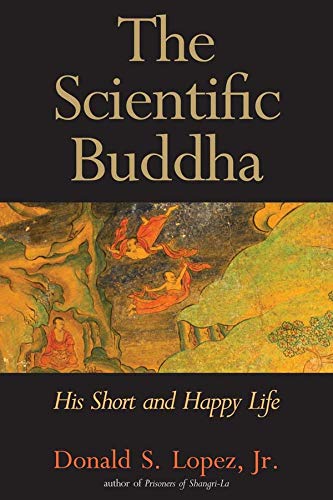
How Western notions of the Buddha have come to misrepresent his teachings and the traditional goals of Buddhist practice This book tells the story of the Scientific Buddha, “born” in Europe in the 1800s but commonly confused with the Buddha born in India 2,500 years ago. The Scientific Buddha was sent into battle against Christian missionaries, who were proclaiming across Asia that Buddhism was a form of superstition. He proved the missionaries wrong, teaching a dharma that was in harmony with modern science. And his influence continues. Today his teaching of “mindfulness” is heralded as the cure for all manner of maladies, from depression to high blood pressure.In this potent critique, a well-known chronicler of the West’s encounter with Buddhism demonstrates how the Scientific Buddha’s teachings deviate in crucial ways from those of the far older Buddha of ancient India. Donald Lopez shows that the Western focus on the Scientific Buddha threatens to bleach Buddhism of its vibrancy, complexity, and power, even as the superficial focus on “mindfulness” turns Buddhism into merely the latest self-help movement. The Scientific Buddha has served his purpose, Lopez argues. It is now time for him to pass into nirvana. This is not to say, however, that the teachings of the ancient Buddha must be dismissed as mere cultural artifacts. They continue to present a potent challenge, even to our modern world.
User’s Reviews
Editorial Reviews: Review “This edifying and often witty book is not only about busting myths. It also ventures what Buddhism – now purged of the apocryphal “scientific Buddha” – might indeed teach the world today about altruism and the self.”—Janet Gyatso, Harvard University — Janet Gyatso Published On: 2012-05-29“There could be no more appropriate book for the Terry Lecture Series because this one so meticulously compares contemporary ‘sciences’ with what most of the world would acknowledge as an important and influential ‘religion.’”—Dale B. Martin, author of New Testament History and Literature — Dale B. Martin Published On: 2012-04-11“Donald Lopez’s light-hearted biography of the Scientific Buddha sets the record straight by exposing the false resonance and pious misunderstandings between Buddhism and modern science. An eminently readable book, and a must for anyone interested in the convergence (or lack thereof) of these two traditions.”—Bernard Faure, Columbia University — Bernard Faure Published On: 2012-05-29″The Scientific Buddha is a welcome and timely intervention in the religion-and-science debates. In this eloquent and exquisitely crafted volume, Donald Lopez takes on the ill-begotten notion that Buddhism is a “science of happiness” that prefigures, and is fully consonant with, the findings of modern science. But the book is much more than a critique of slipshod appropriations or representations of Buddhism; Lopez goes on to argue that the real contribution of Buddhism may lie precisely in its critique of contemporary scientific hubris. Lopez’s analysis is grounded in impeccable scholarship and a deep appreciation for Buddhist doctrine and history. It is also an absolute delight to read.”—Robert Sharf, University of California, Berkeley — Robert Sharf Published On: 2012-05-29“…offers a new and original perspective on how to understand the comparative relationship that has formed between Buddhism and science among the interested, educated public—in the ‘West’ as well as increasingly across Asia—over the last two centuries.”—Todd Lewis, co-author of Sugata Saurabha: A Poem on the Life of the Buddha by Chittadhar Hridaya of Nepal — Todd Lewis Published On: 2012-04-11 About the Author Donald S. Lopez, Jr. is Arthur E. Link Distinguished University Professor of Buddhist and Tibetan Studies at the University of Michigan. A leading scholar of Buddhism, he is author or editor of more than twenty books. He lives in Ann Arbor, Michigan.
Reviews from Amazon users which were colected at the time this book was published on the website:
⭐Haven’t finished it, but the historical first half alone is worth the price of admission. Lopez is clearly brilliant, and his perspective is worth a look. Withhold criticism on every point & idea, because he sometimes takes his time coming around to the opposite side of an argument or idea. Bright author, valuable book, regardless of your personal point of view.
⭐Donald Lopez does a brilliant job of discussing the limitations of the view of Buddhism as a science. I am a scientist and a Zen practitioner and very open to scientific explanations — but many are not founded on scientific reasoning – Lopez shows why.
⭐Very instructive and insightful. A good companion to Buddhist Modernism. I love the play with the title. The topics covered are things that every “secular” Buddhist should be aware of.
⭐Excellent work in the history of science.
⭐Voy a escribir en español porque es mi idioma nativo. No me resulta claro a quién va dirigido el texto.Hay poca profundidad en cuanto al tratamiento de las fuentes acerca de los movimientos religiosos surgidos en este proceso de secularización de la denominada modernidad. De un plumazo aborda a la Sociedad Teosófica, no leo sobre el Deísmo, ni tampoco se menciona a otros autores que con profundidad han abordado este período. En mi opinión al menos debería mencionárseles, si se trata de un texto académico.No he terminado el libro, pero me asombra también el tratamiento del concepto de Kamma. En un párrafo o dos, analiza el Sutta Culakammavibhanga Sutta del Majjhima Nikaya.Estoy también sorprendida del tono en que está escrito, como un reclamo o regaño, más que con curiosidad e interés.Los procesos de apropiación cultural son complejos. Eso lo sabe el autor. El mismo budismo con su historia lo demuestra.¿Qué es lo que se pretende con este texto? No lo sé.Como budista, así como muchos budistas occidentales, el camino ha sido arduo, la lectura que he realizado a lo largo de 21 años, con frecuencia ha sido ecléctica. Siendo latinoamericana podría decir que las dificultades aún son mayores.No se trata de enjuiciar, se trata de entender procesos, eso es lo que esperaba. No un regaño a personas que se apropiaron de una religión desde sus propias limitaciones enmarcadas en una cultura quizás hasta opuesta a la cosmovisión budista.Soy antropóloga social.I believe in stating my own background and biases first. I have practiced Zen for nearly forty years under well-respected and traditional teachers. I am a research professor (nothing related to Buddhism, but very familiar with academic pressures, politics, and promotion.) In my experience Buddhism and science are not identical; they have very different origins, motivations and ways of explaining matters. I share what I think is Lopez’s concern about facile equation of science and religion (not only Buddhism). I recognize that Buddhism is very susceptible to one-with-everything assimilation of other traditions, not merely scientific ones. I would not like to see Buddhism reduced to a subset of mechanistic science, nor merely to stress-reduction techniques. In these opinions I believe I agree with Lopez (although it is often hard to tell; like many scholars, he obscures his own stance by citing sources.)Lopez (whom I’ll refer to by initials, DSL) is clearly expert in the history of Buddhism; online indications are that he reads Tibetan and other primary languages. I can’t document whether he actually practices meditation, but his writing has the feel of a celibate student of love poetry (and occasionally, of one who thinks he knows love better than the lovers). What is very clear is that DSL is a scholar, and takes that calling extremely seriously. Too seriously, I believe, to be well positioned to critique the scientific tradition, because his idea of scholarship is bound up in that tradition, especially its equation of documentation with Truth.Lopez writes (p. 78), “It is not the role of the scholar to protect, preserve, and defend the religion that he or she studies… It is the task of the scholar to document and analyze those efforts. Religions change over time. It is the task of the scholar to document and analyze that change…” `Document and analyze’ is DSL’s definition of scholarship, and certainly not his alone. This is indeed the scientific attitude toward all scholarship, and imposes serious difficulties throughout the social sciences. It takes as given the assumption (more valid in the `hard’ sciences) that factual data is documentable in an unambiguous manner. This is far from true when studying any matter of human behavior, and especially religious history.Imagine trying to establish the true causes of the economic situation in the contemporary USA, strictly relying on documents as evidence. If you went merely by the numbers and by who was most prolific, T-party opinions would clearly be elevated to Truth.The issue is far worse in studying the past: social values and languages change, and a high percentage of `documents’ are randomly destroyed or lost. Past social movements often can’t be checked against statistics, especially if they are about ethics or cosmology. The likelihood of arriving at Truth via documents becomes rather slim.In order to contrast Science against Buddhism, DSL invokes dozens of legitimate examples of superstitious Buddhists. We all know that there are Christians, individually and as groups, whose prime belief was summed up by Janis Joplin: Lord Won’t You Buy Me a Mercedes Benz. The existence of such superstitious selfishness does not invalidate the teachings of Christ. It does not increase (or decrease) the imperfect historical documentation of those teachings. It does not diminish the value of Christian compassion, self-sacrifice, insight into the human condition, or the social activism of some branches of the Christian family tree. Unfortunately, using his specialized knowledge of a tradition that is still exotic to many Westerners, DSL cherry-picks the most superstitious aspects of Buddhism’s long history to show that Buddhism is not Scientific. He also under represents the traditions, particularly Zen/Chan, that long ago jettisoned literal belief in the metaphors that seem superstitious to us today.Buddhism is not Science, but the two fields (insofar as anyone can talk about them as monolithic) share some key attitudes, alongside significant differences. Both view the operation of the universe as governed by laws, not by the whim of anthropomorphic deities. Both believe that humans can appreciate, if not fully articulate, the Way of the universe. Both believe that understanding must come from direct experience, and warn against basing truth on nothing but authority. To the extent that can be documented, these attitudes were strongly present in the teachings of the historical Buddha, Shakyamuni. In addition, Buddhism views human experience as primarily human, and suffering as the result, not of supernatural punishment or failure to please, but of misunderstanding and/or rejecting universal patterns of cause and effect. This is a very scientific attitude, as is the notion that human suffering must be transcended within the realm of human experience, not through appeals to external divinities. The fact that there are sects of Buddhism that do not practice very close to these core principles should not obscure their centrality throughout the Buddhist world.Buddhist practice (and I differentiate this strongly from Buddhist narrative-making) is, in my opinion, highly compatible with the attitudes of Western science. Real faith in Christianity causes serious trouble for many believers to accept the Big Bang or Darwin, but practicing Buddhists by and large have no such difficulty (there are sectarian differences, of course). Buddhism, it should be remembered, was the product of a time in which knowledge came only via the un-instrumented human senses. Thus, if an early Buddhist says that physical matter is made up of tiny dust-motes swept together by a cosmic wind, we should neither see this as a precise expression, anticipating theories of subatomic particles, nor reject it as superstitious and utterly inaccurate.This does NOT mean that the experiential truths of a Buddhist practitioner are identical to the research results of a physicist. But is a biologist non-scientific because his/her results do not include quarks, nor measure behavior in terms of electron exchange? Obviously not. What makes both biology and physics `scientific’ is the insistence on careful observation of actual experience. And this insistence is a core part of Buddhism, despite being ignored in some sects and eras.Buddhism is focused on the mind, and as B. Alan Wallace points out so clearly, practitioners are expected to observe mental phenomena with unusual care and detachment. The only argument against this qualifying as a `scientific’ approach boils down to Cartesian mind-body dualism: the assumption that the mind can reliably observe products of matter, but not products of mind. Given that we now accept that we can `observe’ the Higgs Boson, which is very nearly beyond our instrumentation let alone our ordinary senses, this assumption is fraying at the edges.Humans conceptualize and teach through metaphor. In virtually every human endeavor (including pure mathematics, if George Lakoff is to be believed), a certain percentage of metaphorical teaching devices are mistaken for documented fact. Seeing through this conundrum is, to me, the real task of a scholar. Unfortunately, Deconstructivism has convinced too many current scholars that their goal is to find something, anything, to dismiss as myth.I will happily admit that I may have misread DSL – but I am a careful reader, and knowledgeable about his subject, and I will place the confusion squarely at his feet. I cannot be certain which “myth” he thinks he is busting. I entirely agree with him that it is revisionist nonsense to say that Shakyamuni could have stated e=Mc2 if he’d cared to mess with the math, and I don’t disagree that there have been many Westerners who have deliberately or foolishly adopted such nonsensical views. I cannot agree when he treats the popularity of Mindfulness exercises as “reducing” Buddhism; I’ve talked to or read many of the proponents of mindfulness therapies, and they see mindfulness as a small, useful piece of Buddhist knowledge, applicable without strings attached. None of them claim mindfulness replaces Buddhism as a whole.Ultimately, The Scientific Buddha is an invention, not of Victorians, but of Lopez himself, by overstating a simpler truth. Many Buddhist practitioners would say that Buddhist attitudes are generally conducive to science, and vice versa. Compared to other religions, Buddhism is relatively free of impediments to scientific thinking. That is far from being a `myth’ that needs busting.
⭐Really good book. Thanks very much. Thanks again for all of your assistance. This is much appreciated. Would recommend to others.
⭐Very easy to read, but offers comprehensive explanations correcting common misconceptions about Buddhism. A must-read for anyone interested in Buddhism or the study of religion. I will definitely pursue more books by this author.
Keywords
Free Download The Scientific Buddha: His Short and Happy Life (The Terry Lectures Series) in PDF format
The Scientific Buddha: His Short and Happy Life (The Terry Lectures Series) PDF Free Download
Download The Scientific Buddha: His Short and Happy Life (The Terry Lectures Series) 2012 PDF Free
The Scientific Buddha: His Short and Happy Life (The Terry Lectures Series) 2012 PDF Free Download
Download The Scientific Buddha: His Short and Happy Life (The Terry Lectures Series) PDF
Free Download Ebook The Scientific Buddha: His Short and Happy Life (The Terry Lectures Series)