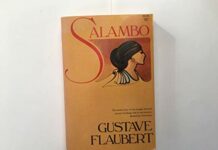
Ebook Info
- Published: 1977
- Number of pages: 288 pages
- Format: EPUB
- File Size: 1.99 MB
- Authors: Gustave Flaubert
Description
An epic story of lust, cruelty, and sensuality, this historical novel is set in Carthage in the days following the First Punic War with Rome.For more than seventy years, Penguin has been the leading publisher of classic literature in the English-speaking world. With more than 1,700 titles, Penguin Classics represents a global bookshelf of the best works throughout history and across genres and disciplines. Readers trust the series to provide authoritative texts enhanced by introductions and notes by distinguished scholars and contemporary authors, as well as up-to-date translations by award-winning translators.
User’s Reviews
Editorial Reviews: From the Back Cover An epic story combining lust, cruelty, riches, ritual and sensuality, few French historical novels can stand comparison with Salammbo. About the Author Gustave Flaubert was born in Rouen in 1821. After illness interrupted a career in law, he retired to live with his widowed mother and devote himself to writing. He achieved limited success in his own lifetime, but his fame and reputation grew steadily after his death in 1880.Dr. A.J. Krailsheimer was born in 1921 and was Tutor in French at Christ Church, Oxford, from 1957 until his retirement in 1988. His publications are Studies in Self-Interest (1963), Rabelais and the Franciscans (1965), Three Conteurs of the Sixteenth Century (1966),Rabelais (1967), A. J. de Rancé, Abbot of La Trappe (1974), Pascal (1980), Conversion (1980), Letters of A. J. de Rancé (1984), Rancé and the Trappist Legacy (1985) and Correspondance de Rancé (1993). He has also translated Flaubert’s Bouvard and Pécuchet and Salammbo and Pascal’s The Provincial Letters for the Penguin Classics.
Reviews from Amazon users which were colected at the time this book was published on the website:
⭐Death, mayhem, blood, torture, and no sympathetic characters; except, perhaps, the poor. The characters are petty, dishonest, conniving, and superstitious. The forward suggested that Flaubert had something that he needed to get out of his system, with this writing, in order to move on to better things; and I think that is true. But the book is probably more representative of the nature of most wars than say the Lord of the Rings, or such. No one is really fighting, here, for a value system or such and war is hell as Flaubert enthusiastically depicts; no glory here. Although Flaubert hoped for an historical fiction, the forward claims he falls far short of it and the book should be read as a simple fiction. Salammbo didn’t draw me in until the last fourth, even then it wasn’t moving, but that might have been Flaubert’s intention (or the translator’s fault); the lack of pathos or sentimentality part. The first three fourths was a bit tedious or maybe my exposure to sci-fi in my teens made it all blaze; it reminded me of bad sci-fi. The love affair(s) were undeveloped and not believable. Some of the actions of these born killers is not credible either.So maybe the two finger thing was symbolic of civilization’s subtle conforming of the masses, and the priests the driving force behind taming the barbarian in all of us as well as those outside. Being part of a civiization/society was seen as a privilage until Rousseau flip flopped the whole concept and made the barbarian the noble one. Okay priviliage is based on fear and oppresion justified by religious superstition. A lot ofsci-fi books have symbolism to ponder.2012 – Some of the themes in this book are quite powerful. Conformity being subtle, the pride of citizenship (verse the Rousseau-ian “Noble Savage”). Flaubert did capture something here worth investigating.
⭐This is a monstrous, depraved, beautiful and lofty book, obviously the work of a genius – the last third I found completely riveting, but I have to say it felt like I was being pulled deeper and deeper into the dark vortex of Flaubert’s psychology, where terrible brutality is mixed with rapturous lyricism – hate and love, pleasure and pain become one and the same – very disturbing, actually – EROS/THANATOS unleashed. I now have certain images in my head that will be difficult to forget. This was probably one of the most violent and disturbing things that I’ve read; it’s a book obsessed with sadomasochistic impulses, on an epic scale; it’s quite troubling because it makes the reader complicit by joining in the eroticization of torture and killing, of human barbarity and degradation; nevertheless, I was compelled to keep reading – because of Flaubert’s amazing artistry, I couldn’t look away. “Salammbo” makes the horrors of battle real and visceral, while turning hell-on-earth into intoxicating poetry – a very strange but beautiful work. The original french readers of “Salammbo” (1862) must have experienced quite a shock; it was a financial success (following the sensation of “Madame Bovary”), but it wasn’t translated into english until much later – now I think I understand why.The true nature of Salammbo (more an archetype than a mortal heroine) isn’t revealed to the reader, or to her, until the final pages of the book. What were Flaubert’s motivations for writing this novel? I guess he had to get it out of his system; he’s like a dangerous, intoxicated, wild animal, filled with blood lust, who can transform his cravings into mystical poetry. But perhaps this represents Flaubert’s personal portrait of humanity, expressed through ancient history and myth: a twisted, eternal conflict encompassing light and dark, masculine and feminine, civilization and chaos, war and religion, mystic and erotic, but essentially, when stripped of it’s outer forms, barbaric.
⭐A fascinating novel that reads as if Flaubert must have done a lot of preliminary research into ancient history, geography, languages, technology, different cultures’ types of money, mythology, religion, folklore and folk medicine, magic, warfare and weaponry, and archeology, even if it’s really mostly pure fiction. Good if you like war stories, like Homer’s Iliad, but very different from Homer. Contains many very gruesome and disturbing images and ideas, though, involving outrageous violence and vicious cruelty. Not just a war story, but also a love story. Interesting and complex overall structure, very good character and plot development, and writing in general. More evidence of Flaubert’s greatness as an author.
⭐Even though I agree with the reviewers who stated that this novel is nothing like Madame Bovary, I tend to see this as a strength of a talented world writer. In this novel Carthage is in its death throes as an imperial nation—eternally at war and unable to meet the daily needs of its citizens. They are forced to believe in an ecstatic religious cult that demands the sacrifice of humans. Flaubert’s language in this novel even mirrors the internal frenzy of the citizens who always have to be prepared for yet another war. (I finished this novel in one day, I could not put it down.) Salammbo needs to be read as a novel; not as a work of history in order to truly understand what Flaubert intentions were.
⭐From both a historical and literary standpoint, this novel is a masterpiece. It’s a shame this isn’t more known in the English world.
⭐I was not expecting anything from this book, though I loved Madam Bovary. The problem with the character, Salambo, a temple girl, is that she was missing in action. Instead, the author uses the title as a pretense to explore and describe ancient Carthage, and gives us little opportunity to know the main characters. Salambo says a few vague lines and then she’s off, usually in a huff over her father, then Flaubert starts his travelogue on Carthage again, panning the lens around. If you love sheer exotic scenery then you might like this story–but if you also want memorable characters, this is not the book.
⭐I became interested in Flaubert indirectly – in fact from reading about the Victorian era explorer Henry Morton Stanley who cited Flaubert as one of his favourite writers and Salammbo in particular as one of his favourite books. I had read no synopsis and done little research, so picked up the book with no previous knowledge of the story or the writer.And wow – what a shock! The most astonishing thing about the book is the level of incredibly descriptive, sadistic (and often masochistic) violence. Flaubert was – accordingly to record – a student of De Sade, but even so this would make a modern hard-core horror fan blush. The author is completely unforgiving and unrepentant in his portrayal of the various battles, tortures and physical sacrifice that the protagonists endure. What makes it even more amazing is that this was written over 100 years ago, at a time we tend to think of as rather staid and conservative. Interestingly, women were as supposedly as populous readers of this novel as men were, and despite the title and cover of this version, chick lit this isn’t….in fact it is more akin to torture porn for the Victorian Era. I think it actually illustrates more about the character of the Victorian reader of the day than the writer himself, particularly when the likes of Wilde, Tolstoy, Bram Stoker and others were also coming up with some interesting (and occasionally disturbing) ideas!But then, the time the novel was set would not have been suited to a squeamish temperament, and nor would have been the backdrop of empire building, exploration, war, and industry that it was written during.But overall it’s a good story – maybe a little disjointed here and there. And a little over dramatic when it comes to Salammbo herself. What I couldn’t fathom was the direct brutality the writer uses to describe other events in the story, but when it comes to Salammbo herself it becomes very opaque and florid. Flaubert also obviously did a huge amount of work to try to bring alive the story during long expeditions to North Africa as research, and it really shows in the level of detail and description. As other reviewers have commented, the scope is epic and the sense of place fantastic. You can almost feel the hot, dusty plains of Morocco at times, and smell the tens of thousands of soldiers sweating for weeks in the sun.I’d certainly recommend this for fans of war and history – and would be very interested to see what a director made of this as an epic….although the modern audience would probably have to leave their stomach at the door!
⭐immensely detailed historical drama so much so I lost track of the narrative but I didn’t mind the world of carthage is so wonderfully drawn. a sword and sandals epic which I would recommend.
⭐Although this book is called Salammbo, she doesn’t appear in it that much, and her story is just an incidental sideline to the main story. If you have read Flaubert before you will find this book somewhat different. If you like a bog standard historical novel you may find this tale a bit too exotic.Salammbo is set in the second century BC. Carthage won’t pay its mercenaries after the Punic Wars, and thus starts the Mercenary War. What this book shows is the horrors of war, and man’s inhumanity to man. Prisoners of war are crucified or trampled underfoot by elephants amongst other indignities. Carthage is under siege at one stage and the inhabitants practice human sacrifice to appease the gods. The mercenaries that see this look on in shocked dismay, only for some of them to later carry out cannibalism.This book is bloody and gory, and the story will keep you absorbed. It would make an excellent movie, but once again it won’t be a book for everyones tastes.
Keywords
Free Download Salammbo (Penguin Classics) in EPUB format
Salammbo (Penguin Classics) EPUB Free Download
Download Salammbo (Penguin Classics) 1977 EPUB Free
Salammbo (Penguin Classics) 1977 EPUB Free Download
Download Salammbo (Penguin Classics) EPUB
Free Download Ebook Salammbo (Penguin Classics)