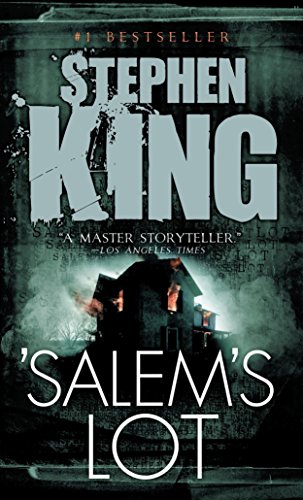
Ebook Info
- Published: 2011
- Number of pages: 672 pages
- Format: MOBI
- File Size: 2.12 MB
- Authors: Stephen King
Description
#1 BESTSELLER • Ben Mears has returned to Jerusalem’s Lot in hopes that exploring the history of the Marsten House, an old mansion long the subject of rumor and speculation, will help him cast out his personal devils and provide inspiration for his new book. But when two young boys venture into the woods, and only one returns alive, Mears begins to realize that something sinister is at work.In fact, his hometown is under siege from forces of darkness far beyond his imagination. And only he, with a small group of allies, can hope to contain the evil that is growing within the borders of this small New England town.With this, his second novel, Stephen King established himself as an indisputable master of American horror, able to transform the old conceits of the genre into something fresh and all the more frightening for taking place in a familiar, idyllic locale.
User’s Reviews
Editorial Reviews: From Booklist *Starred Review* Before vampires became sympathetic characters with their own alternate worlds, complete with vampire coffee shops and vampire politics, they used to be bad guys, scary not sexy, and they preferred wreaking havoc in horror novels rather than exuding tortured sensitivity in YA coming-of-age fiction. Fortunately, we don’t need to go all the way back to Dracula and Boris Karloff to remember those halcyon days: we have Stephen King’s ’Salem’s Lot, from 1975. Oddly, it’s not the vampires that make ’Salem’s Lot great popular fiction. Mr. Barlow, our lead vampire, is no Dracula. He doesn’t even appear until the story is nearly half over, and he is perhaps the most one-dimensional figure in the book (but that single dimension is enough: unadulterated evil). The real main character isn’t a person at all, human or vampire: it’s the seemingly idyllic New England town of Jerusalem’s Lot. King once said that in ’Salem’s Lot, he set out to create “a fictional town with enough prosaic reality about it to offset the comic-book menace of a bunch of vampires.” He did just that by drawing on our universal fear of outsiders, and nowhere is that fear more recognizable than in our traditional image of the New England small town, where insularity itself becomes a defense against incursion by strangers. The stereotypical Yankee, befuddling outsiders with a series of cryptic yups and nopes, may be a comic character from folklore, but he is also a soldier defending his Maginot Line against potential blitzkrieg. And behind the crotchety Yankee’s seeming impregnability, there is the constant fear that one day a stranger will come to town who won’t take nope for an answer. That juxtaposition of prosaic reality against outlandish terror has always been central to King’s technique for scaring his readers. In ’Salem’s Lot, he does it by looking beneath the surface of idyllic New England. We see the pastoral beauty, the close-knit community, and the unpretentious lifestyle, yet from the beginning, we also see the harbinger of something else, something other. The novel begins with a stranger, not Barlow but a writer, Ben Mears, returning to the Lot, where he’d lived briefly as a boy. Mears has come home again not to reclaim his innocence but to expunge his demons—the memory of the body of a man dead for decades, still hanging in the closet of the Marsten House. Mears believes he hallucinated this horrible scene, but he wants to explore why it happened, why this house prompted him to imagine evil. What Mears finds when he returns to the Lot is that the Marsten House is now occupied by another stranger, our Mr. Barlow. As the known gives way to the unknown, King shows how the small-town insistence on maintaining the illusion of tranquility makes easy pickings for a vampire intent on fomenting a little evil. If ’Salem’s Lot were just another old-fashioned vampire novel, it would portray a straightforward struggle between good (people) and bad (vampires). It would not portray the arrival of vampires in the Lot as a kind of supernatural manifestation of the town’s distorted sense of itself. King feels both affection for and anger toward his small town. A part of him wants to see ’Salem’s Lot get its comeuppance, and this part gives the novel a degree of frisson that most vampire stories lack. And yet, in the end, the vampires don’t win, at least not exactly. Yes, Ben Mears pounds a stake in Barlow’s heart, but that isn’t enough. The evil continues to thrive. The town needs its own stake. Writers of every kind—from Nathaniel Hawthorne to Grace Metalious to John Updike to Carolyn Chute—have wrestled with their mixed feelings about the small towns of New England. But it took Stephen King to burn one down. –Bill Ott Review “A master storyteller.” —The Los Angeles Times“Stephen King has built a literary genre of putting ordinary people in the most terrifying situations. . . . He’s the author who can always make the improbable so scary you’ll feel compelled to check the locks on the front door.” —The Boston Globe “Peerless imagination.” —The Observer (London)“An unabashed chiller.” —Austin American Statesman“[The] most wonderfully gruesome man on the planet.” —USA Today“[King is] the guy who probably knows more about scary goings-on in confined, isolated places than anybody since Edgar Allan Poe.” —Entertainment Weekly“Spine-tingling fiction at its best.” —Grand Rapids Press“A super exorcism. . . . Tremendous.” —Kirkus Reviews “A novel of chilling, unspeakable evil.” —Chattanooga Times About the Author Stephen King is the author of more than fifty books, all of them worldwide bestsellers. Among his most recent are Full Dark, No Stars; Under the Dome; Just After Sunset; Duma Key; Lisey&;s Story; Cell; and the concluding novels inthe Dark Tower saga: Wolves of the Calla, Song of Susannah, and The Dark Tower. His acclaimed nonfiction book On Writing is also a bestseller. In 2003, he was awarded the National Book Foundation Medal for Distinguished Contribution to American Letters, and in 2007 he received the Grand Master Award from the Mystery Writers of America. He lives in Maine with his wife, novelist Tabitha King. Excerpt. © Reprinted by permission. All rights reserved. Chapter OneBen (I)By the time he had passed Portland going north on the turnpike, Ben Mears had begun to feel a not unpleasurable tingle of excitement in his belly. It was September 5, 1975, and summer was enjoying her final grand fling. The trees were bursting with green, the sky was a high, soft blue, and just over the Falmouth town line he saw two boys walking a road parallel to the expressway with fishing rods settled on their shoulders like carbines.He switched to the travel lane, slowed to the minimum turnpike speed, and began to look for anything that would jog his memory. There was nothing at first, and he tried to caution himself against almost sure disappointment. You were nine then. That’s twenty-five years of water under the bridge. Places change. Like people.In those days the four-lane 295 hadn’t existed. If you wanted to go to Portland from the Lot, you went out Route 12 to Falmouth and then got on Number 1. Time had marched on.Stop that shit.But it was hard to stop. It was hard to stop when–A big BSA cycle with jacked handlebars suddenly roared past him in the passing lane, a kid in a T-shirt driving, a girl in a red cloth jacket and huge mirror-lensed sunglasses riding pillion behind him. They cut in a little too quickly and he overreacted, jamming on his brakes and laying both hands on the horn. The BSA sped up, belching blue smoke from its exhaust, and the girl jabbed her middle finger back at him.He resumed speed, wishing for a cigarette. His hands were trembling slightly. The BSA was almost out of sight now, moving fast. The kids. The goddamned kids. Memories tried to crowd in on him, memories of a more recent vintage. He pushed them away. He hadn’t been on a motorcycle in two years. He planned never to ride on one again.A flash of red caught his eye off to the left, and when he glanced that way, he felt a burst of pleasure and recognition. A large red barn stood on a hill far across a rising field of timothy and clover, a barn with a cupola painted white–even at this distance he could see the sun gleam on the weather vane atop that cupola. It had been there then and was still here now. It looked exactly the same. Maybe it was going to be all right after all. Then the trees blotted it out.As the turnpike entered Cumberland, more and more things began to seem familiar. He passed over the Royal River, where they had fished for steelies and pickerel as boys. Past a brief, flickering view of Cumberland Village through the trees. In the distance the Cumberland water tower with its huge slogan painted across the side: “Keep Maine Green.” Aunt Cindy had always said someone should print “Bring Money” underneath that.His original sense of excitement grew and he began to speed up, watching for the sign. It came twinkling up out of the distance in reflectorized green five miles later:ROUTE 12 JERUSALEM’S LOTCUMBERLAND CUMBERLAND CTRA sudden blackness came over him, dousing his good spirits like sand on fire. He had been subject to these since (his mind tried to speak Miranda’s name and he would not let it) the bad time and was used to fending them off, but this one swept over him with a savage power that was dismaying.What was he doing, coming back to a town where he had lived for four years as a boy, trying to recapture something that was irrevocably lost? What magic could he expect to recapture by walking roads that he had once walked as a boy and were probably asphalted and straightened and logged off and littered with tourist beer cans? The magic was gone, both white and black. It had all gone down the chutes on that night when the motorcycle had gone out of control and then there was the yellow moving van, growing and growing, his wife Miranda’s scream, cut off with sudden finality when–The exit came up on his right, and for a moment he considered driving right past it, continuing on to Chamberlain or Lewiston, stopping for lunch, and then turning around and going back. But back where? Home? That was a laugh. If there was a home, it had been here. Even if it had only been four years, it was his.He signaled, slowed the Citroën, and went up the ramp. Toward the top, where the turnpike ramp joined Route 12 (which became Jointner Avenue closer to town), he glanced up toward the horizon. What he saw there made him jam the brakes on with both feet. The Citro‘n shuddered to a stop and stalled.The trees, mostly pine and spruce, rose in gentle slopes toward the east, seeming to almost crowd against the sky at the limit of vision. From here the town was not visible. Only the trees, and in the distance, where those trees rose against the sky, the peaked, gabled roof of the Marsten House.He gazed at it, fascinated. Warring emotions crossed his face with kaleidoscopic swiftness.”Still here,” he murmured aloud. “By God.”He looked down at his arms. They had broken out in goose flesh.TWOHe deliberately skirted town, crossing into Cumberland and then coming back into ‘salem’s Lot from the west, taking the Burns Road. He was amazed by how little things had changed out here. There were a few new houses he didn’t remember, there was a tavern called Dell’s just over the town line, and a pair of fresh gravel quarries. A good deal of the hardwood had been pulped over. But the old tin sign pointing the way to the town dump was still there, and the road itself was still unpaved, full of chuckholes and washboards, and he could see Schoolyard Hill through the slash in the trees where the Central Maine Power pylons ran on a northwest to southeast line. The Griffen farm was still there, although the barn had been enlarged. He wondered if they still bottled and sold their own milk. The logo had been a smiling cow under the name brand: “Sunshine Milk from the Griffen Farms!” He smiled. He had splashed a lot of that milk on his corn flakes at Aunt Cindy’s house.He turned left onto the Brooks Road, passed the wrought-iron gates and the low fieldstone wall surrounding Harmony Hill Cemetery, and then went down the steep grade and started up the far side–the side known as Marsten’s Hill.At the top, the trees fell away on both sides of the road. On the right, you could look right down into the town proper–Ben’s first view of it. On the left, the Marsten House. He pulled over and got out of the car.It was just the same. There was no difference, not at all. He might have last seen it yesterday.The witch grass grew wild and tall in the front yard, obscuring the old, frost-heaved flagstones that led to the porch. Chirring crickets sang in it, and he could see grasshoppers jumping in erratic parabolas.The house itself looked toward town. It was huge and rambling and sagging, its windows haphazardly boarded shut, giving it that sinister look of all old houses that have been empty for a long time. The paint had been weathered away, giving the house a uniform gray look. Windstorms had ripped many of the shingles off, and a heavy snowfall had punched in the west corner of the main roof, giving it a slumped, hunched look. A tattered no-trespassing sign was nailed to the right-hand newel post.He felt a strong urge to walk up that overgrown path, past the crickets and hoppers that would jump around his shoes, climb the porch, peek between the haphazard boards into the hallway or the front room. Perhaps try the front door. If it was unlocked, go in.He swallowed and stared up at the house, almost hypnotized. It stared back at him with idiot indifference.You walked down the hall, smelling wet plaster and rotting wallpaper, and mice would skitter in the walls. There would still be a lot of junk lying around, and you might pick something up, a paperweight maybe, and put it in your pocket. Then, at the end of the hall, instead of going through into the kitchen, you could turn left and go up the stairs, your feet gritting in the plaster dust which had sifted down from the ceiling over the years. There were fourteen steps, exactly fourteen. But the top one was smaller, out of proportion, as if it had been added to avoid the evil number. At the top of the stairs you stand on the landing, looking down the hall toward a closed door. And if you walk down the hall toward it, watching as if from outside yourself as the door gets closer and larger, you can reach out your hand and put it on the tarnished silver knob–He turned away from the house, a straw-dry whistle of air slipping from his mouth. Not yet. Later, perhaps, but not yet. For now it was enough to know that all of that was still here. It had waited for him. He put his hands on the hood of his car and looked out over the town. He could find out down there who was handling the Marsten House, and perhaps lease it. The kitchen would make an adequate writing room and he could bunk down in the front parlor. But he wouldn’t allow himself to go upstairs.Not unless it had to be done.He got in his car, started it, and drove down the hill to Jerusalem’s Lot.Chapter TwoSusan (I)He was sitting on a bench in the park when he observed the girl watching him. She was a very pretty girl, and there was a silk scarf tied over her light blond hair. She was currently reading a book, but there was a sketch pad and what looked like a charcoal pencil beside her. It was Tuesday, September 16, the first day of school, and the park had magically emptied of the rowdier element. What was left was a scattering of mothers with infants, a few old men sitting by the war memorial, and this girl sitting in the dappled shade of a gnarled old elm.She looked up and saw him. An expression of startlement crossed her face. She looked down at her book; looked up at him again and started to rise; almost thought better of it; did rise; sat down again.He got up and walked over, holding his own book, which was a paperback Western. “Hello,” he said agreeably. “Do we know each other?””No,” she said. “That is . . . you’re Benjaman Mears, right?””Right.” He raised his eyebrows.She laughed nervously, not looking in his eyes except in a quick flash, to try to read the barometer of his intentions. She was quite obviously a girl not accustomed to speaking to strange men in the park.”I thought I was seeing a ghost.” She held up the book in her lap. He saw fleetingly that “Jerusalem’s Lot Public Library” was stamped on the thickness of pages between covers. The book was Air Dance, his second novel. She showed him the photograph of himself on the back jacket, a photo that was four years old now. The face looked boyish and frighteningly serious–the eyes were black diamonds.”Of such inconsequential beginnings dynasties are begun,” he said, and although it was a joking throwaway remark, it hung oddly in the air, like prophecy spoken in jest. Behind them, a number of toddlers were splashing happily in the wading pool and a mother was telling Roddy not to push his sister so high. The sister went soaring up on her swing regardless, dress flying, trying for the sky. It was a moment he remembered for years after, as though a special small slice had been cut from the cake of time. If nothing fires between two people, such an instant simply falls back into the general wrack of memory.Then she laughed and offered him the book. “Will you autograph it?””A library book?””I’ll buy it from them and replace it.”He found a mechanical pencil in his sweater pocket, opened the book to the flyleaf, and asked, “What’s your name?””Susan Norton.”He wrote quickly, without thinking: For Susan Norton, the prettiest girl in the park. Warm regards, Ben Mears. He added the date below his signature in slashed notation.”Now you’ll have to steal it,” he said, handing it back. “Air Dance is out of print, alas.””I’ll get a copy from one of those book finders in New York.” She hesitated, and this time her glance at his eyes was a little longer. “It’s an awfully good book.””Thanks. When I take it down and look at it, I wonder how it ever got published.””Do you take it down often?””Yeah, but I’m trying to quit.”She grinned at him and they both laughed and that made things more natural. Later he would have a chance to think how easily this had happened, how smoothly. The thought was never a comfortable one. It conjured up an image of fate, not blind at all but equipped with sentient 20/20 vision and intent on grinding helpless mortals between the great millstones of the universe to make some unknown bread.”I read Conway’s Daughter, too. I loved that. I suppose you hear that all the time.””Remarkably little,” he said honestly. Miranda had also loved Conway’s Daughter, but most of his coffeehouse friends had been noncommittal and most of the critics had clobbered it. Well, that was critics for you. Plot was out, masturbation in.”Well, I did.””Have you read the new one?””Billy Said Keep Going? Not yet. Miss Coogan at the drugstore says it’s pretty racy.””Hell, it’s almost puritanical,” Ben said. “The language is rough, but when you’re writing about uneducated country boys, you can’t . . . look, can I buy you an ice-cream soda or something? I was just getting a hanker on for one.”She checked his eyes a third time. Then smiled, warmly. “Sure. I’d love one. They’re great in Spencer’s.”That was the beginning of it. Read more
Reviews from Amazon users which were colected at the time this book was published on the website:
⭐I read this book as a kid and it scared the beejesus out of me. I read it again recently as an adult and it was a different experience alltogether. If you arent a King fan or are, if horror is your thing or its not, here are 3 reasons why this is still a great bookk:1. Its not what you might expect. Yes, its about vampires visiting a small town and good vs Evil (capital “E”), but Salems lot is a soap opra, with vivid characters only King can create and vignettes of life in a small town that will make you feel nostalgic and disgusted at the same time. They beat their children, cheat on their husbands, drink and bully. Yet its hard to pin them on a good vs bad board, there are shades of grey with everyone you meet. This town is Anytown USA, more a charcter than a setting and you realize the evil man can do is more destructive to society than a thousand year old vampire.2. It is King at his finest – the writing, the transitions and use of the third person narrative makes the story come alive – its a slow build I admit but by the time the bodies start dropping King makes you care in a way most horror novels dont bother to. You feel for the Glicks, you root for the alcoholic priest trying to reclaim enough faith to battle the dark one and you are happy for Dud in his new life. King will do this again in the Stand and in It, but once you read SL you realize hes sampling from his earlier works and no other book will make you laugh cry and turn on the lights like this one will. The genuis of starting the book with the tall man and boy in Mexico is you kind of know whats going to happen (much like a Columbo episode where you see the murder up front), but it raises so many questions you simply have to hang on.3. Its the best kind of horror story – it follows the rules and tells classic tale. Straker and Barlow may be the villans but they arent blood thirsty monsters either – they are true to their nature. A vampire kils and a watchdog protects. In one seen where Straker does something awful, King takes the time to tell us about the look on his face which enlightens the reader about his motivation. They follow all the vampire rules – sunlight and crosses and of course the need for an invitation (in fact they were invited to the town by Marsten). They arent invincible foes but they are formidable ones. And its the townspeople that drive the action and turn SL into an apocalypse.This is a rich story full of great themes about society, the power of faith, men vs boys (my favorite chapter is the inner monologue Mark Petrie has after a close call where he muses about how adult fears are nothing compared to what a child dels with under the bed at night) and even love and salvation. Read it and decide for yourself if this is a horror novel or a novel about the horrorz of man.
⭐I enjoyed Salem’s Lot. Prior to this novel, I read Carrie which was my first by King. I liked this story, a writer staying in a boarding house to write a book about a haunted house from his childhood that continued to bother him even in his adulthood. A group coming together to kill these creatures infesting the town. The witty English teacher/ Dr. Van Helsing character. Parts if it made me laugh in bed while reading, others creeped me out… especially the image of these child vampires overcoming the town’s crotchety bus driver after baiting him onto the bus in the middle of the night. It definitely kept me engaged and I’m looking forward to reading a few more of King’s books. In the afterword, King refers to Salem’s Lot as an American vampire tale… it was then I remembered thumbing through the pages one of my brother’s comic books with the same title and how King contributed to the writing of it. Good read.
⭐I’ll start with a confession: I read this because of the Dark Tower series. That said, my first King book I read was The Stand, and I was hooked. I starting the Dark Tower series shortly thereafter, and found myself wanting to know more about Father Callahan, so I jumped to Salem’s Lot.Slight spoiler alert. If you’re looking for a story about Father Callahan, or are trying to gleam some more information on the Dark Tower, I think you’ll be disappointed. The Father is definitely in the book, and there’s more detail surrounding his ordeal in The ‘Lot, but the Dark Tower does a pretty good job of explaining it. So if you’re coming at it from that angle, you might be disappointed. All of that said, this is a great book. It was on my short list to read anyway, I just jumped on it sooner rather than later.
⭐‘Salem’s Lot is Stephen King’s reimagination of Bram Stoker’s Dracula, setting the story in a small 1970s New England town called Jerusalem’s (‘Salem’s) Lot. The book begins much like Stoker’s classic tale, with a lawyer arranging the purchase of the town’s most notorious mansion by a mysterious man named Straker and his unseen partner, Barlow. When the lawyer’s lackeys are tasked with delivering a large crate – one big enough to hold a coffin – to the mansion, the stage is set. The book is an utterly suspenseful read, and I tore through all 668 pages. King apparently considers ‘Salem’s Lot his favorite novel. I might not share the same view, given my love for The Stand and the Gunslinger series, particularly Wizard and Glass. But whether or not it’s King’s best, ‘Salem’s Lot is one hell of a book by one of the most talented novelists of our time.
⭐Salem’s Lot by the legendary Stephen King is genuinely not only one of his greatest novels of all-time but is a horror masterpiece! The way he builds Jerusalem’s Lot piece by piece and all its interesting characters, you’ll be hooked immediately from the start. I could not put this book down and took my time reading it as it’s that immersive.As ‘Salem’s Lot unfolds, whether you read it many moons ago or are just reading it for the first time, the way King is able to keep you on the edge of your seat is surreal. He set the tone for his incredible writing career back in 1975 when this was originally published and decades later, it still holds up. As a matter of fact, many readers will tell you it’s the best novel he’s ever written, yes, even scarier than “It”. I’ve read many horror novels in my life and can tell you that ‘Salem’s Lot is up there in the “best of the best” category without even thinking about it twice.This is 5/5 stars in my book and is something I’d recommend to anyone that either loves King’s work or is a fan of horror. If you’re into reading novels about vampires but written in a way that stands out from anything else, ‘Salem’s Lot is for you. Just make sure to leave the lights on…
⭐OK.At the time of writing (Oct 2019), I’m forty-seven.Remember that number, OK?Right, the book: ‘Salem’s Lot.In no particular order.It started slowly. Very slowly. It crawled. But, round about 15%(Yes, I read on a Kindle so talk about % now rather than page numbers…)of the way in, I realised that the crawling plot had, in fact, been tying loose knots around my imagination. And when the first few people disappeared, those knots started tightening. That didn’t stop until the end of the novel. And that’s the thing – no one and nothing is sacred in this story. From the initial, chilling sacrifice to the Lord of Flies to the final show down. People drop like, well, flies, I guess. They are there and then they’re gone.The problem is, most of these people come back. After dark. And these are not nice vampires. They don’t sparkle. They don’t come armed with comedy accents and cliches and dress in cloaks. They are unpleasant and, in some cases, tragic. But the nastiness doesn’t stop there. There’s a house – The Marsten House. Its cellar is almost as scary as some of the monsters. As the author says in the foreword: ‘it’s one of the scary ones.’But, outside of Barlow and his vampires, and the Marsten House and its cellar, and the superb depictions of some very messed up people there were a few things that jarred.1 – the vast number of peripheral characters was hard to follow. We’re talking about a town’s worth. Many appear and disappear then reappear and I wasn’t always sure who was who. Are you the useless cop? The horny (pervy) dump manager? The wifebeater. And so on…2 – the ending was over too quickly. The set up to the final moments were chillingly good, but the final resolution? Over too soon. Maybe it’s better that way rather than turning the last pages into a B-movie gore schlock fest?3 – where are the rats? They exist in the deleted scenes at the end of the book but were culled from the finished version. I’d have preferred they were kept as some of those scenes are terrifying.All in all, though, this is another one of those books where I found myself wondering why I had never read it before.So. Back to my age. You remember how old I am, right? Go check it you’ve forgotten. I’ll wait.Back already?OK.I read the bulk of this book whilst staying in a largish flat in London. I was on my own. Reading late in the evening. Suffering from insomnia. One night – I think it was near the end of the book when things had really gone belly up for the inhabitants of the Lot – I couldn’t sleep. Not because of my insomnia, but because a doubt had crept up on me, rat-like, whiskers tickling the toes of my imagination. Who, or what, was in the other rooms in the flat? I was there on my own, right? Of course I was. Just me. No one else. Not a soul. Only little old me…Yup.A forty-seven year old man got out of bed to check there were no monsters in the closet, under the bed, in the other rooms or hiding on the landing.Are you laughing at me?You should be…Now go read the book. It’s scarily good.
⭐This might be a long book but my goodness is it worth the read. I’ve gone through a phase of reading some classic horror (Frankenstein, The Exorcist and Dracula), and this is easily the pick of the lot.Stephen King needs no introduction and this book highlights why he is one of the best-selling writers alive. His books read like a movie, you can imagine and picture every detail and visualise the story in your head – yes almost everyone does this with any fiction book they read but with King there is a level of visualisation and detail that is rarely found – he is a true storyteller.The book itself is about a writer who returns to Salem’s Lot after many years to write a book. He learns on arrival that the creepy, empty house he was hoping to rent (this house has a strong connection to an episode during the writer’s childhood), has already been let to two mysterious men. What pursues is a story of residents that suddenly go missing, people seemingly coming back from the dead and what seems to be a town silently becoming overrun by a growing group of vampires and a plan by remaining residents to stop them.One of the highlights of the book is the short story ‘One For The Road’ at the end. This short story was even more creepy than Salem’s Lot and a fantastic end to the read. I had read Dracula before this and must confess that I found it slightly disappointing. Whilst the book has a very eerie vibe, the characters are not particularly likeable and the narrative can get bland at times. Salem’s Lot is of course completely different to Dracula but if you are looking for a great horror/vampire book then you must purchase this!
⭐As an exercise in building tension and fear, this novel succeeds. Taking Stoker’s Dracula as a template, King’s approach is intriguing. We have a scary (haunted?) house, we have strangers in town and we have one newcomer, bound by his past, returning to the scene of his mental horror.It’s hardly a spoiler to write that this is a vampire novel. The point is that it’s more than that.A sleepy New England town is subject to an attack, a virus. The question is who can see this and try and resist? In the end it is rather tortured writer and a young boy, who knows fear but has read enough stories to conquer that fear. This village of the damned plays out as a gradual death of a functioning American community. The New England setting suggests that the virus is both old and new.The difficulty faced by the intrepid band of vampire hunters becomes clear only gradually. The rate at which the evil spreads is beyond their joint efforts to eradicate it. And so the novel reaches the only conclusion possible, fixated on place and terror. The whole town is cursed and even the purification wrought by the protagonists cannot remove the horror permanently.So? If you haven’t read this Stephen King classic, read it now – you’re in for a treat. For those who read it years ago and have lost touch; there are two connected short stories which complement the book.Yes, it’s scary. But so is real life. Read and digest. Understand how one plague can destroy a community.
⭐This book was advertised as a hard back copy of Salem’s Lot, however what it actually appeared to be was a cheaply printed paperback with a very dubious hard cover. Remember the dodgy CD’s or video cassettes you could buy from the bloke in the pub that looked like the jacket cover had been homemade on his printer, well this book was from the same stable…. Yes is arrived on time and was well packed and you could read it but the quality of the item for the price charged was tantamount to daylight robbery. Amazon, I am surprised at you!
⭐***Spoilers for general plot***Whilst this book isn’t strictly of the same vein, the zombie apocalypse genre should take lessons from King and Salem’s Lot.Starting off slowly and with an almost hokey premise (a sinister man of unknown motive moves into a sleepy town’s single, creepy, broken down house) the novel builds over time into a remarkably sinister, shocking and scary tale of a whole township being turned into blood-thirsty monsters by a vampire.The plot centres around a group of people, led by the protagonist (a man who grew up in the town, moved away and has now returned), who discover the truth early on and the excitement ratchets up over each page as sanity bleeds from their world and allies are devoured and turned by the terrible enemy.The pacing is perfect, the relationships believable and brilliant, the theme terrifying and the horror palpable – it’s well worth a read.
Keywords
Free Download Salem’s Lot in MOBI format
Salem’s Lot MOBI Free Download
Download Salem’s Lot 2011 MOBI Free
Salem’s Lot 2011 MOBI Free Download
Download Salem’s Lot MOBI
Free Download Ebook Salem’s Lot